
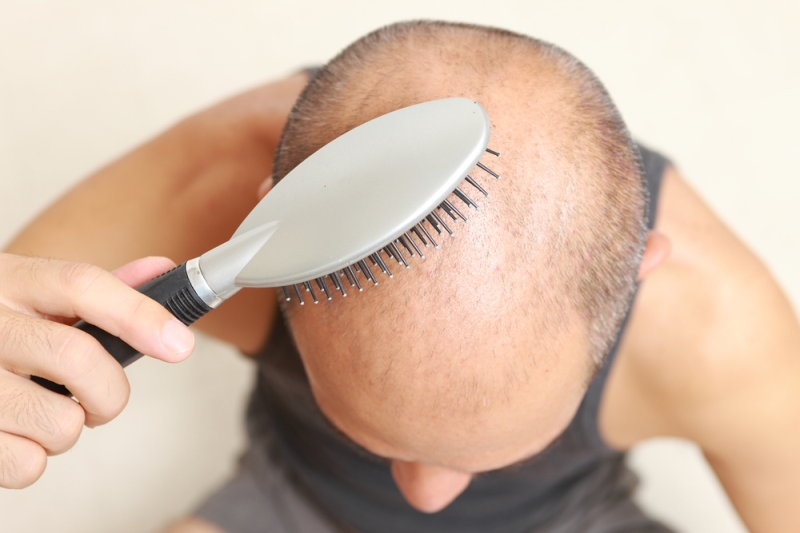
Hair loss can make it feel as though the hair you once had is gone for good. You may have tried changing your hairstyle, using thickening products, or researching treatments that promise to stimulate new growth.
For suitable candidates, modern hair transplantation offers another option: moving healthy hair follicles from one area of your scalp to areas affected by permanent thinning or baldness.
This allows you to restore coverage using your own naturally growing hair. The transplanted follicles come from your scalp, retain your hair’s color and texture, and can continue producing hair after they establish themselves in the treatment area.
However, it is important to understand what “regrowing your own hair” truly means. A hair transplant does not create brand-new follicles or reverse every possible cause of hair loss. Instead, it carefully redistributes a limited supply of healthy donor follicles to improve the areas where restoration can make the greatest cosmetic difference.
Quick Summary
Modern Follicular Unit Extraction, commonly called FUE, allows individual follicular units to be harvested from a stable donor area and transplanted into areas affected by permanent hair loss.
Unlike older strip-harvesting procedures, FUE does not require removing a long section of scalp. This means there is no long linear donor scar, although small extraction marks are still created.
Natural-looking results depend on much more than the technology used. Proper candidacy evaluation, physician involvement, donor preservation, hairline design, graft placement, realistic expectations, and long-term planning all influence the outcome.
Can You Really Regrow Your Own Hair?
A hair transplant can restore hair growth in selected thinning or bald areas by relocating follicles that are already growing elsewhere on your scalp.
The follicles are commonly harvested from the back and sides of the head. These areas are often used because their hair tends to be more resistant to the pattern of thinning that affects the frontal hairline, temples, mid-scalp, and crown.
Once the follicles are transplanted successfully, they can begin producing hair in their new location.
The new growth is your own hair. It can generally be:
- Washed
- Cut
- Styled
- Grown longer
- Trimmed shorter
- Treated like the rest of your hair after healing
The procedure does not involve synthetic fibers, a hairpiece, or donor hair from another person.
However, transplantation does not increase the total number of follicles on your scalp. It redistributes existing follicles from the donor area to the recipient area. This is why protecting the donor supply is such an important part of treatment planning.
What Is Follicular Unit Extraction?
Follicular Unit Extraction is a modern hair transplant technique in which naturally occurring follicular units are individually removed from a donor area.
A follicular unit may contain:
- One hair
- Two hairs
- Three hairs
- Occasionally four or more hairs
After extraction, the follicular units are prepared and transplanted into small recipient sites created in the areas where additional coverage is desired.
FUE differs from traditional Follicular Unit Transplantation, or FUT, because it does not require removing a strip of scalp. Instead, small circular extraction sites are distributed throughout the donor region.
This avoids the long linear scar associated with strip harvesting and may provide greater flexibility for patients who prefer shorter hairstyles. However, FUE should not be described as completely scar-free because each extraction creates a small healing site.
Learn more about the procedure:
What Is Follicular Unit Extraction?
Concord Hair Restoration currently describes FUE as the individual harvesting and transplantation of follicular units, with treatment planned around natural direction, density, donor management, and recovery.
How Does an FUE Hair Transplant Work?
An FUE hair transplant involves several stages. Every procedure should begin with an individualized evaluation rather than a predetermined graft package.
Evaluating Your Hair Loss
Before recommending transplantation, a physician should evaluate why you are losing hair.
Hair thinning may be related to:
- Male pattern baldness
- Female pattern hair loss
- Hormonal changes
- Stress-related shedding
- Certain medical conditions
- Autoimmune disorders
- Medications
- Nutritional deficiencies
- Scalp conditions
- Traction from tight hairstyles
Not every form of hair loss should be treated surgically. Some conditions may require medical evaluation, monitoring, or nonsurgical treatment before transplantation is considered.
The evaluation may include reviewing your:
- Medical history
- Family history
- Hair-loss pattern
- Rate of progression
- Scalp health
- Donor density
- Hair texture and caliber
- Previous treatments
- Long-term goals
Designing the Treatment Plan
If you are a candidate, the physician develops a plan for the donor and recipient areas.
This includes deciding:
- Where the hairline should begin
- How the hairline should be shaped
- Which areas should receive priority
- How many grafts may be harvested safely
- Where density should be concentrated
- How transplanted hair will blend with existing hair
- How future hair loss may affect the result
The best plan is not necessarily the one that uses the most grafts. It is the one that creates meaningful improvement while protecting the donor supply.
Preparing the Donor Area
The donor region is generally trimmed or shaved so individual follicular units can be identified.
Local anesthesia is administered to help keep the patient comfortable during the procedure.
The exact preparation may vary based on the number of grafts, the patient’s hairstyle, the location of the donor follicles, and the treatment plan.
Extracting the Follicular Units
The physician or treatment team uses specialized instruments to extract individual follicular units from the donor area.
The grafts must be removed carefully to reduce unnecessary trauma to the follicles and surrounding tissue.
Donor harvesting should be distributed appropriately. Concentrating too many extractions in one region can create visible thinning or patchiness.
Preparing the Grafts
After extraction, the grafts are examined, sorted, counted, and protected until placement.
Careful handling is important because follicles can be damaged by:
- Dehydration
- Crushing
- Excessive manipulation
- Improper storage
- Prolonged time outside the body
The grafts may also be organized according to how many hairs each follicular unit contains.
Creating the Recipient Sites
Small recipient sites are created where the hair will be transplanted.
Their angle, direction, spacing, and distribution help determine how the new hair will grow.
Hair does not grow in the same direction across every part of the scalp. For example:
- Frontal hairline hairs typically grow at a shallow angle
- Temple hairs follow a distinct directional pattern
- Mid-scalp hair may grow backward or diagonally
- Crown hair often follows a natural whorl
Matching these patterns helps transplanted hair blend with existing growth.
Placing the Follicular Units
The grafts are placed into the recipient sites according to the treatment plan.
Single-hair grafts are often useful near the front of the hairline because they create a softer transition. Follicular units containing two or more hairs may be placed behind them to help build the appearance of density.
This strategic distribution can create a more natural result than placing grafts uniformly throughout the treatment area.
How Is Modern FUE Different From Older Hair Transplants?
Some people still associate hair transplantation with large, obvious plugs or straight rows of hair.
Older procedures sometimes transplanted larger sections of tissue containing many hairs. These grafts could produce an uneven, artificial appearance, particularly along the frontal hairline.
Modern FUE uses smaller, naturally occurring follicular units. This gives the physician greater control over:
- Hairline irregularity
- Graft direction
- Placement angle
- Density transitions
- Distribution of single- and multi-hair grafts
- Blending with existing hair
Older strip-harvesting procedures also created a long linear scar in the donor area. FUE avoids that linear scar by extracting individual follicular units through small circular openings.
FUT remains an established surgical option and may still be appropriate for certain patients. The right method depends on the patient’s donor supply, treatment needs, hairstyle preferences, previous procedures, and long-term plan.
Compare the methods:
The Differences Between FUE and FUT Hair Transplants
Can FUE Results Look Natural?
Modern FUE can produce very natural-looking results when the procedure is carefully planned and executed.
The final appearance does not depend solely on the extraction device or the number of grafts. It depends on how the entire procedure is designed.
Important factors include:
- Hairline position
- Hairline shape
- Use of single-hair grafts
- Graft angle and direction
- Density distribution
- Donor management
- Existing hair
- Hair texture
- Hair caliber
- Facial proportions
- Future hair loss
A natural hairline is usually not perfectly straight or uniformly dense. It contains subtle variations that resemble normal hair growth.
The physician should also consider whether the proposed hairline will remain appropriate as the patient ages. An overly low or aggressive hairline may look appealing initially but become difficult to maintain if surrounding hair continues to thin.
Learn more:
Do Hair Transplants Ever Look Natural?
https://concordhairrestoration.com/do-hair-transplants-ever-look-natural/
Concord’s current results information emphasizes individualized hairline design, direction, density, and gradual growth rather than relying on graft count alone.
Why Your Donor Hair Matters
The donor area is the foundation of a hair transplant.
Every patient has a limited number of follicles that can be removed without making the donor region appear excessively thin.
Donor planning should consider:
- Natural donor density
- Hair caliber
- Hair texture
- Follicular-unit distribution
- Scalp characteristics
- Previous procedures
- Current hair-loss pattern
- Expected future hair loss
- Hairstyle preferences
Overharvesting can leave the back or sides of the scalp looking patchy, thin, or uneven. It may also reduce the number of follicles available if another procedure becomes appropriate later.
A responsible treatment plan attempts to create meaningful recipient-area coverage while maintaining a natural-looking donor region.
Learn more:
Donor Area Management: Avoiding Overharvesting
Who May Be a Candidate for FUE?
FUE may be appropriate for men and women who have a suitable pattern of permanent hair loss and enough healthy donor hair.
Potential candidates may include people with:
- A receding hairline
- Temple recession
- Male pattern baldness
- Female pattern hair loss
- Mid-scalp thinning
- Crown thinning
- Certain stable scars
- Adequate donor density
- Realistic expectations
Candidacy cannot be determined by age or a photograph alone.
A physician should consider whether the hair loss is stable, whether the donor area is healthy, and whether the available follicles can create a cosmetically meaningful improvement.
Who May Not Be a Good Candidate?
Hair transplantation may not be the right option when:
- The cause of hair loss is unknown
- Hair loss is temporary
- The donor area is too limited
- Thinning affects the proposed donor region
- Hair loss is progressing rapidly
- There is an active scalp condition
- The patient is not medically cleared for surgery
- Expectations exceed what transplantation can provide
- The treatment area is too large for the available donor supply
Younger patients with rapidly progressing loss may require especially conservative planning. Restoring a low hairline before the pattern becomes clear could create difficulties if thinning continues behind the transplanted area.
Can Women Regrow Their Own Hair With a Transplant?
Some women may be candidates for FUE hair transplantation, but female hair loss must be evaluated carefully.
Women frequently experience diffuse thinning rather than the more defined recession patterns commonly seen in men. In some cases, thinning may affect both the recipient area and the proposed donor area.
Potential causes of female hair loss include:
- Female pattern hair loss
- Hormonal changes
- Menopause
- Thyroid disorders
- Iron deficiency
- Stress-related shedding
- Traction alopecia
- Autoimmune conditions
- Postpartum changes
- Certain medications
A woman may be a stronger surgical candidate when she has a stable area of permanent loss and a healthy donor region that is not significantly miniaturizing.
A consultation should focus first on identifying the cause and pattern of thinning before discussing transplantation.
How Much Density Can a Hair Transplant Create?
A hair transplant can improve the appearance of coverage, but it cannot recreate the unlimited density a patient may have had before experiencing hair loss.
The available result depends on:
- Donor density
- Hair thickness
- Hair texture
- Curl pattern
- Hair color
- Skin tone
- Size of the treatment area
- Existing hair
- Number of safely available grafts
- Distribution of the grafts
Thicker or curlier hair may create greater visual coverage than fine, straight hair. Lower contrast between the scalp and hair color may also make an area appear fuller.
When the treatment area is extensive, the physician may recommend prioritizing the frontal hairline and other highly visible areas rather than spreading grafts too thinly across the entire scalp.
Learn more:
Hair Transplant Density Explained
How Many Grafts Will You Need?
The number of grafts varies from patient to patient.
Factors influencing the estimate include:
- The size of the treatment area
- The degree of hair loss
- Hairline position
- Desired coverage
- Donor density
- Hair texture
- Hair caliber
- Existing hair
- Previous procedures
- Expected future thinning
A small area of temple recession may require far fewer grafts than restoration involving the frontal hairline, mid-scalp, and crown.
Graft count should support the treatment plan rather than become the primary goal. A higher number is not automatically better if it risks donor overharvesting or places follicles where they will provide little cosmetic benefit.
Learn more:
Does FUE Require Pills or Creams?
A hair transplant does not depend on a pill or topical product to physically relocate the follicles. The transplanted grafts are moved surgically from the donor area into the recipient area.
However, it would not be accurate to say that every patient will never need or benefit from additional treatment.
A hair transplant does not prevent the surrounding non-transplanted hair from continuing to thin. Depending on the cause of hair loss, medical history, and long-term plan, a physician may discuss nonsurgical options intended to support existing hair.
These options should be considered individually. Patients should not begin or stop medications based solely on general online advice.
What Is Recovery Like After FUE?
FUE recovery occurs in stages.
Immediately after treatment, patients may notice:
- Small scabs around the grafts
- Redness
- Mild swelling
- Tenderness
- Temporary numbness
- Tightness or sensitivity
Your physician should provide individualized instructions for washing, sleeping, exercising, taking medication, and protecting the grafts.
The First Several Days
During early healing, patients may be advised to:
- Avoid touching or scratching the grafts
- Sleep with the head elevated
- Follow the prescribed washing method
- Avoid strenuous exercise
- Protect the scalp from direct sunlight
- Take medication as directed
- Avoid tight hats unless approved
Many patients can resume light daily activities within several days, although visible redness, scabbing, shaving, or swelling may influence how much time they prefer to take away from work.
Weeks Two Through Six
The transplanted hair shafts frequently shed during the first several weeks.
This temporary shedding is expected and does not necessarily mean the follicles have been lost. The follicular structures generally remain beneath the scalp as they transition through their growth cycle.
Months Three Through Four
Early growth may begin appearing around the third or fourth month.
The initial hairs may look:
- Fine
- Soft
- Light
- Uneven
- Sparse
This is only the beginning of the growth process.
Months Six Through Nine
More noticeable improvement may develop as the new hairs become longer, thicker, and easier to style.
Months 12 Through 18
The hair can continue maturing for approximately one year or longer. Crown restoration may progress more slowly than frontal hairline growth.
Learn more:
Hair Transplant Recovery Timeline Los Angeles
When Will You See Your Final Results?
Hair transplant results do not appear immediately.
A general growth timeline may include:
- First few weeks: Healing and temporary shedding
- Months three to four: Early growth may begin
- Months six to nine: More noticeable cosmetic improvement
- Months 12 to 18: Continued maturation, thickening, and texture development
Every patient progresses differently. Hair characteristics, treatment area, healing response, general health, and postoperative care can all influence the timeline.
Concord’s current patient-result resources describe early growth beginning after several months and fuller maturation developing gradually over the following year.
Are Hair Transplant Results Permanent?
Successfully transplanted follicles are commonly selected from donor areas that are more resistant to pattern hair loss. They may continue growing for many years after transplantation.
However, surrounding non-transplanted hair may continue to thin.
This can change the overall appearance and may eventually create a need for:
- Additional treatment
- Nonsurgical management
- Hairstyle adjustments
- Another transplant procedure
- Continued monitoring
Long-term planning should account for future thinning before the first procedure is performed.
A conservative hairline and responsible donor management can help preserve options if treatment is needed later.
Learn more:
Does Hair Transplant Surgery Provide Permanent Results?
Why Physician Experience Matters
The equipment used during FUE is only one component of the procedure.
Technology does not independently decide:
- Whether you are a candidate
- Where the hairline belongs
- How many grafts are safe to harvest
- Which donor regions should be used
- How grafts should be distributed
- Which placement angles are appropriate
- How future hair loss should be addressed
Those decisions require medical evaluation, surgical judgment, and an understanding of natural hairline design.
Two clinics may use similar equipment while providing very different levels of planning, physician involvement, donor management, and follow-up care.
Before selecting a clinic, ask:
- Who evaluates my candidacy?
- Who designs the hairline?
- Who extracts the grafts?
- Who creates the recipient sites?
- Who places the follicles?
- How will my donor supply be protected?
- How will future hair loss be considered?
- Can I review comparable patient results?
- What should I realistically expect?
Learn more about the physician-led approach:
Concord Hair Restoration states that Dr. Ben Mousavi’s approach emphasizes individualized planning based on donor availability, hair characteristics, facial proportions, and long-term goals.
“A hair transplant does not create an unlimited supply of new hair. It redistributes a patient’s existing follicles, which is why every graft must be planned carefully. My goal is to restore the areas that matter most while preserving donor hair and creating a result that continues to look natural over time.”
— Dr. Ben Mousavi
Questions to Ask During Your Consultation
Your consultation should help you understand both the benefits and limitations of treatment.
Consider asking:
- What is causing my hair loss?
- Am I a suitable candidate for FUE?
- Is my hair-loss pattern stable?
- How healthy is my donor area?
- How many grafts can be harvested safely?
- Which areas should receive priority?
- Where should my hairline be placed?
- What density can I realistically expect?
- How could future thinning affect the result?
- Could I need another procedure later?
- What does recovery involve?
- When should I expect visible growth?
- Who performs each stage of the procedure?
A reputable clinic should provide clear answers without guaranteeing a specific density or outcome.
Restoring Your Own Hair Begins With a Personalized Plan
Modern FUE makes it possible for suitable candidates to restore thinning or bald areas using their own naturally growing follicles.
The procedure can create meaningful, long-lasting improvement, but it should not be treated as a one-size-fits-all solution.
Successful treatment depends on:
- Identifying the cause of hair loss
- Confirming candidacy
- Evaluating the donor area
- Designing an age-appropriate hairline
- Distributing grafts strategically
- Protecting future donor options
- Following postoperative instructions
- Establishing realistic expectations
The best first step is a personalized consultation with a physician who can evaluate your hair-loss pattern and explain what may be achievable with your available donor supply.
Learn More About Hair Transplantation in Los Angeles
At Concord Hair Restoration, Dr. Ben Mousavi develops individualized hair restoration plans based on each patient’s pattern of loss, donor density, hair characteristics, facial proportions, and long-term goals.
Patients considering treatment in Southern California can learn more here:
The current Los Angeles service page emphasizes donor preservation, density balance, natural hairline design, and long-term aesthetics.
Patients may also explore real treatment examples:
Frequently Asked Questions
Can you actually regrow your own hair with a transplant?
A transplant relocates healthy follicles from your donor area to a thinning or bald area. Successfully transplanted follicles can produce your own natural hair in their new location. The procedure redistributes existing follicles rather than creating new ones.
Is transplanted hair real hair?
Yes. The follicles come from your own scalp, so the resulting growth retains your natural hair characteristics.
Does FUE create new hair follicles?
No. FUE moves existing follicular units from one area of the scalp to another. It does not increase the total number of follicles you naturally have.
Is an FUE hair transplant permanent?
Transplanted follicles may provide long-lasting growth because they are generally taken from more stable donor areas. However, surrounding non-transplanted hair may continue thinning.
Does FUE leave scars?
FUE avoids the long linear scar associated with FUT, but it does create small circular extraction sites. These marks are often difficult to see after healing when harvesting is performed carefully.
Will the transplanted hair look natural?
It can. Natural-looking results depend on appropriate hairline design, graft selection, angle, direction, density distribution, donor management, and physician experience.
How long does it take for transplanted hair to grow?
Early growth may begin around three to four months. More noticeable improvement often develops between six and nine months, with continued maturation for approximately 12 to 18 months.
Can women receive an FUE hair transplant?
Some women are suitable candidates. The cause and distribution of hair loss must be evaluated carefully because diffuse thinning may also affect the donor area.
How many grafts will I need?
The number depends on the size of the treatment area, donor density, hair characteristics, existing coverage, hairline design, and long-term treatment plan.
Does a hair transplant prevent future hair loss?
No. The procedure relocates selected follicles but does not necessarily stop thinning in the surrounding original hair.
Will I need more than one procedure?
Some patients achieve their goals with one procedure, while others may consider additional treatment because of extensive hair loss, limited graft availability during the first session, or continued thinning.
How do I know whether I am a candidate?
A physician should evaluate the cause and stability of your hair loss, donor supply, scalp health, medical history, hair characteristics, and expectations before recommending surgery.