
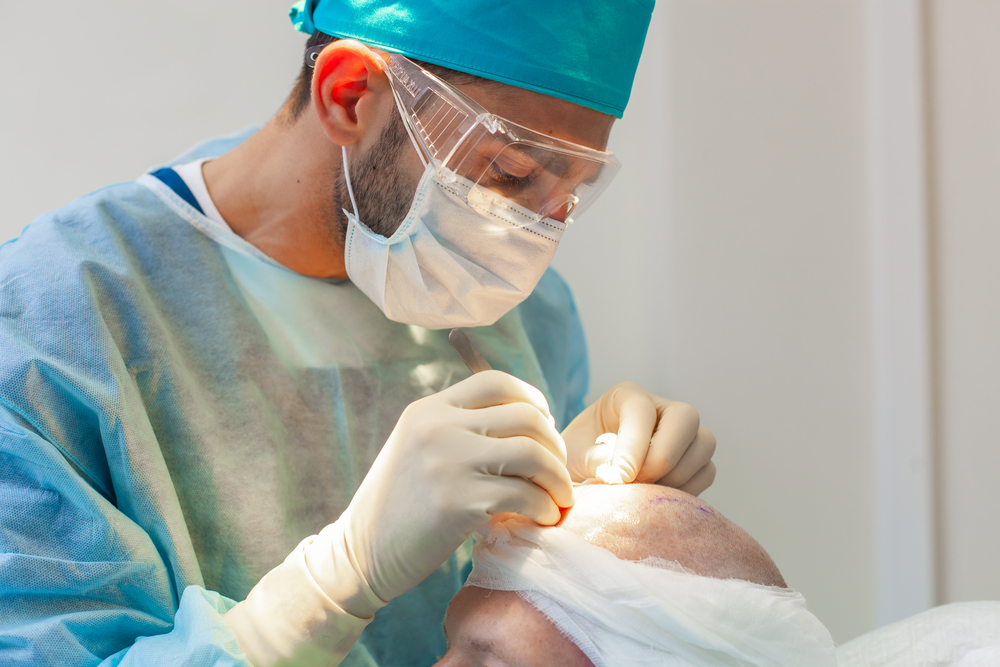
Hair loss is a concern that plagues millions worldwide. With advancements in medical technology, hair transplant procedures have become the go-to solution for many. But when it comes to choosing between FUE and FUT hair transplants, which is the superior choice? Let’s dive deep into the world of hair restoration and find out.
What is FUE Hair Transplant?
The Basics of FUE
Follicular Unit Extraction, or FUE, is the latest technology in the realm of hair transplants. In this method, individual hair follicles are extracted from the donor area and then transplanted to the balding or thinning areas.
Why Choose FUE?
- Minimally Invasive: Unlike other methods, FUE doesn’t leave a linear scar.
- Faster Recovery: Patients can resume normal activities within days.
- Natural Results: Hair grows in a pattern that mimics natural growth.
what recovery looks like after FUE
“Patients often ask which procedure is ‘better,’ but the better question is which procedure is best for their individual hair loss pattern and long-term goals. A successful hair transplant starts with selecting the right technique for the right patient.”
— Dr. Ben Mousavi
What is FUT Hair Transplant?
The Basics of FUT
Follicular Unit Transplantation, or FUT, involves removing a strip of tissue from the donor area, from which individual hair follicles are then extracted and transplanted.
The Drawbacks of FUT
- Visible Scarring: The method can leave a linear scar in the donor area.
- Longer Recovery: It might take weeks before one can return to regular activities.
- Potential for Pain: Some patients report discomfort during and after the procedure.
Comparing FUE and FUT Hair Transplant Techniques
The Evolution of Hair Transplants
Remember the days when hair transplants were easily noticeable? Those days are long gone, thanks to FUE. Think of FUE as the smartphone of hair transplants, while FUT is the old flip phone. Both work, but one is clearly more advanced.
Which Procedure Is Right for You?
Both FUE and FUT can produce excellent results when performed by an experienced hair restoration surgeon. The right choice depends on several factors, including your pattern of hair loss, donor hair characteristics, hairstyle preferences, and long-term treatment goals.
At Concord Hair Restoration, we most commonly recommend advanced FUE because it allows for precise follicular extraction, minimal visible scarring, and greater flexibility for patients who prefer shorter hairstyles. However, every treatment recommendation is based on an individualized evaluation rather than a one-size-fits-all approach.
The goal is never simply to choose the newest technique—it’s to recommend the procedure that offers the safest, most natural-looking, and longest-lasting outcome for each patient.
Factors We Consider When Recommending FUE or FUT
Choosing between FUE and FUT involves much more than comparing recovery times. During your consultation, Dr. Ben Mousavi evaluates several factors to determine which approach is most appropriate, including:
- Your current pattern of hair loss
- Donor hair density and quality
- Hair caliber and texture
- The number of grafts likely to be needed
- Your preferred hairstyle and hair length
- Future hair loss progression
- Long-term donor area preservation
This comprehensive evaluation helps create a personalized treatment plan designed to achieve natural-looking results while preserving options for the future.
FAQs
- Is FUE more expensive than FUT?
- Generally, FUE might be pricier due to its advanced technique, but the benefits often justify the cost.
- How long do the results last?
- Both FUE and FUT offer permanent results. However, one’s general health and hair care play a role in longevity.
- Are there any side effects?
- As with any medical procedure, there can be side effects. However, FUE typically has fewer complications than FUT.
- How long is the recovery period for FUE?
- Most patients can return to normal activities within a week, while strenuous activities should be avoided for at least a month.
- Can I undergo both FUE and FUT?
- It’s possible, but it’s best to consult with a hair transplant specialist to determine the best course of action.
Learn More About Hair Restoration Options in Los Angeles
Understanding the differences between FUE and FUT is only one part of choosing the right treatment. Successful hair restoration also depends on careful donor area management, personalized hairline design, graft distribution, and long-term planning. Visit our comprehensive Hair Transplant Los Angeles page to learn more about advanced FUE procedures, patient candidacy, the consultation process, recovery, and how Concord Hair Restoration develops customized treatment plans to achieve natural-looking, long-lasting results.
Schedule Your Personalized Consultation
No two patients experience hair loss in exactly the same way. During your consultation, Dr. Ben Mousavi will evaluate your hair loss pattern, donor hair quality, scalp health, and cosmetic goals to determine whether FUE, FUT, or another treatment approach is most appropriate. Our goal is to provide honest recommendations that prioritize natural-looking results, long-term donor preservation, and your overall satisfaction.
If you’re considering hair restoration in Southern California, we’re here to help you make an informed decision with a treatment plan designed specifically for you.
📍 Encino (Los Angeles): (818) 800-2002
📍 San Diego: (619) 905-4247