Hair Restoration Before & After Case Studies
Real Patient Journeys From Consultation to Results
Choosing to undergo a hair transplant is an important decision. While before-and-after photos provide a glimpse of the final outcome, they don’t always explain the planning, decision-making, and personalized treatment that make natural-looking results possible.
At Concord Hair Restoration, every patient receives an individualized treatment plan based on their pattern of hair loss, donor hair availability, facial proportions, long-term goals, and overall health.
Our Hair Restoration Case Studies provide a closer look at how Dr. Ben Mousavi approaches each patient differently. These real patient journeys highlight consultation findings, treatment recommendations, graft planning, recovery milestones, and final outcomes.
Whether you’re considering a hair transplant in Los Angeles or San Diego, these examples can help you better understand what to expect during your own hair restoration journey.
Why Every Hair Restoration Case Is Different
No two patients experience hair loss in exactly the same way.
Factors that influence treatment planning include:
- Hair loss pattern
- Hair density
- Donor area quality
- Hair texture
- Facial proportions
- Age
- Long-term hair loss progression
- Cosmetic goals
Rather than recommending the same procedure for every patient, Dr. Ben Mousavi develops personalized treatment plans designed to create natural-looking, long-lasting results while preserving future treatment options.
Featured Hair Restoration Case Studies
Below are several examples of patients treated by Dr. Ben Mousavi using advanced Follicular Unit Extraction (FUE) techniques.
As additional patient stories become available, this page will continue expanding to showcase a wider variety of hair restoration procedures and outcomes.
Hairline Restoration Case Study
Restoring a Receding Hairline With Advanced FUE Hair Restoration
Patient Snapshot
Primary Concern: Receding frontal hairline
Procedure: Advanced Follicular Unit Extraction (FUE)
Treatment Goal: Restore a natural-looking hairline while preserving donor hair for the future
Physician: Dr. Ben Mousavi, MD
Location: Los Angeles
One of the earliest and most noticeable signs of hair loss is a receding hairline. As the hairline gradually moves backward, it can change facial balance, create the appearance of a larger forehead, and make patients feel older than they are.
For this patient, the goal wasn’t to create an unnaturally low hairline. Instead, Dr. Ben Mousavi focused on restoring a fuller, age-appropriate hairline that complemented the patient’s facial features while maintaining flexibility for the future.
Every hair restoration procedure at Concord Hair Restoration begins with a comprehensive consultation. Dr. Mousavi carefully evaluated the patient’s pattern of hair loss, donor hair availability, hair characteristics, facial proportions, and long-term goals before developing a personalized treatment plan.
The Challenge
Like many patients experiencing male pattern hair loss, this individual developed gradual recession along the frontal hairline.
The treatment plan focused on several key objectives:
- Restore a stronger, more youthful hairline
- Maintain a natural appearance
- Create soft, irregular hairline transitions
- Preserve donor hair for future needs
- Achieve results that will continue looking natural over time
Rather than following a standardized approach, every recommendation was customized to this patient’s unique hair characteristics and long-term treatment goals.
Dr. Ben’s Treatment Philosophy
Designing a natural hairline requires both medical expertise and artistic judgment.
During the planning process, Dr. Mousavi evaluated:
- Existing hair density
- Hair texture and caliber
- Natural hair direction
- Facial proportions
- Donor area quality
- Expected future hair loss
These factors helped determine the ideal placement of each follicular unit to create a hairline that blends seamlessly with the patient’s existing hair while aging naturally over time.
The Procedure
Using advanced Follicular Unit Extraction (FUE), individual follicular units were carefully harvested from the donor area and strategically transplanted into the frontal hairline.
Every graft was placed according to its natural angle, direction, and density to recreate the appearance of naturally growing hair. The objective was not simply to add more hair, but to restore facial harmony through careful planning and precise execution.
The Results
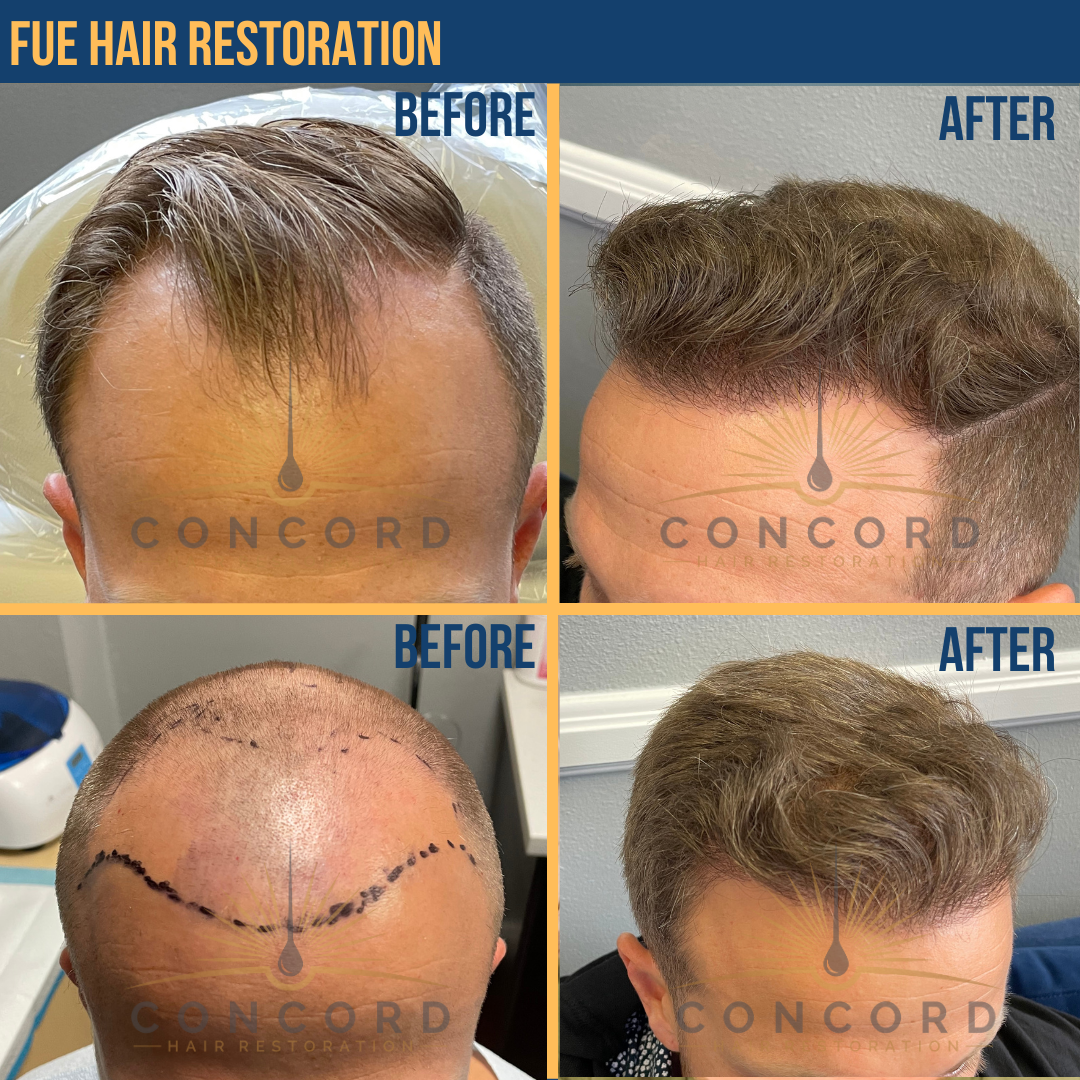
The before-and-after photographs demonstrate a fuller, more defined hairline while maintaining a natural appearance.
Instead of dramatically changing the patient’s overall look, the procedure restored balance to the upper face and enhanced facial framing in a subtle way. The final result complements the patient’s existing hairstyle while preserving a mature, age-appropriate hairline.
One of the hallmarks of successful FUE hair restoration is that the results appear natural enough that most people simply notice the patient looks younger or more refreshed without recognizing why.
Why This Case Matters
Every successful hair transplant begins long before the procedure itself.
Natural-looking results are created through careful consultation, thoughtful donor management, individualized treatment planning, and meticulous hairline design—not simply by transplanting the highest possible number of grafts.
This case demonstrates how a personalized approach can restore confidence while preserving donor hair and maintaining options for the future.
Dr. Ben’s Perspective
“One of the most important decisions we make isn’t how many grafts to transplant—it’s where to place them. My goal is always to design a hairline that looks natural today and continues to look natural for years to come. Every patient deserves a treatment plan that’s personalized to their facial features, hair characteristics, and long-term goals.”
— Dr. Ben Mousavi, MD
Interested in Learning More?
If you’re considering a Hair Transplant in Los Angeles, Dr. Ben Mousavi provides personalized consultations designed around your unique pattern of hair loss, donor hair availability, and long-term goals.
Crown Hair Restoration
Improving Crown Density While Preserving Donor Hair
Patient Snapshot
Primary Concern: Crown thinning and diffuse hair loss
Procedure: Advanced FUE Hair Restoration
Treatment Goal: Improve crown density while preserving donor hair for future hair loss
Physician: Dr. Ben Mousavi, MD
Location: Los Angeles
The crown, often called the “vertex,” is one of the most challenging areas to restore with a hair transplant. Unlike the hairline, the crown contains a natural spiral growth pattern and often continues thinning over time. Successful treatment requires careful planning, strategic graft placement, and thoughtful donor management.
For this patient, the primary goal was to improve overall density while maintaining a natural appearance and preserving donor hair for any future treatment that may become necessary.
Every patient at Concord Hair Restoration receives a personalized consultation. Before recommending treatment, Dr. Ben Mousavi evaluated the patient’s hair loss pattern, donor density, hair characteristics, crown size, and long-term goals to develop an individualized treatment plan.
The Challenge
This patient presented with significant thinning throughout the crown and vertex region while also experiencing recession toward the front of the scalp.
Because crown hair loss often progresses gradually over time, treatment planning needed to balance today’s cosmetic improvement with future flexibility.
The treatment goals included:
- Improve crown density
- Create natural coverage
- Preserve donor hair
- Respect the crown’s natural growth pattern
- Develop a long-term restoration strategy
Rather than attempting to completely fill every area of thinning in a single procedure, the focus was on creating balanced density that would continue looking natural as the patient’s hair changed over time.
Dr. Ben’s Treatment Philosophy
The crown is one of the most technically demanding areas of hair restoration.
Unlike the frontal hairline, the crown contains a circular “whorl” pattern that requires follicles to be placed at multiple angles and directions to recreate natural hair growth.
During treatment planning, Dr. Mousavi carefully evaluated:
- Existing crown density
- Donor hair availability
- Hair caliber
- Hair direction
- Hair texture
- Long-term progression of hair loss
- Future treatment options
Every recommendation was based on achieving a natural appearance while preserving healthy donor follicles for years to come.
The Procedure
Using advanced Follicular Unit Extraction (FUE), individual follicular units were carefully harvested from the donor area and strategically transplanted throughout the thinning crown.
Special attention was given to recreating the crown’s natural swirl pattern, allowing transplanted follicles to blend with the patient’s existing hair and produce a more natural appearance as growth developed.
Each graft was placed with precision to maximize cosmetic improvement while maintaining flexibility for future procedures if needed.
The Results
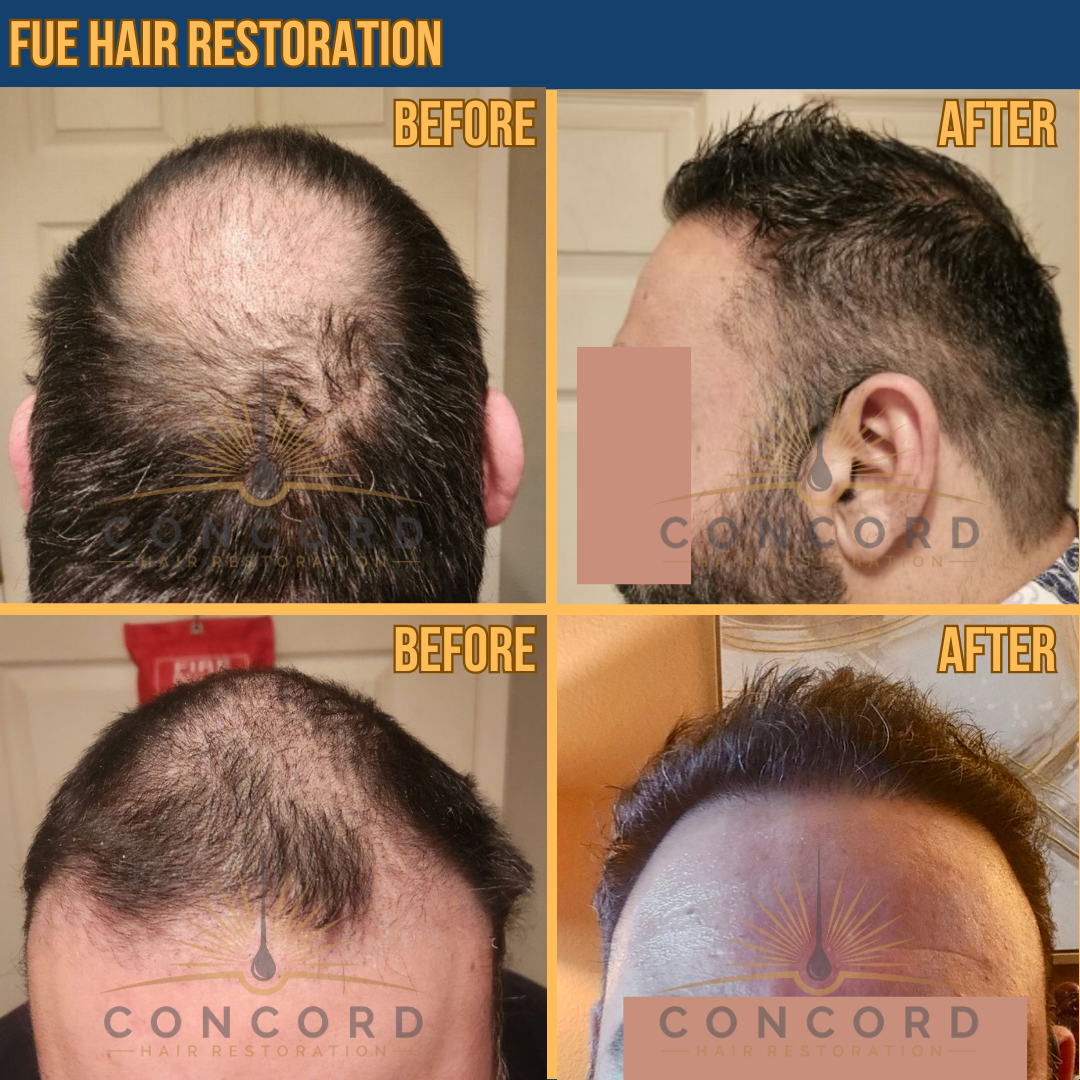
The before-and-after photographs demonstrate a noticeable improvement in overall crown coverage and hair density.
Rather than creating an unnaturally dense appearance, the restoration was designed to provide balanced coverage that complements the patient’s existing hair while respecting the natural growth pattern of the crown.
The result is fuller-looking hair that maintains a natural appearance from multiple viewing angles.
Why This Case Matters
Crown restoration requires a different approach than frontal hairline restoration.
Because the crown often continues thinning over time, successful treatment depends on long-term planning rather than simply transplanting as many grafts as possible.
This case demonstrates how careful donor preservation, strategic graft placement, and individualized treatment planning can improve density while maintaining options for the future.
Dr. Ben’s Perspective
“The crown is one of the most complex areas to restore because every patient’s growth pattern is unique. My goal is to improve density while respecting the natural swirl of the crown and preserving donor hair so patients continue to have options if hair loss progresses in the future.”
— Dr. Ben Mousavi, MD
Female Hair Restoration
Personalized Hair Restoration for Female Pattern Hair Loss
Patient Snapshot
Primary Concern: Diffuse thinning along the top of the scalp
Procedure: Advanced FUE Hair Restoration
Treatment Goal: Restore hair density while maintaining a natural appearance
Physician: Dr. Ben Mousavi, MD
Location: Los Angeles
Hair loss affects millions of women, yet female hair restoration requires a very different approach than traditional male pattern hair loss. Rather than focusing on restoring a receding hairline, treatment often centers on improving overall density while preserving existing hair and creating natural-looking fullness.
For this patient, the primary concern was progressive thinning throughout the top of the scalp that had become increasingly noticeable over time. The goal was to improve density while maintaining a soft, natural appearance that blended seamlessly with her existing hair.
Every consultation at Concord Hair Restoration begins with a personalized evaluation. Before recommending treatment, Dr. Ben Mousavi carefully assessed the patient’s pattern of hair loss, donor hair availability, scalp health, hair characteristics, and long-term goals to develop an individualized treatment plan.
The Challenge
Unlike many male patients, women often experience diffuse thinning across larger areas of the scalp rather than isolated bald spots.
This patient’s treatment plan focused on:
- Improve overall hair density
- Preserve existing healthy hair
- Maintain a natural hairline
- Blend transplanted hair with surrounding hair
- Create long-term, natural-looking results
Because women frequently continue experiencing gradual thinning over time, every recommendation emphasized both immediate improvement and long-term planning.
Dr. Ben’s Treatment Philosophy
Hair restoration for women requires careful planning and a conservative approach.
During treatment planning, Dr. Mousavi evaluated:
- Pattern of hair thinning
- Existing hair density
- Donor hair quality
- Hair texture
- Scalp condition
- Facial proportions
- Long-term treatment goals
Rather than applying the same techniques commonly used for male hair restoration, every procedure was customized to preserve existing hair while improving density in areas affected by thinning.
The Procedure
Using advanced Follicular Unit Extraction (FUE), individual follicular units were carefully harvested from the donor area and strategically transplanted throughout the areas of thinning.
Every graft was placed to blend naturally with the patient’s existing hair, increasing density without creating an artificial appearance.
Careful planning helped maximize cosmetic improvement while preserving donor hair for any future treatment that may become beneficial.
The Results
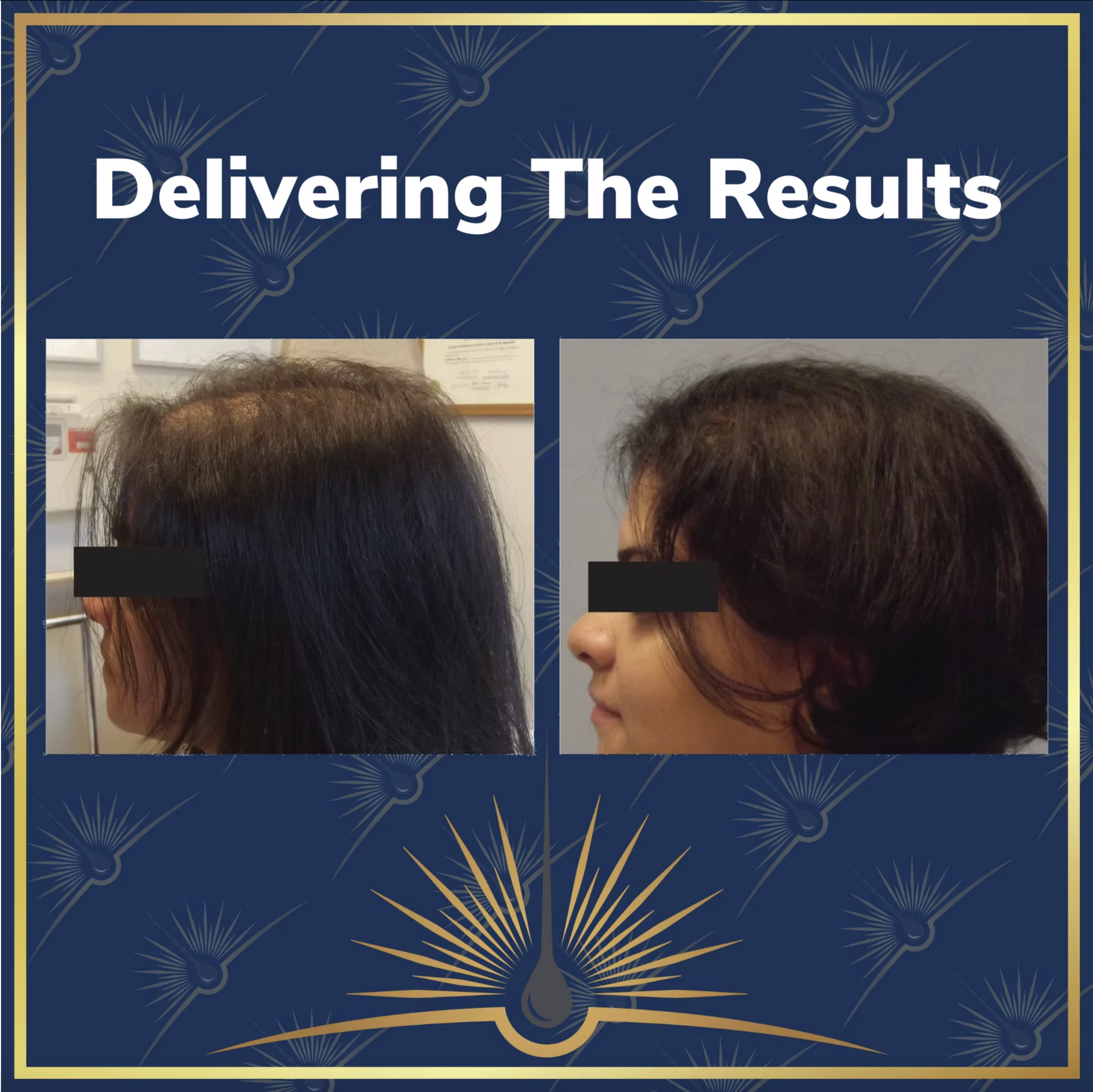
The before-and-after photographs demonstrate improved density throughout the treated area while maintaining the patient’s natural hairstyle and overall appearance.
Rather than dramatically changing the patient’s look, the restoration created fuller-looking hair that blends naturally with existing growth and enhances overall confidence.
One of the goals of female hair restoration is for the improvement to appear subtle and natural, allowing patients to style their hair with greater confidence without drawing attention to the procedure itself.
Why This Case Matters
Female hair restoration differs significantly from traditional male hair transplantation.
Women often require a more individualized approach because hair loss patterns, donor availability, and treatment goals vary considerably from patient to patient.
This case demonstrates how personalized planning, physician experience, and thoughtful graft placement can improve density while preserving a natural appearance.
Dr. Ben’s Perspective
“Hair restoration for women is never a one-size-fits-all procedure. Every patient has different hair characteristics, patterns of thinning, and cosmetic goals. My priority is always to create natural-looking density while preserving healthy hair and developing a treatment plan that continues to look beautiful for years to come.”
— Dr. Ben Mousavi, MD
Beard Hair Transplant
Restoring Facial Hair Density With Advanced FUE Beard Restoration
Patient Snapshot
Primary Concern: Patchy beard growth and limited facial hair density
Procedure: Advanced FUE Beard Hair Transplant
Treatment Goal: Create a fuller, natural-looking beard while preserving natural growth patterns
Physician: Dr. Ben Mousavi, MD
Location: Los Angeles
A full, well-defined beard plays an important role in facial balance and overall appearance. However, many men naturally experience patchy beard growth, uneven density, or areas where facial hair never fully develops.
For this patient, the goal was to create a fuller, more symmetrical beard while maintaining a completely natural appearance. Rather than simply increasing density, the treatment focused on recreating the natural direction, angle, and growth pattern of facial hair.
Every consultation at Concord Hair Restoration begins with individualized treatment planning. Dr. Ben Mousavi carefully evaluated the patient’s facial structure, existing beard growth, donor hair quality, and cosmetic goals before developing a personalized beard restoration plan.
The Challenge
This patient wanted to improve beard fullness while maintaining a result that looked completely natural from every angle.
The treatment goals included:
- Increase beard density
- Fill patchy areas
- Improve facial symmetry
- Match natural beard growth direction
- Create long-lasting, natural-looking results
Because facial hair grows at different angles throughout the cheeks, jawline, mustache, and chin, every graft placement required careful planning.
Dr. Ben’s Treatment Philosophy
Beard restoration is much more than simply transplanting hair.
To achieve natural results, every follicle must be placed to match the patient’s existing facial hair pattern.
During treatment planning, Dr. Mousavi evaluated:
- Existing beard density
- Hair texture
- Hair caliber
- Facial proportions
- Hair growth direction
- Donor hair characteristics
- Long-term cosmetic goals
These details help ensure transplanted hair blends seamlessly with the patient’s natural beard.
The Procedure
Using advanced Follicular Unit Extraction (FUE), individual follicular units were carefully harvested from the donor area and transplanted into areas of facial hair loss.
Each graft was strategically placed to match the natural angle and direction of surrounding facial hair, creating smooth transitions throughout the beard.
Because beard hair is viewed at close range, careful graft placement plays a critical role in producing results that appear completely natural.
The Results
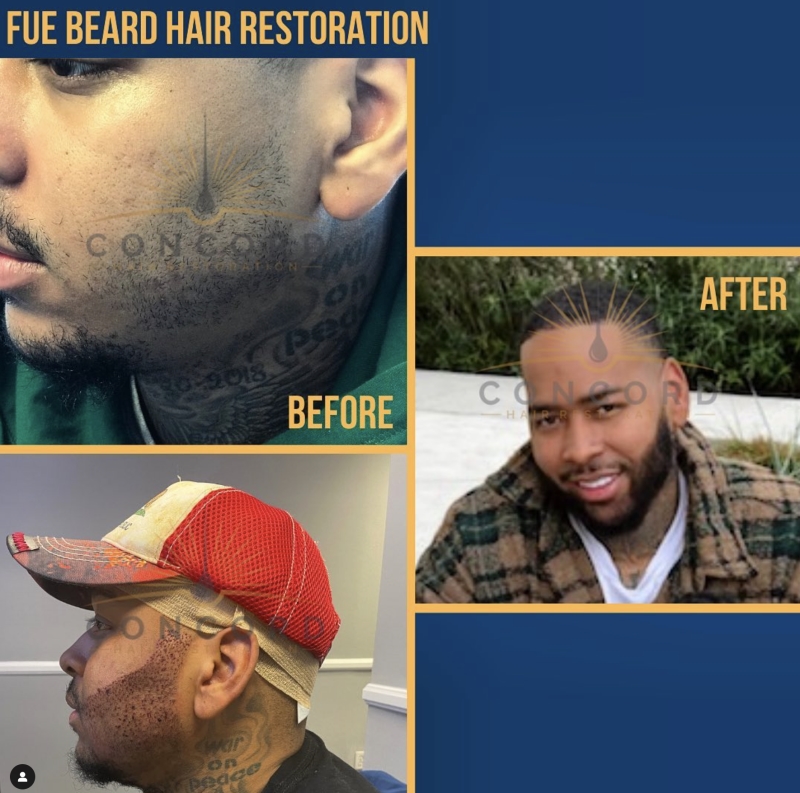
The before-and-after photographs demonstrate significantly improved beard density and facial framing while maintaining a natural appearance.
Rather than looking transplanted or overly dense, the restored beard blends naturally with the patient’s existing facial hair, creating a fuller and more balanced appearance.
The final result enhances facial definition while allowing the patient to groom and style the beard naturally.
Why This Case Matters
Beard transplantation requires a different approach than scalp hair restoration.
Every graft must follow the unique direction, angle, and density of facial hair to achieve realistic results.
This case demonstrates how careful planning, physician experience, and meticulous graft placement can restore facial hair while preserving a completely natural appearance.
Dr. Ben’s Perspective
“A successful beard transplant shouldn’t look like a transplant. Every follicle has to follow the natural direction and flow of facial hair so the final result blends seamlessly with the patient’s existing beard. My goal is to create density that looks completely natural whether the beard is worn short or full.”
— Dr. Ben Mousavi, MD
Ethnic Hair Restoration
Specialized FUE Hair Restoration for Curly and Textured Hair
Patient Snapshot
Primary Concern: Hairline recession
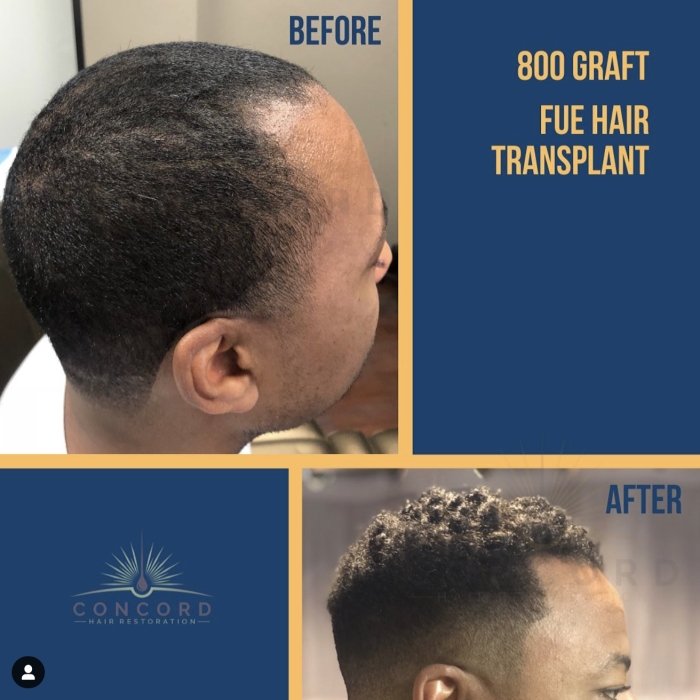
Procedure: 800-Graft FUE Hair Transplant
Hair Type: Curly / Textured Hair
Treatment Goal: Restore a natural hairline while preserving curl pattern and donor hair
Physician: Dr. Ben Mousavi, MD
Location: Los Angeles
Patients with curly and textured hair often have unique hair restoration needs. Hair characteristics, follicle shape, curl pattern, and donor hair density all influence how a procedure should be planned and performed.
For this patient, the goal was to restore a fuller, natural-looking hairline while maintaining the patient’s existing curl pattern and creating a result that blended seamlessly with his natural hair.
Every consultation at Concord Hair Restoration is personalized. Dr. Ben Mousavi carefully evaluated the patient’s hair characteristics, pattern of hair loss, donor area, facial proportions, and long-term goals before recommending an individualized treatment plan.
The Challenge
This patient was experiencing recession along the frontal hairline but wanted results that looked completely natural.
The treatment goals included:
- Restore the frontal hairline
- Preserve the patient’s natural curl pattern
- Create soft, natural hairline transitions
- Maintain donor density
- Achieve long-term, natural-looking results
Hair restoration for textured hair requires careful planning because curly follicles beneath the skin often follow a curved path, making harvesting and placement more technically demanding than with straight hair.
Dr. Ben’s Treatment Philosophy
Every hair type deserves an individualized approach.
For patients with curly and textured hair, Dr. Mousavi carefully evaluates:
- Curl pattern
- Hair caliber
- Hair density
- Donor area quality
- Hair growth direction
- Facial proportions
- Long-term hair loss progression
These factors help determine how each follicular unit should be harvested and placed to preserve natural growth patterns and achieve balanced, realistic density.
Rather than applying a one-size-fits-all technique, every procedure is customized to the patient’s unique hair characteristics.
The Procedure
Using advanced Follicular Unit Extraction (FUE), approximately 800 grafts were carefully harvested from the donor area and strategically placed throughout the frontal hairline.
Every graft was positioned to match the patient’s existing curl direction, angle, and natural growth pattern, helping create a seamless transition between transplanted and existing hair.
Preserving the natural characteristics of textured hair is an essential part of achieving a result that looks authentic rather than transplanted.
The Results
The before-and-after photographs demonstrate a noticeable improvement in hairline definition while maintaining the patient’s natural curl pattern and facial balance.
Instead of creating an overly aggressive or perfectly straight hairline, the restoration was designed to complement the patient’s facial features and existing hairstyle.
The result is a fuller, natural-looking hairline that enhances appearance while respecting the unique characteristics of textured hair.
Why This Case Matters
Curly and textured hair often presents unique considerations during hair restoration.
Follicles naturally curve beneath the skin, requiring careful harvesting techniques and thoughtful graft placement to preserve healthy follicles and achieve natural-looking growth.
This case demonstrates how individualized planning, physician experience, and attention to detail can produce results that blend naturally with the patient’s existing hair while preserving long-term treatment options.
Dr. Ben’s Perspective
“Every patient’s hair is unique, and textured hair requires thoughtful planning from the very beginning. My goal is always to preserve each patient’s natural curl pattern while designing a hairline that looks completely natural today and continues to look natural for years to come.”
— Dr. Ben Mousavi, MD
Interested in Learning More?
If you’re considering an ethnic hair transplant in Los Angeles, Dr. Ben Mousavi provides personalized consultations designed around your hair type, pattern of hair loss, donor area, and long-term goals.
Corrective Hair Restoration
Improving Results After Previous Hair Restoration
Some patients seek treatment after undergoing previous procedures elsewhere.
Corrective hair restoration often requires careful donor management, realistic expectations, and long-term planning.
Coming Soon

What You’ll Learn From Our Case Studies
Every patient story includes information such as:
- Initial consultation
- Hair loss pattern
- Treatment goals
- Physician evaluation
- Graft recommendations
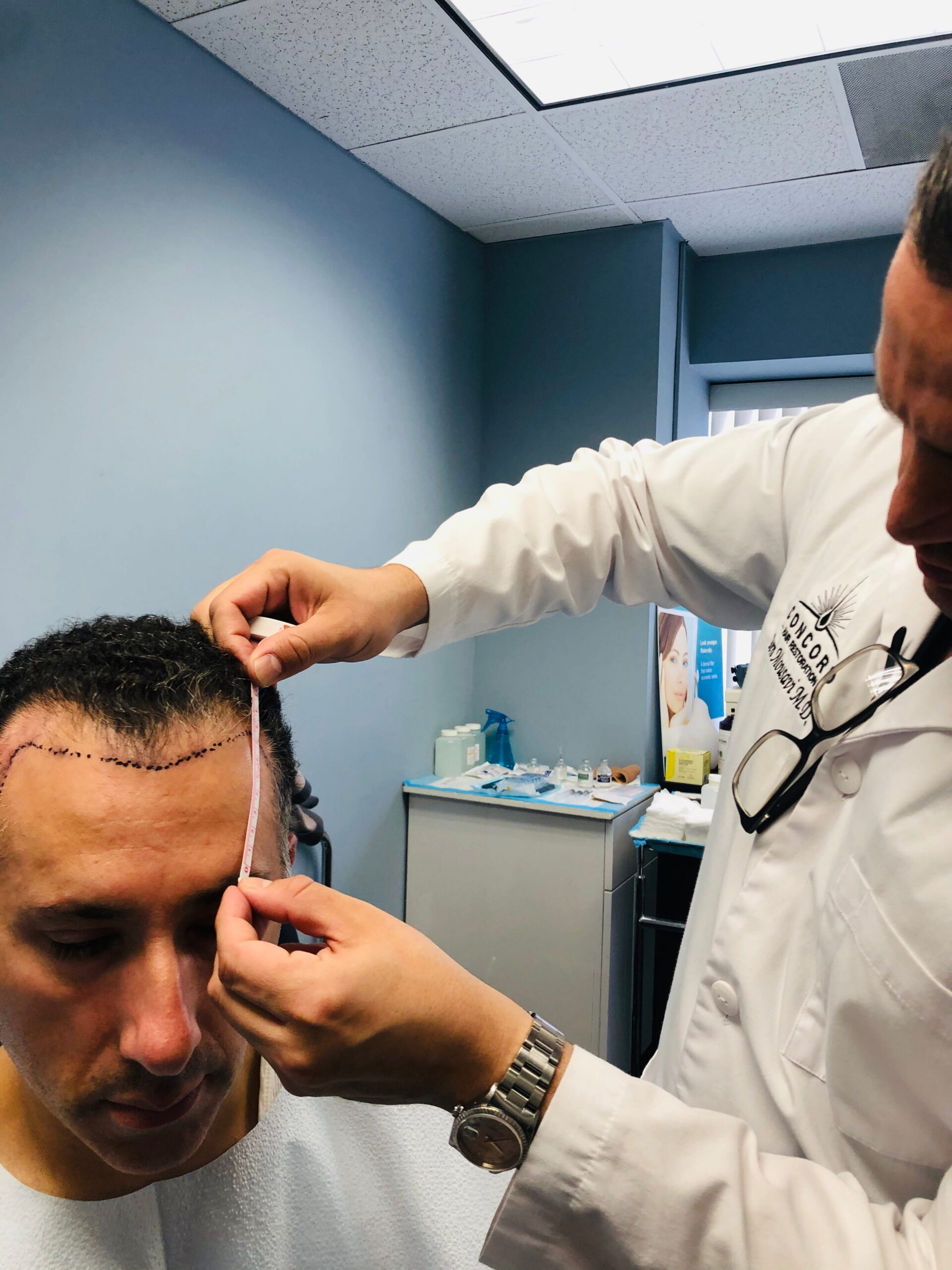
- Hairline planning
- Procedure overview
- Recovery timeline
- Before-and-after photographs
- Long-term results
- Dr. Ben’s commentary
Our goal is to provide educational information that helps patients better understand the hair restoration process while demonstrating how individualized planning contributes to natural-looking outcomes.
Why Personalized Treatment Matters
Successful hair restoration isn’t determined by graft count alone.
Natural results depend on thoughtful physician evaluation, artistic hairline design, donor preservation, and realistic long-term planning.
By sharing these patient experiences, we hope prospective patients gain a better understanding of how modern FUE hair restoration is customized to each individual’s unique needs.
Learn More About Hair Restoration
If you’re researching hair restoration, you may also find these educational resources helpful:
How Much Does a Hair Transplant Cost in Los Angeles?
Hair Transplant Recovery Timeline
Schedule a Consultation
Every patient has different goals, hair characteristics, and treatment needs.
If you’re considering hair restoration in Los Angeles or San Diego, Dr. Ben Mousavi can evaluate your hair loss pattern, discuss your goals, and develop a personalized treatment plan designed around long-term, natural-looking results.
Contact Concord Hair Restoration today to schedule your confidential consultation.
FAQs
Are these real hair restoration patients?
Yes. Every case study featured on this page is based on real patients treated at Concord Hair Restoration. Patient privacy is always respected, and images or identifying details are only shared with appropriate permission.
Why do graft counts vary between patients?
Every patient has different hair characteristics, donor density, hair loss patterns, and cosmetic goals. Treatment recommendations are personalized rather than based on a standard number of grafts.
Will my hair transplant results look like these case studies?
Every patient is unique. While case studies demonstrate real treatment outcomes, individual results vary depending on hair characteristics, donor supply, healing, and long-term hair loss progression.
Why are patient case studies helpful?
Case studies provide insight into the consultation process, treatment planning, recovery, and long-term outcomes. They help prospective patients better understand how personalized hair restoration decisions are made.
Does Dr. Ben Mousavi personally evaluate every patient?
Yes. Dr. Ben Mousavi personally evaluates each patient and develops individualized treatment recommendations based on their hair loss pattern, donor area, and long-term goals.