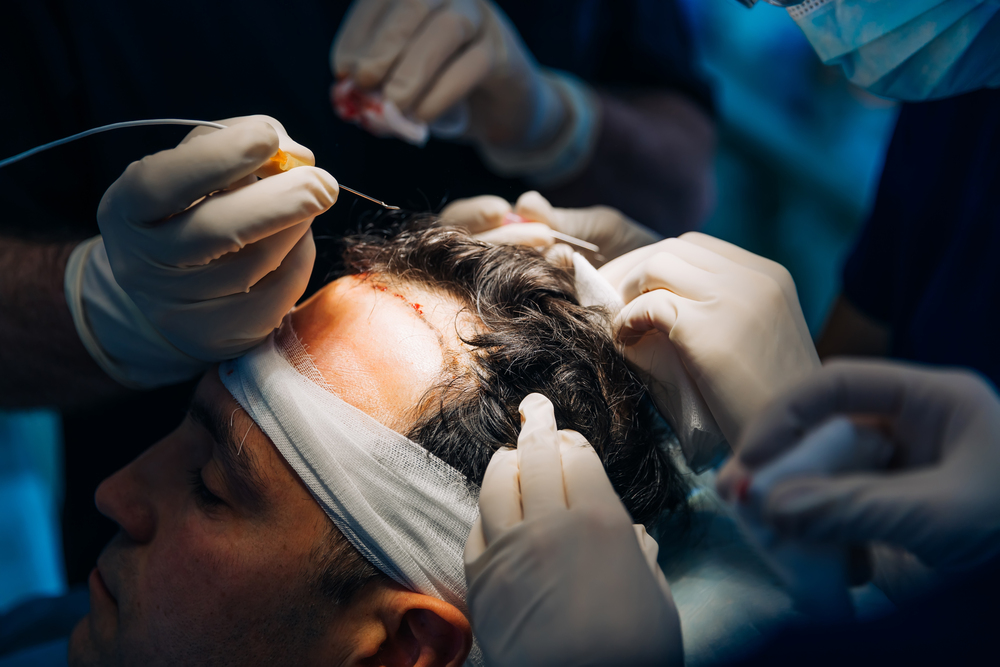
Hair transplant technology has changed considerably over the years, but the most important advances in hair restoration aren’t simply about using newer equipment.
Modern hair transplantation combines precise follicular-unit harvesting, strategic donor management, natural hairline design, careful graft placement, and long-term treatment planning.
For patients considering hair restoration in Los Angeles, understanding these techniques can make it easier to compare clinics and determine what actually matters when choosing a provider.
Here’s what patients should know about today’s advanced hair transplant techniques—and why technology is only one part of achieving natural-looking results.
What Makes a Hair Transplant Technique “Advanced”?
The term “advanced” gets used frequently in cosmetic medicine.
But newer technology doesn’t automatically produce better hair transplant results.
Modern hair restoration should focus on several objectives:
- Preserving healthy donor follicles
- Minimizing unnecessary scalp trauma
- Creating natural-looking hairlines
- Reproducing natural growth direction
- Strategically distributing grafts
- Minimizing visible scarring
- Planning for potential future hair loss
- Creating results appropriate for the patient’s age and facial features
The equipment used during the procedure can assist with these goals, but the treatment plan ultimately determines how that technology is used.
Follicular Unit Extraction (FUE)
One of the most significant developments in modern hair restoration has been Follicular Unit Extraction (FUE).
With FUE, individual follicular units are harvested from the donor area rather than removing a strip of scalp.
This offers several potential advantages:
✔ No long linear donor scar
✔ Individual follicular-unit harvesting
✔ Strategic distribution of donor extraction
✔ Flexibility for patients who prefer shorter hairstyles
✔ Ability to select individual follicular units
✔ Relatively quick return to many normal activities
However, FUE still creates small extraction sites, and careful donor management remains important.
Patients interested in the procedure itself can read our complete guide to Follicular Unit Extraction (FUE).
FUE vs. Traditional FUT Hair Transplantation
Before FUE became widely adopted, Follicular Unit Transplantation (FUT), sometimes called strip surgery, was a common method of obtaining donor follicles.
FUT involves removing a strip of donor scalp and separating it into individual follicular units for transplantation.
The primary difference between the techniques is therefore how donor follicles are harvested.
FUE avoids the long linear donor scar associated with FUT, while FUT may still have advantages for certain patients depending on graft requirements, donor characteristics, previous procedures, and treatment goals.
Rather than assuming that one technique is universally superior, the procedure should be selected according to the individual patient.
Our FUE vs. FUT comparison explains those differences in greater detail.
What Is NeoGraft?
NeoGraft is a device designed to assist with certain stages of FUE hair transplantation.
Technology like this can help facilitate follicular-unit harvesting, but it’s important for patients to understand an important distinction:
NeoGraft is a tool. FUE is the hair transplant technique.
A device does not independently determine:
- Where your hairline should begin
- What shape your hairline should have
- How many grafts you need
- Which follicles should be harvested
- Where those grafts should be placed
- The appropriate graft angles
- How donor hair should be preserved
- How future hair loss should be addressed
Those decisions are part of the clinical and aesthetic treatment plan.
That’s why patients shouldn’t choose a hair transplant clinic solely because it advertises a particular machine or technology.
Advanced Hairline Design
One of the most important areas of modern hair transplantation isn’t mechanical at all.
It’s hairline design.
A natural-looking hairline should complement the patient’s:
- Facial proportions
- Age
- Existing hair
- Temple recession
- Hair caliber
- Hair texture
- Donor supply
- Pattern of hair loss
Hairlines also aren’t naturally perfectly straight or uniformly dense.
Careful use of follicular units can create subtle transitions and irregularities that more closely resemble naturally growing hair.
Why Graft Angle and Direction Matter
Hair grows differently throughout the scalp.
Follicles near the frontal hairline emerge at different angles than follicles farther back.
The temples have their own growth direction.
The crown frequently forms a whorl pattern.
If transplanted follicles are placed at inappropriate angles or directions, the hair can appear unnatural even if the grafts grow successfully.
Modern recipient-site planning therefore considers where the follicle is placed as well as the angle and direction in which the resulting hair should grow.
Strategic Graft Selection
Individual follicular units may contain different numbers of hairs.
This allows the treatment plan to use different graft types strategically.
For example, finer or single-hair follicular units may be useful near the leading edge of a hairline where a softer transition is desired.
Multi-hair follicular units may be strategically positioned farther behind the hairline to contribute additional visual density.
This type of planning can help create the appearance of natural progression rather than an abrupt wall of transplanted hair.
Advanced Donor Area Management
The donor area is one of the most important resources in hair transplantation.
And it’s limited.
FUE doesn’t create new follicles. It redistributes existing follicles from one location to another.
That means removing too many grafts—or concentrating extraction improperly—can affect the appearance of the donor region.
Advanced donor planning considers:
- Donor density
- Hair caliber
- Extraction distribution
- Existing miniaturization
- Previous procedures
- Number of grafts required
- Potential future transplant needs
The objective isn’t simply to harvest as many follicles as possible.
It’s to use the available donor supply strategically over the patient’s lifetime.
More Grafts Aren’t Always More Advanced
Patients comparing Los Angeles hair transplant clinics may receive very different graft estimates.
It can be tempting to assume that the clinic recommending the largest number offers the best value.
That’s not necessarily the case.
An appropriate graft count depends on:
- Size of the treatment area
- Existing native hair
- Donor density
- Hair characteristics
- Desired coverage
- Hairline design
- Future hair loss
- Long-term donor requirements
A strategically placed graft can potentially contribute more to the visual result than simply maximizing graft numbers without considering the bigger picture.
Advanced Hair Transplant Planning Considers Future Hair Loss
One limitation of every hair transplant technique is that transplanting hair doesn’t automatically stop existing native hair from continuing to thin.
This matters tremendously when planning a procedure.
For example, imagine creating an extremely low, dense frontal hairline in a younger patient who later loses substantial hair behind it.
The transplanted hairline may remain while the surrounding native hair continues receding.
That can create an unnatural pattern and require additional procedures.
Modern hair restoration planning should therefore consider not only what the patient looks like today, but what their hair-loss pattern may look like in the future.
Can Advanced Techniques Create a Scar-Free Hair Transplant?
This is another area where I’d correct the language from the old page.
You’ll frequently see FUE described online as “scar-free.”
That’s not technically accurate.
Any surgical procedure that creates an opening in the skin can produce some degree of scarring.
The advantage of FUE is that it does not create the long linear donor scar associated with FUT.
Instead, individual extraction sites heal throughout the donor region and may become difficult to notice depending on factors such as extraction technique, donor characteristics, healing, hairstyle, and individual scarring.
That’s a much more accurate way to explain the advantage.
Do Advanced Hair Transplants Have Less Downtime?
Modern FUE techniques can allow many patients to return to ordinary activities relatively quickly.
However, “no downtime” isn’t a particularly useful promise because the scalp still needs time to heal.
During the early recovery period, patients may experience:
- Redness
- Small scabs
- Swelling
- Mild tenderness
- Temporary shedding
- Visible signs of recent treatment
Patients should follow their physician’s individual recovery instructions.
Our guide to care after hair transplant surgery explains the general recovery process in more detail.
What Happens After an Advanced FUE Procedure?
Even the most advanced hair transplant doesn’t produce instant final results.
Hair restoration follows the body’s normal healing and hair-growth processes.
A typical progression may include:
First Few Weeks
The scalp heals while small scabs and redness gradually improve.
Weeks 2–8
Many transplanted hair shafts shed.
This can concern patients, but shedding doesn’t necessarily mean the transplanted follicles have been lost.
Months 3–6
Early new hair growth may begin appearing.
Months 6–9
More visible growth and density can develop.
12 Months and Beyond
Transplanted hair continues gaining length, thickness, and maturity.
Our complete hair transplant timeline explains these stages in greater detail.
What Should Los Angeles Patients Look for Beyond Technology?
Los Angeles is a competitive cosmetic-treatment market, and patients may encounter clinics advertising numerous technologies, devices, proprietary techniques, and impressive-sounding terminology.
Rather than focusing only on equipment, ask questions about the treatment plan.
Consider asking:
Who performs the important stages of my procedure?
Understand the roles of the physician and clinical team.
How was my graft estimate determined?
Ask why that number is appropriate for your particular hair loss and donor supply.
How will my donor area be protected?
Your donor follicles are limited.
How was my hairline designed?
There should be a reason behind its position, shape, and density.
How will you account for future hair loss?
This is particularly important for younger patients.
Can I see results from patients with hair loss similar to mine?
Comparable cases can be particularly useful when evaluating results.
Technology vs. Technique vs. Treatment Planning
One of the easiest ways to understand modern hair transplantation is to separate these three concepts:
Technology = the equipment used during portions of the procedure.
Technique = how donor follicles are harvested and transplanted.
Treatment planning = deciding which follicles to use, how many are needed, where they should go, what the hairline should look like, and how the result fits into the patient’s long-term hair-loss pattern.
All three can matter.
But advanced equipment cannot compensate for poor planning.
That’s why patients should evaluate the entire approach rather than choosing a clinic based solely on the name of a device.
Considering Advanced Hair Transplantation in Los Angeles?
Modern hair restoration offers patients more refined options than were available in previous generations.
But the biggest improvements aren’t simply machines.
Natural-looking results depend on combining modern techniques with appropriate patient selection, hairline design, graft placement, donor preservation, and long-term planning.
If you’re considering a hair transplant in Los Angeles, Concord Hair Restoration offers personalized consultations to evaluate your hair-loss pattern, donor characteristics, goals, and potential treatment options.
Understanding both the possibilities and limitations of modern hair restoration can help you make a more informed decision about your treatment.
Frequently Asked Questions
What is the most advanced hair transplant technique?
FUE is one of the most widely used modern hair transplant techniques. However, no technique is automatically best for every patient. Donor characteristics, hair-loss pattern, graft requirements, previous procedures, and long-term goals all influence treatment selection.
What is the difference between FUE and NeoGraft?
FUE is a method of harvesting individual follicular units. NeoGraft is a device that can assist with portions of the FUE process. The technology does not independently determine hairline design, graft distribution or the overall treatment plan.
Is FUE scar-free?
No surgical procedure should literally be considered scar-free. FUE avoids the long linear donor scar associated with FUT but creates small individual extraction sites that heal throughout the donor region.
Does advanced technology make a hair transplant look more natural?
Technology can assist with parts of a procedure, but natural-looking results also depend heavily on hairline design, follicular-unit selection, graft direction, density planning and donor management.
How long does advanced FUE take to recover from?
Many patients return to ordinary activities relatively quickly, but visible healing can continue during the first several weeks. Individual recovery varies.
When does FUE hair begin growing?
Early new growth may become noticeable several months after transplantation, with additional density and maturation developing over the following months.
Why is donor management important?
The donor supply is limited. Careful extraction helps maintain the donor area’s appearance while preserving follicles that may be useful for future restoration.
What should I look for in a Los Angeles hair transplant clinic?
Look beyond the technology being advertised. Consider treatment planning, hairline design, donor management, procedural involvement, relevant before-and-after results, recovery guidance and planning for future hair loss.