Hair Transplant Timeline: What to Expect From Recovery and Growth
Hair transplant results develop gradually.
After surgery, the scalp goes through an early healing phase, transplanted hairs may shed, and new growth develops progressively over the following months.
Understanding the hair transplant timeline can help you know what is normal during recovery and when visible changes may begin.
Every patient heals differently, so exact timing can vary depending on the procedure, number of grafts, treatment area, hair characteristics, and individual healing.
If you’re still researching treatment options, visit our Hair Transplant Los Angeles page for an overview of our Los Angeles hair restoration services.
For a detailed explanation of the procedure itself, see our FUE Hair Transplant Los Angeles guide.
Hair Transplant Timeline at a Glance
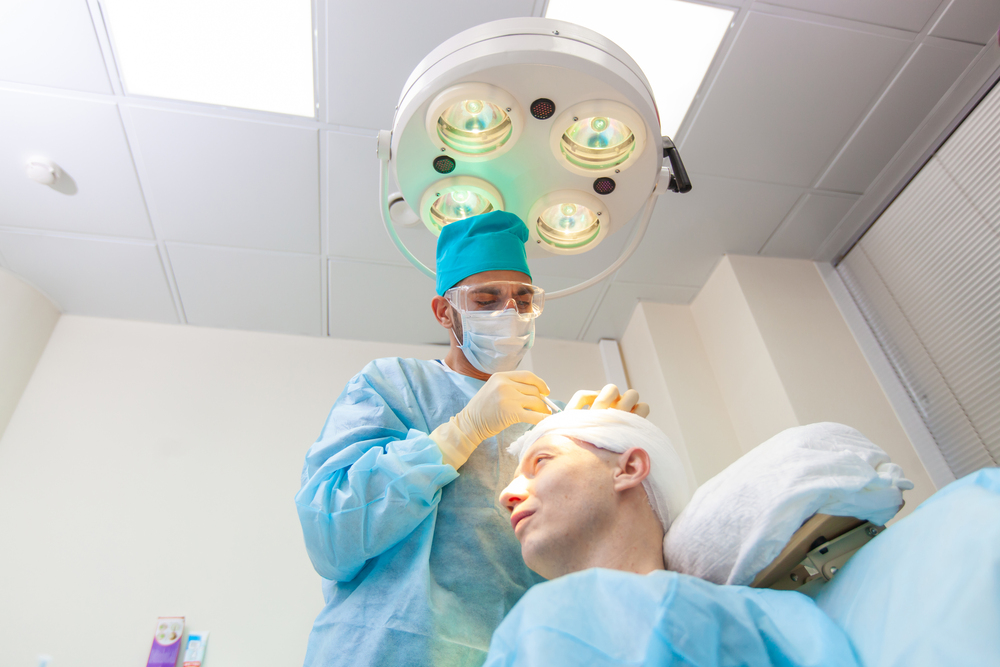
A general hair transplant recovery and growth timeline may look like this:
Day of surgery: Grafts are transplanted and early healing begins.
Days 1–7: Redness, tenderness, swelling, and small scabs may be present.
Weeks 2–4: Transplanted hairs may begin shedding.
Months 1–3: The scalp continues healing while transplanted follicles remain beneath the skin.
Months 3–6: Early new growth may begin to appear.
Months 6–9: Hair growth generally becomes more noticeable.
Months 9–12: Density, length, and texture continue improving.
Months 12–18: Hair may continue maturing and the overall result becomes easier to evaluate.
These stages are general. Your individual recovery may be faster or slower.
Before Your Hair Transplant
The timeline begins before the procedure.
During your consultation, your treatment team may evaluate:
- Hair-loss pattern
- Donor density
- Hair characteristics
- Scalp condition
- Medical history
- Previous procedures
- Treatment goals
- Estimated graft requirements
You should also receive personalized instructions regarding preparation for surgery.
If you’re preparing for your first appointment, read What to Expect During Your First Hair Transplant Consultation in Los Angeles.

Day of Your Hair Transplant
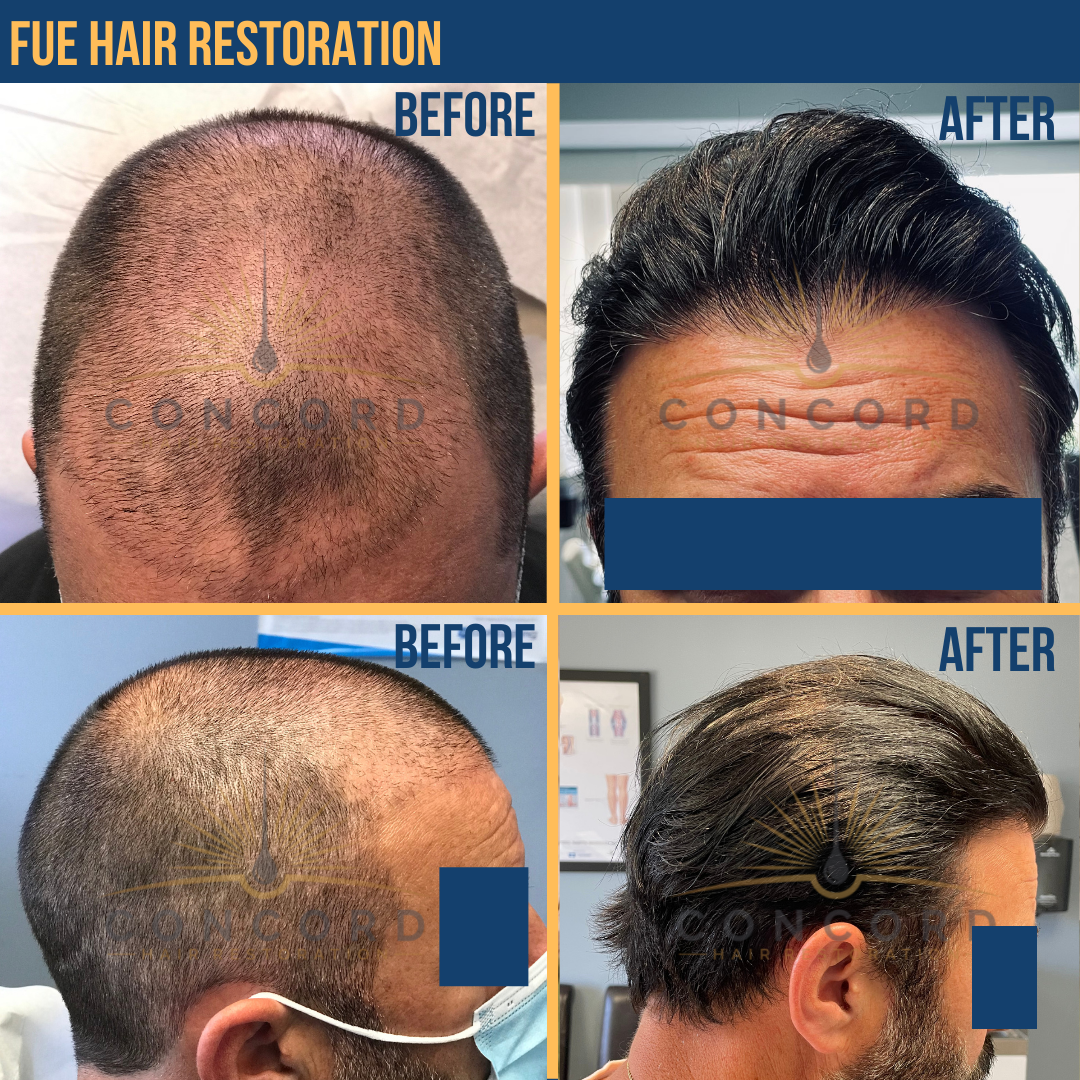
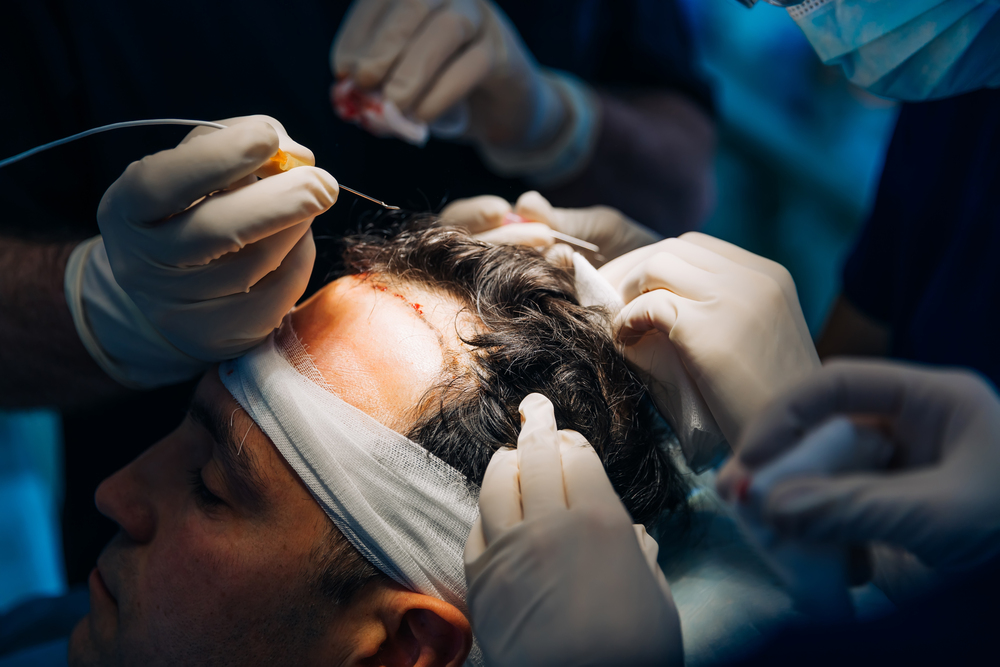
Procedure length can vary depending on the number of grafts being transplanted and the complexity of the treatment plan.
During an FUE hair transplant, individual follicular units are harvested from the donor area and placed into the planned treatment area.
The procedure generally involves:
- Preparation of the donor and recipient areas
- Local anesthesia
- Harvesting follicular units
- Creating recipient sites
- Placing grafts according to the treatment plan
Patients typically receive postoperative instructions before leaving the clinic.
Days 1–3: Early Healing
The first few days are primarily about protecting the transplanted grafts and allowing the donor and recipient areas to begin healing.
During this period, patients may experience:
- Redness
- Tenderness
- Mild swelling
- Small scabs
- Sensitivity
Your clinic should provide specific instructions regarding sleeping position, scalp care, medications, washing, and activity.
Avoid rubbing or scratching the transplanted area unless specifically instructed otherwise by your clinical team.
Days 4–7: Scalp Continues Healing
During the remainder of the first week, the donor and recipient areas continue healing.
Redness and swelling may gradually improve, although recovery varies from patient to patient.
Small scabs may still be present.
Continue following your clinic’s postoperative instructions rather than trying to speed up the healing process.
Weeks 2–4: Shedding May Begin
One of the stages that surprises many patients is temporary shedding.
Some of the transplanted hairs may shed during the weeks following surgery.
This does not necessarily mean that the transplanted follicles have been lost.
The follicles can remain beneath the scalp while moving through their normal growth cycle.
Some patients may also experience temporary shedding of nearby native hairs.
The exact amount of shedding varies considerably.
Months 1–3: The Waiting Phase
This can be one of the least visually exciting stages of the hair transplant timeline.
The scalp may look relatively normal again while there is still little visible new growth.
That can make patients wonder whether the procedure worked.
Hair transplantation is a slow biological process. The follicles need time before new hairs begin emerging.
During this period, patience is important.
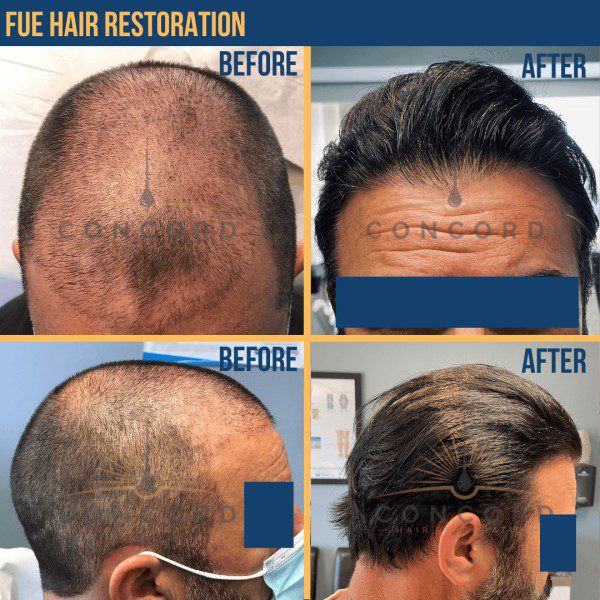
Months 3–6: Early Hair Growth
New hairs may begin becoming visible during this stage.
Early growth can initially appear:
- Fine
- Soft
- Light
- Uneven
That is not necessarily representative of the final result.
The hairs can continue thickening and maturing as growth progresses.
The existing page already places the beginning of visible new growth in approximately this period.
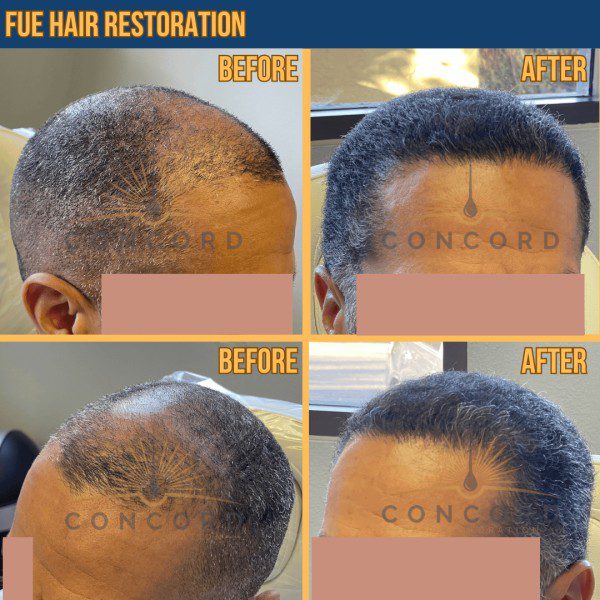
Months 6–9: More Noticeable Improvement
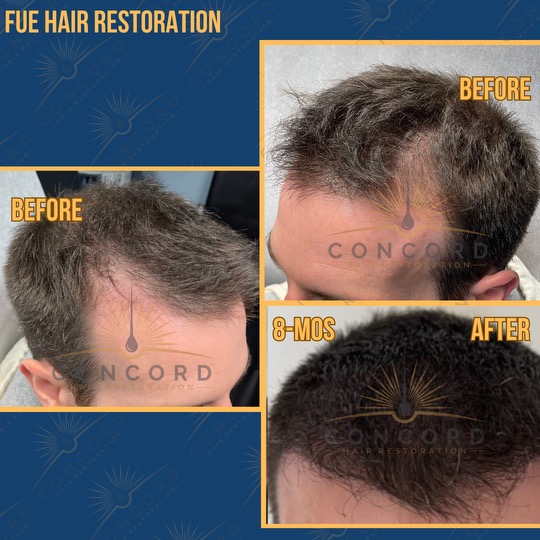
Between approximately six and nine months, many patients begin seeing more noticeable cosmetic improvement.
Hair may become:
- Longer
- Thicker
- Easier to style
- Better blended with surrounding hair
Density may continue improving as additional transplanted follicles begin producing visible hair.
Your result is still developing during this stage.
The current Concord timeline likewise identifies months 6–9 as a period when density and cosmetic improvement become more noticeable.
Months 9–12: Continued Maturation
By this stage, the overall appearance of the transplant may be considerably easier to evaluate.
Hair can continue improving in:
- Density
- Length
- Texture
- Styling flexibility
- Integration with native hair
Some patients will be further along than others.
Different areas of the scalp may also mature at different rates.
Months 12–18: Later Hair Transplant Results
Hair can continue maturing beyond the first year.
During this stage, improvements may continue in:
- Density
- Hair caliber
- Texture
- Length
- Overall appearance
For some patients, the result becomes increasingly apparent during this later period.
Your existing page also treats approximately 12–18 months as the later maturation stage.
Why Hair Transplant Results Take Time
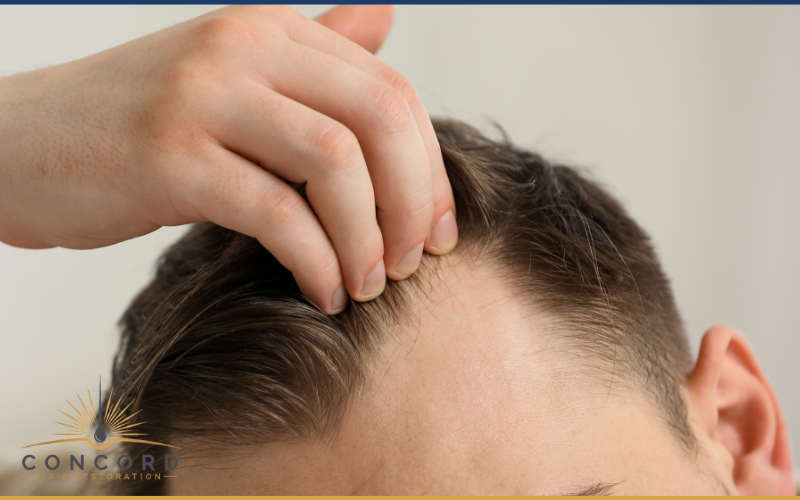
Hair follicles naturally move through growth cycles.
Transplanting a follicle does not create instant long hair.
The scalp first needs to heal, and transplanted follicles then progress through their growth cycle before producing visible new hair.
That is why hair transplantation should be evaluated over months rather than days or weeks.
Why Hair Transplant Timelines Differ Between Patients
Not everyone follows exactly the same timeline.
Differences may be influenced by factors such as:
- Number of grafts transplanted
- Treatment area
- Hair characteristics
- Individual healing
- Previous procedures
- Scalp condition
- Postoperative care
- Overall treatment plan
The crown may also appear to progress differently from the frontal hairline because these areas have different patterns, surface areas, and cosmetic characteristics.
FUE Donor Area Recovery
FUE involves individually harvesting follicular units from the donor area.
Immediately afterward, the donor area contains many small extraction sites.
These begin healing during the early recovery period.
Patients should follow their postoperative instructions regarding:
- Washing
- Sun exposure
- Exercise
- Hats or head coverings
- Scalp products
- Haircuts
- Donor-area care
Avoid relying on a generic internet timeline if your treating clinician has provided specific instructions.

Recipient Area Recovery
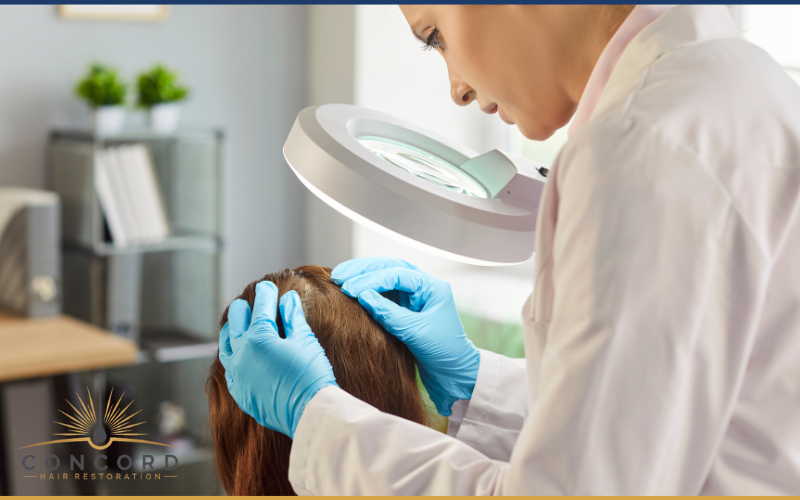
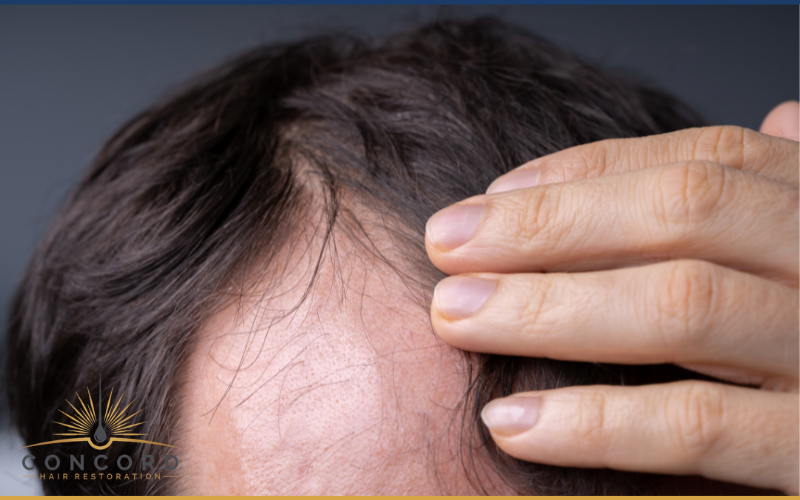
The recipient area contains the newly transplanted grafts.
During the early healing period, the priority is protecting those grafts while the scalp heals.
Patients may notice:
- Redness
- Small scabs
- Temporary sensitivity
- Changes in appearance as the area heals
The visual appearance during the first several days or weeks should not be confused with the final hair transplant result.
When Can You Return to Work?
There is no universal return-to-work date.
The answer depends partly on:
- Type of work
- Degree of physical activity
- Size of the procedure
- Visible redness or scabbing
- Personal comfort
- Your clinician’s instructions
Someone who works remotely may have very different considerations from someone performing strenuous outdoor work.
Ask your treatment team for guidance based on your specific procedure.
When Can You Exercise After a Hair Transplant?
Exercise recommendations should come from your treating clinic.
Strenuous activity may be restricted during the early recovery period.
Your postoperative instructions should explain when you can gradually return to activities such as:
- Walking
- Weight training
- Running
- Sports
- Swimming
Do not restart strenuous exercise simply because your scalp looks healed externally.

When Can You Wash Your Hair?
Your clinic should provide specific washing instructions.
Hair washing during the early recovery period may differ from your normal routine because the newly transplanted area needs to be treated carefully.
Follow the technique and timing provided by your treatment team.
What Happens to the Transplanted Hair?
It is important to distinguish the transplanted hair shaft from the transplanted follicle.
Visible transplanted hairs may shed during the early weeks after surgery.
The follicle can remain beneath the scalp and later produce new growth.
This shedding stage can be concerning if patients are not expecting it, which is why understanding the timeline beforehand is helpful.
When Should You Evaluate Your Final Hair Transplant Result?
Hair transplant results should not be judged during the first few weeks or months.
Early appearance may be affected by:
- Healing
- Shedding
- Uneven early growth
- Short hair length
- Differences in maturation
Progress becomes more meaningful as new hairs grow and mature over time.
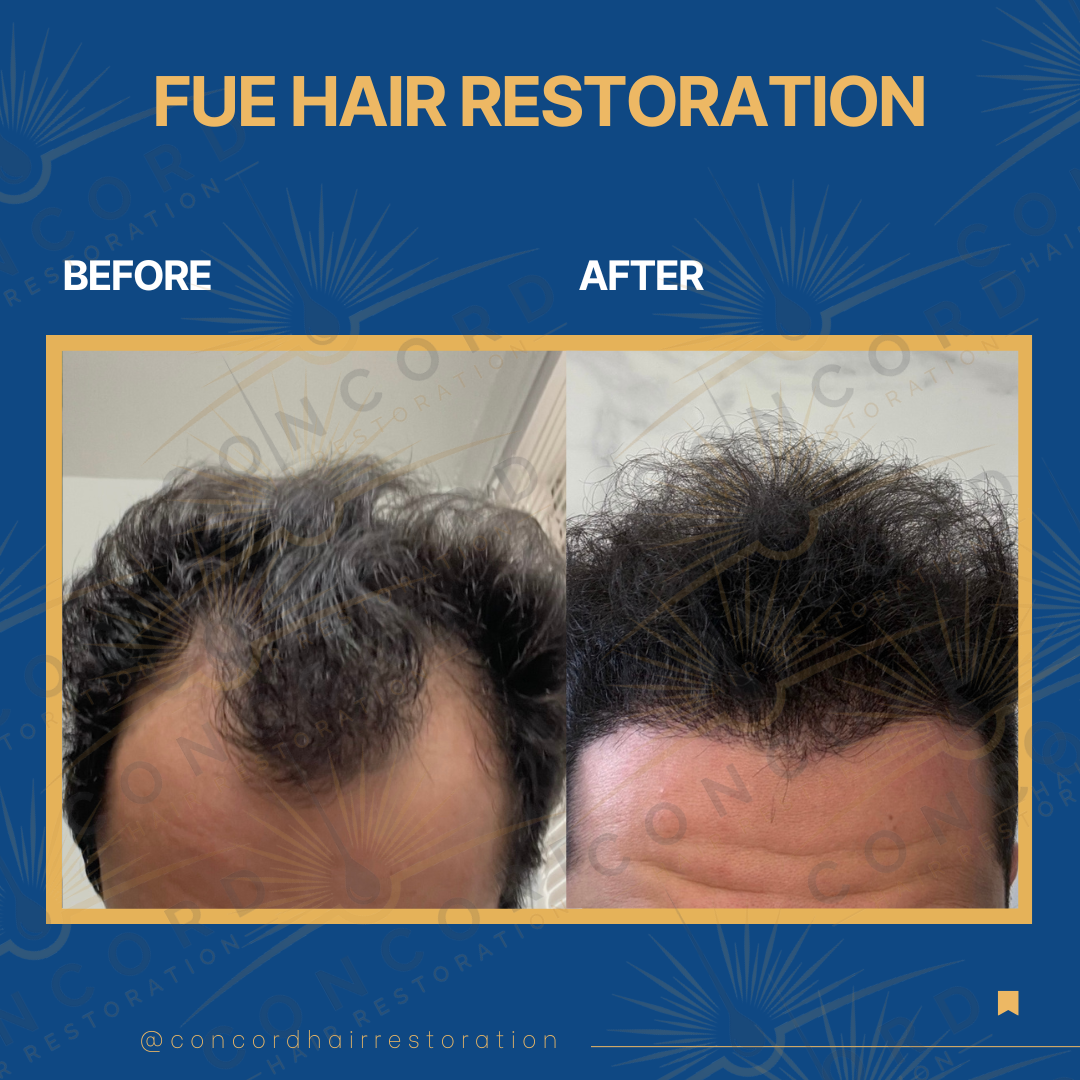
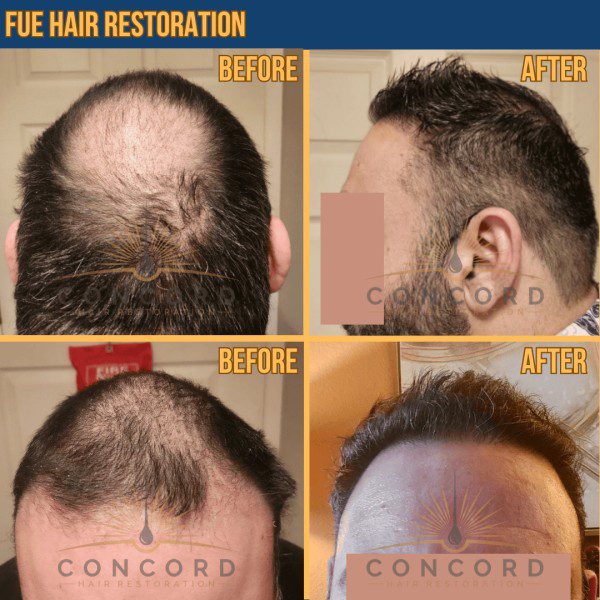
You can view examples of patient outcomes in our hair transplant before-and-after gallery.
How Many Grafts Affect the Timeline?
The number of grafts primarily relates to the size and complexity of the treatment plan rather than creating a guaranteed faster or slower growth timeline.
However, larger procedures may involve more extensive donor and recipient areas.
If you’re trying to understand your potential graft requirements, read How Many Hair Grafts Do I Need?.
Does Hair Transplant Cost Affect Recovery?
Price itself does not determine how quickly hair grows.
Hair transplant cost can be influenced by factors such as graft requirements, treatment area, complexity, donor characteristics, and the overall treatment plan.
For pricing information, visit our Hair Transplant Cost in Los Angeles guide.
Tips for Hair Transplant Recovery
The most important recovery advice is to follow the postoperative instructions provided by your treating clinical team.
General priorities may include:
- Protecting the transplanted area
- Following washing instructions
- Avoiding unnecessary trauma to the scalp
- Taking prescribed medications as directed
- Following activity restrictions
- Protecting the scalp from excessive sun exposure
- Attending follow-up appointments
- Contacting the clinic if you have recovery concerns
Your existing page already emphasizes postoperative instructions, scalp protection, activity restrictions, sun protection, and follow-up visits.
When Should You Contact Your Hair Transplant Clinic?
Your clinical team should tell you what symptoms are expected and what should prompt a call.
Contact your provider if you are concerned about your healing or if something appears different from the recovery instructions you were given.
For urgent or severe symptoms, seek appropriate medical care rather than relying on general online information.
Frequently Asked Questions About the Hair Transplant Timeline
When does transplanted hair start growing?
Visible new growth may begin developing several months after surgery. Early hairs may initially appear fine or uneven before becoming thicker over time.
Is shedding after a hair transplant normal?
Temporary shedding of transplanted hairs can occur during the early weeks after surgery. Your clinical team can help distinguish expected shedding from a potential problem.
What happens during the first week?
The first week is primarily an early healing period. Redness, tenderness, swelling, and small scabs may occur.
When will my hair transplant start looking better?
Visible improvement generally occurs gradually over several months rather than immediately after surgery.
When will I see the final result?
Many patients evaluate their results over approximately 12 months or longer, with maturation potentially continuing into the 12–18 month range.
Why does my transplanted hair look thin at first?
Early growth may initially be fine, short, or uneven. Hair can become thicker and more mature as the growth process continues.
Does everyone follow the same hair transplant timeline?
No. Healing and growth vary between patients, which is why your individual timeline may differ from generalized estimates.
Does FUE grow faster than other hair transplant methods?
The harvesting technique does not create instant growth. Transplanted follicles still need to progress through the healing and hair-growth process.
Questions About Your Hair Transplant Timeline?
Every patient’s recovery is different.
During your consultation and follow-up appointments, Concord Hair Restoration can explain what to expect based on your procedure, treatment area, graft requirements, and individual recovery.
Concord Hair Restoration – Encino Office
16661 Ventura Blvd., Suite 703
Encino, CA 91436
(818) 800-2002
Book a Consultation Today!
Ready to restore your hair? Contact Concord Hair Restoration to discuss your hair transplant timeline and get a personalized treatment plan tailored to your needs.
Contact us today for a free consultation in Los Angeles or San Diego.

Contact Us Today to Schedule Your Consultation