Hair Transplant Glendale, CA: FUE Hair Restoration Near Glendale
Private FUE by Concord Hair Restoration
If you’re researching a hair transplant in Glendale, CA, you may be looking for more than the closest clinic. Hair restoration is a long-term decision, and the quality of the treatment plan can matter just as much as convenience.
Concord Hair Restoration serves Glendale residents from our Los Angeles-area clinic in Encino, offering individualized hair restoration plans focused on natural-looking results, responsible donor management, and long-term planning.
Patients visit us from throughout Glendale, including Downtown Glendale, Brand Boulevard, Verdugo Hills, and neighborhoods surrounding The Americana at Brand and Glendale Galleria.
Whether you are dealing with a receding hairline, thinning crown, diffuse thinning, or previous hair transplant concerns, the first step is determining why you are losing hair and what can realistically be restored with your available donor supply.
Patients who are still comparing their options can also explore our main Los Angeles hair transplant guide.
Hair Restoration for Glendale Residents
Glendale is close enough to central Los Angeles to provide plenty of choices for cosmetic treatment, but hair transplantation is not a procedure where simply choosing the nearest office should be the deciding factor.
A good hair restoration plan should consider:
- Your type and pattern of hair loss
- Your age
- Existing hair density
- Donor hair availability
- Hair caliber and texture
- Current hairline
- Future hair-loss progression
- Desired hairstyle
- Previous procedures
- Realistic density expectations
At Concord Hair Restoration, the objective is not simply to transplant the largest possible number of grafts.
The goal is to use the patient’s available donor hair strategically so the result looks appropriate today and remains believable as the patient ages.
FUE Hair Transplants Near Glendale
Follicular Unit Extraction, or FUE, is one of the primary techniques used in modern hair transplantation.
With FUE, individual follicular units are harvested from an appropriate donor area rather than removing one long strip of scalp tissue.
Because follicular units are removed individually, FUE avoids the long linear donor scar associated with traditional FUT strip harvesting.
However, FUE is not truly “scarless.” Each extraction creates a very small healing site, which is why proper extraction spacing and donor management remain important.
Patients who want to understand the procedure in greater detail can read our complete FUE hair transplant guide.
NeoGraft FUE Hair Restoration
Concord Hair Restoration also uses NeoGraft technology to assist with portions of the FUE process.
NeoGraft is an automated FUE system that can assist with follicular-unit extraction and implantation.
The technology itself does not determine the patient’s ideal hairline, long-term graft requirements, donor limits, or future hair-loss pattern.
Those decisions still require individualized treatment planning.
Learn more about NeoGraft FUE hair transplantation.
Why Donor Hair Matters
Patients understandably focus most of their attention on the thinning or bald area they want restored.
But the donor area is often what determines how much restoration is realistically possible.
Hair transplantation redistributes follicles.
It does not create an unlimited supply of new hair.
That means every graft used in the frontal hairline, temples, mid-scalp, or crown comes from a limited donor reserve.
Factors that can influence available donor supply include:
- Donor density
- Hair caliber
- Follicular-unit characteristics
- Miniaturization
- Previous FUE procedures
- Previous FUT surgery
- Hair-loss pattern
- Expected future thinning
Our guide to understanding donor hair and your hair transplant donor area explains why this is such an important part of transplant planning.
Avoiding Donor Overharvesting
One of the risks of aggressive FUE harvesting is removing too many follicles from the donor region.
Overharvesting can potentially leave the back or sides of the scalp looking:
- Thin
- Patchy
- Uneven
- More transparent
- Difficult to wear with short hairstyles
It can also reduce the number of follicles available if another procedure becomes necessary later.
That is why a responsible transplant plan should consider not only how many grafts can be removed today, but how much donor supply should remain for the future.
Read more about hair transplant donor-area management and overharvesting.
Natural Hairline Design
One of the clearest differences between an obvious hair transplant and a natural-looking result is the hairline.
A believable hairline should not look like a perfectly straight row of identical hairs.
Natural hairline planning considers:
- Facial proportions
- Age
- Existing hairline characteristics
- Hair caliber
- Single-hair graft placement
- Direction
- Angle
- Irregularity
- Density transition
- Temple points
- Future hair loss
A hairline that looks appropriate at age 35 should ideally continue looking appropriate years later.
Learn more about what makes a hair transplant hairline look natural.
How Many Hair Grafts Might You Need?
There is no universal graft number for a Glendale hair transplant.
Two patients with similar-looking hair loss may require different treatment plans because of differences in:
- Head size
- Hair-loss pattern
- Donor density
- Hair shaft thickness
- Curl
- Hair-to-scalp contrast
- Existing hair
- Desired density
The frontal hairline may require a different density strategy from the crown.
Someone with limited donor supply may also need to prioritize certain areas rather than attempting maximum coverage everywhere.
Our hair transplant graft calculator guide explains the factors used when estimating graft requirements.
Hair Transplant Density
Patients often assume that more grafts automatically mean better results.
That is not necessarily true.
Visual density depends on much more than graft count.
Hair caliber, texture, follicular-unit composition, recipient-area size, placement, and existing hair all affect how dense the result appears.
There is also a difference between maximum density and strategic density.
The goal is usually to create the strongest cosmetic improvement possible while respecting the limitations of the donor area.
Read our guide to hair transplant density and realistic coverage for a deeper explanation.
Hairline, Crown, and Mid-Scalp Restoration
Hair loss does not affect every patient the same way.
Receding Hairline
A receding frontal hairline can change the proportions of the face and may be one of the first signs of androgenetic alopecia.
Hair transplantation may be used to recreate or reinforce the frontal hairline in appropriately selected patients.
Temple Recession
Temple recession can become especially noticeable even when substantial hair remains elsewhere.
Restoring temples requires careful attention to angle and direction because naturally growing temple hair lies relatively flat against the scalp.
Mid-Scalp Thinning
Mid-scalp thinning often needs to be planned together with frontal hair restoration so the transition between existing and transplanted hair remains natural.
Crown Hair Loss
The crown creates a different challenge because hair grows in a whorl pattern and the area can consume a significant number of grafts.
Patients with extensive hair loss may need to prioritize frontal coverage before committing large portions of donor supply to the crown.
Will a Hair Transplant Stop Future Hair Loss?
No.
A hair transplant moves selected follicles into a new location, but it does not automatically stop surrounding native hair from continuing to thin.
This is especially important for younger patients and anyone with actively progressing androgenetic alopecia.
Long-term planning may involve considering:
- Current hair-loss pattern
- Family history
- Existing miniaturization
- Donor reserves
- Medical hair-loss management
- Possibility of additional transplantation later
Our guide to continued hair loss after a hair transplant explains why this needs to be considered before the first procedure.
Hair Transplant Recovery
Hair transplant recovery happens in stages.
The scalp begins healing immediately after surgery, but new hair growth takes considerably longer.
During early recovery, patients may experience temporary:
- Redness
- Scabbing
- Swelling
- Tenderness
- Shedding of transplanted hairs
The visible transplanted hairs may shed even though the follicular structures remain beneath the scalp.
New growth develops gradually over the following months.
For a detailed explanation, review our hair transplant recovery and growth timeline.
Hair Transplant Recovery for Glendale Patients
Living in Glendale also creates some practical recovery considerations.
Southern California sunshine, warmer inland temperatures, hiking, fitness routines, outdoor dining, and commuting can all affect how patients organize the first weeks after surgery.
Patients may temporarily need to adjust activities involving:
- Direct sun exposure
- Heavy sweating
- Strenuous exercise
- Swimming
- Tight hats
- Outdoor recreation
Specific instructions vary by patient and procedure.
Our local guide to hair transplant recovery in Los Angeles discusses sun exposure, heat, exercise, beaches, commuting, and other Southern California lifestyle considerations.
A Hair Transplant Clinic Serving Glendale From Encino
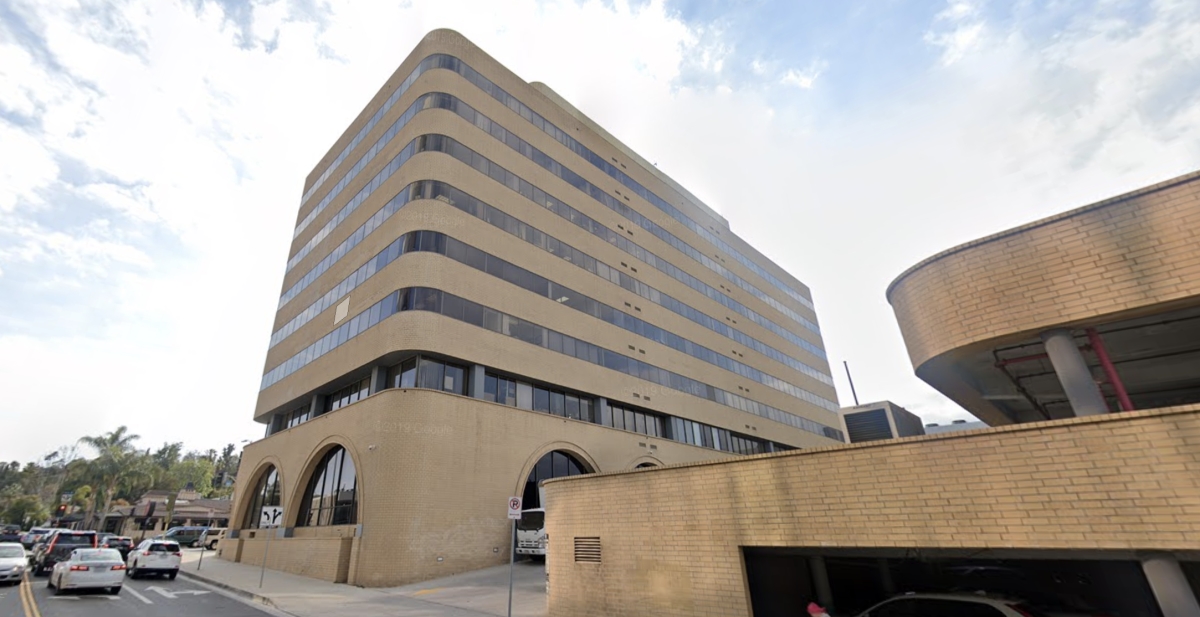
Concord Hair Restoration’s Los Angeles office is located at:
16661 Ventura Blvd.
Suite #703
Encino, CA 91436
Glendale patients can reach Encino from the east San Fernando Valley and surrounding Los Angeles communities, with travel time varying significantly depending on traffic.
We regularly serve patients from areas including:
- Glendale
- Burbank
- Eagle Rock
- La Cañada Flintridge
- Pasadena
- Encino
- Sherman Oaks
- Beverly Hills
- Santa Monica
- West Hollywood
- Greater Los Angeles
For Glendale residents, this provides another option beyond choosing a clinic solely based on which office is physically closest.
What Happens During a Hair Transplant Consultation?
A consultation should help determine whether transplantation is actually appropriate.
An evaluation may include discussion of:
- Hair-loss history
- Current thinning
- Family history
- Previous treatments
- Donor density
- Miniaturization
- Hair caliber
- Desired hairline
- Areas of greatest concern
- Potential graft requirements
- Future hair loss
Sometimes the appropriate recommendation is surgery.
Other times, it may make sense to monitor hair loss or consider nonsurgical management first.
Patients can read our guide to what to expect at your first hair transplant consultation before scheduling.
Hair Transplant Cost for Glendale Patients
Hair transplant pricing varies because procedures are individualized.
Cost can depend on factors such as:
- Number of grafts
- Size of the treatment area
- Complexity
- Previous procedures
- Technique
- Treatment plan
A patient needing limited frontal reinforcement may require a very different procedure from someone seeking restoration across the hairline, mid-scalp, and crown.
For general pricing information, see our hair transplant cost guide.
Patients researching local pricing can also review our Los Angeles hair transplant cost guide.
Hair Transplant Before and After Results
Before choosing a hair restoration provider, look carefully at actual patient results.
When reviewing before-and-after photographs, pay attention to more than overall density.
Look closely at:
- Hairline shape
- Frontal softness
- Temple design
- Direction
- Density transition
- Crown pattern
- Donor appearance
You can view examples in the Concord hair transplant before-and-after gallery.

Concord Hair Restoration – Encino Office
16661 Ventura Blvd.
Suite #703
Encino, CA 91436
(818) 800-2002
Contact Us Today to Schedule Your Consultation
Hair Transplant Glendale FAQs
Is there a hair transplant clinic serving Glendale, CA?
Yes. Concord Hair Restoration serves patients from Glendale and surrounding Los Angeles communities from its Encino office.
Does Concord Hair Restoration have an office in Glendale?
No. Our Los Angeles office is located in Encino. This page is for Glendale residents looking for nearby hair restoration options.
I would definitely include this FAQ because it makes the location relationship completely transparent rather than implying Concord has a physical Glendale office.
Is FUE a good option for Glendale hair transplant patients?
FUE may be appropriate for many patients, but the best technique depends on donor characteristics, previous surgery, hair-loss pattern, goals, and individual circumstances. A consultation is necessary to determine candidacy.
Does FUE leave scars?
FUE avoids the long linear scar associated with FUT strip harvesting, but it is not scarless. Individual extraction sites heal with very small marks that may become difficult to see when harvesting is appropriately distributed.
How many grafts will I need?
There is no universal number. Graft requirements depend on the area being restored, donor supply, hair caliber, follicular-unit characteristics, desired density, and future hair-loss planning.
How soon can I return to work?
Recovery varies by patient and type of work. People with nonphysical jobs may return sooner than patients whose work involves heavy activity, heat, sweating, or head protection. Temporary redness and scabbing may also affect how soon someone feels comfortable returning.
Will my hair transplant look natural as I age?
Naturalness depends on appropriate hairline design, graft selection, angle, direction, density, donor planning, and consideration of future hair loss. A conservative long-term plan can help produce a result that continues to look appropriate as the patient ages.
Can I wear my hair short after FUE?
Possibly. How short someone can comfortably wear the donor area depends on extraction pattern, donor density, scarring, hair characteristics, and the number of grafts harvested.
Does transplanted hair grow immediately?
No. Transplanted hairs commonly shed during early recovery before new growth becomes noticeable. Hair transplant results develop gradually over several months.
Can I see hair transplant results before scheduling?
Yes. Visit our hair transplant before-and-after gallery to review examples of Concord Hair Restoration patient results.
Schedule a Hair Transplant Consultation Near Glendale
If you’re considering a hair transplant in Glendale, CA, the next step is determining whether transplantation is appropriate for your type of hair loss and available donor supply.
Concord Hair Restoration serves Glendale residents from our Encino location with individualized treatment planning focused on natural hairlines, responsible donor management, and realistic long-term results.
Explore our main hair transplant Los Angeles page or schedule a consultation to discuss your options.
Concord Hair Restoration – Los Angeles
16661 Ventura Blvd., Suite #703
Encino, CA 91436
(818) 800-2002