
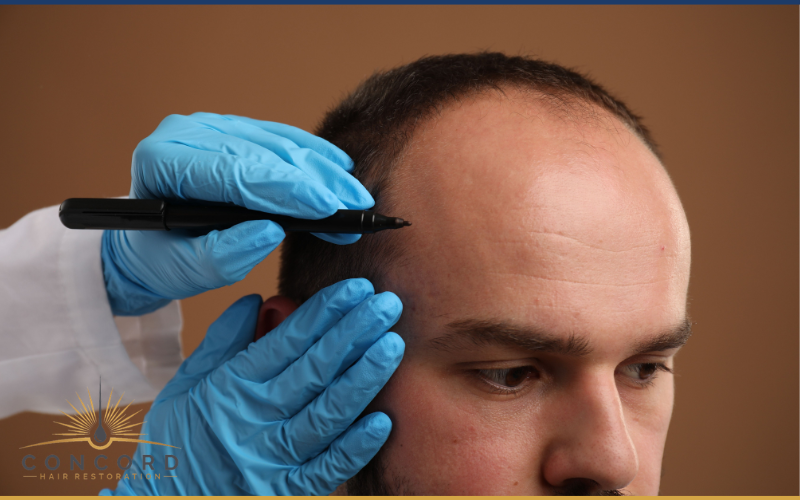
Choosing a hair transplant surgeon is a major decision, especially in a competitive city like Los Angeles where patients often have high expectations for appearance, professionalism, and natural-looking results.
Today’s patients are doing far more research before scheduling consultations. Many compare clinics, review before-and-after photos, read patient reviews, and look closely at a surgeon’s experience with modern hair restoration techniques such as FUE.
At Concord Hair Restoration, we understand that patients want results that look natural, age appropriately, and blend seamlessly with their existing hair. The goal is not simply restoring hair—it is creating a result that complements the individual while avoiding an artificial or overly aggressive appearance.
Why Choosing the Right Hair Transplant Surgeon Matters
Not all hair transplant procedures produce the same results. Hair restoration combines medical knowledge, surgical technique, aesthetic judgment, and long-term planning.
A successful hair transplant requires careful attention to:
- Hairline design
- Graft placement
- Donor area management
- Facial balance
- Natural density
- Hair angle and direction
- Long-term hair loss progression
For patients comparing surgeons, these factors can be just as important as the transplant technique itself.
The goal should be a treatment plan designed around your individual hair characteristics, donor supply, facial features, age, and potential future hair loss.
Look for Experience With FUE Hair Transplants
FUE, or Follicular Unit Extraction, is a modern hair transplant technique that involves harvesting individual follicular units from the donor area and transplanting them into areas affected by hair loss.
When comparing hair transplant surgeons in Los Angeles, look beyond the procedure name itself.
Consider asking:
- How much experience does the surgeon have with FUE?
- Who performs the critical portions of the procedure?
- How does the surgeon evaluate and preserve the donor area?
- How is the hairline designed?
- How are graft angle, direction, and density determined?
- Does the clinic regularly perform hair restoration procedures?
- Are before-and-after examples consistent?
- Are long-term hair loss and future treatment needs discussed?
Technology can assist with hair transplantation, but technology alone does not determine the quality of the final result. Physician judgment, treatment planning, donor management, and careful graft placement all play important roles.
For more information about the procedures available at Concord, visit our Los Angeles hair transplant clinic page.
Pay Close Attention to Hairline Design
Hairline design is one of the most important aspects of natural-looking hair restoration.
A technically successful transplant can still look unnatural if the hairline does not complement the patient’s facial structure or if grafts are placed in an overly uniform pattern.
When evaluating before-and-after results, look for hairlines that:
- Complement the patient’s facial proportions
- Appear appropriate for the patient’s age
- Incorporate natural irregularity
- Transition gradually into greater density
- Follow realistic hair angles and directions
- Leave room for potential future hair loss
Hairline design should also account for aging.
An aggressively low hairline may look appealing initially but may become difficult to maintain if native hair continues to thin behind the transplanted area.
Evaluate Before-and-After Photos Carefully
Before scheduling a consultation, spend time reviewing real patient results.
Strong before-and-after examples can help you evaluate a surgeon’s approach to hairline design, density, donor management, and overall aesthetics.
Look for photos that show:
- Consistent lighting
- Multiple angles
- Fully healed results
- Natural hairlines
- Realistic density
- Clear views of the treatment area
Whenever possible, look for patients who share characteristics similar to your own, including:
- Hair texture
- Hair color
- Hair loss pattern
- Hairline shape
- Age
- Degree of thinning
Someone with thick, coarse hair may achieve a different visual density than someone with fine hair, even when a similar number of grafts is transplanted.
Understanding these differences can help you develop realistic expectations.
Ask Who Actually Performs the Procedure
This is an important question that patients sometimes overlook.
Hair transplantation can involve several stages, including donor harvesting, graft preparation, recipient-site creation, and graft placement.
During your consultation, ask who will be responsible for each part of the procedure.
You may want to ask:
- What portions of the procedure are performed by the physician?
- What portions involve clinical staff?
- Who designs the hairline?
- Who determines graft placement?
- Who evaluates the donor area?
- Who develops the long-term treatment plan?
Understanding the clinical team’s roles can help you make a more informed decision when comparing hair restoration providers.
Consider How the Surgeon Manages the Donor Area
The donor area is a limited resource.
For many patients, donor hair comes primarily from areas along the back and sides of the scalp that are more resistant to pattern hair loss.
Once follicles are removed, the available donor supply becomes more limited.
This makes conservative donor management extremely important.
A thoughtful treatment plan should consider:
- Current donor density
- Hair characteristics
- The number of grafts needed
- The size of the recipient area
- Potential future hair loss
- Whether additional procedures may eventually be needed
A surgeon should not simply focus on extracting the largest possible number of grafts during one procedure.
Long-term planning can help preserve options if additional hair loss occurs later.
Avoid Choosing a Hair Transplant Surgeon Based on Price Alone
Cost is naturally an important consideration.
However, choosing a clinic solely because it offers the lowest advertised price may not be the best approach for a permanent cosmetic procedure.
Poor graft placement, inappropriate hairline design, excessive harvesting, or unrealistic treatment planning can be difficult to correct later.
When comparing providers, consider factors such as:
- Surgeon experience
- Physician involvement
- Before-and-after results
- Hairline design
- Donor management
- Long-term planning
- Patient communication
- Follow-up care
- Personalized consultations
Price should be considered alongside the overall quality and suitability of the treatment plan.
If you’d like to better understand what affects procedure pricing, read our guide to hair transplant costs in Los Angeles.
Look for Natural, Age-Appropriate Results
A successful hair transplant should not draw attention to the fact that someone had a procedure.
Instead, transplanted hair should blend naturally with existing hair.
This requires careful consideration of:
- Hairline position
- Hair direction
- Graft angle
- Follicular-unit selection
- Density transitions
- Facial proportions
- Existing hair
- Potential future thinning
It is also important to think beyond the immediate result.
Hair transplantation should be planned with the understanding that native hair can continue to thin over time.
A treatment plan that looks good immediately after growth should ideally continue to look balanced as the patient ages.
Why Los Angeles Patients Often Have High Expectations
Los Angeles has a large cosmetic and aesthetic medicine market, giving patients many options when researching hair restoration.
Some patients also work in entertainment, media, sales, professional services, or other public-facing careers where subtle cosmetic results may be especially important.
As a result, patients may prioritize:
- Natural-looking hairlines
- Minimal visible evidence of treatment
- Conservative density
- Modern FUE techniques
- Thoughtful donor management
- Discreet recovery
- Long-term aesthetic planning
Regardless of profession or lifestyle, the objective should be the same: a treatment plan designed around the individual rather than a standardized approach.
Consultation Quality Is Extremely Important
A hair transplant consultation should involve more than simply receiving a graft estimate and price.
The consultation is an opportunity to understand your hair loss and determine whether transplantation is appropriate.
A thorough consultation may include discussion of:
- Your pattern of hair loss
- Donor area quality
- Hair characteristics
- Medical history
- Treatment goals
- Hairline design
- Estimated graft requirements
- Expected density
- Recovery
- Future hair loss
- Long-term planning
You should also have an opportunity to ask questions.
A provider should be willing to explain not only what may be possible, but also the limitations of hair transplantation.
Watch for Unrealistic Promises
Hair restoration can produce meaningful improvements for appropriate candidates, but every patient has limitations based on donor supply, hair characteristics, pattern of hair loss, and other individual factors.
Be cautious of promises involving:
- Guaranteed density
- Identical results for every patient
- Unlimited donor hair
- Extremely aggressive graft counts
- Unrealistically low hairlines
- Immediate final results
Hair transplantation is a process.
New growth typically develops gradually over several months, and final maturation takes time.
A responsible provider should help establish realistic expectations before treatment.
Learn More About Hair Transplantation at Concord
Once you’ve identified the qualities you want in a surgeon, the next step is understanding the procedure itself, candidacy, expected results, recovery, cost, and treatment options.
Visit our comprehensive Hair Transplant Los Angeles page to learn about Concord Hair Restoration’s Los Angeles-area services, FUE procedures, consultations, patient results, pricing considerations, and treatment planning.
Final Thoughts
Choosing a hair transplant surgeon should involve more than comparing online rankings or advertised prices.
Consider the surgeon’s experience, approach to hairline design, donor management philosophy, before-and-after results, physician involvement, consultation process, and long-term treatment planning.
The most appropriate treatment should be personalized around your hair characteristics, facial features, donor availability, current hair loss, and how your hair may change in the future.
Taking the time to carefully compare providers and ask detailed questions can help you make a more informed decision about your hair restoration treatment.
FAQs
How do I choose the best hair transplant surgeon in Los Angeles?
Look at the surgeon’s experience with hair restoration, before-and-after results, approach to natural hairline design, donor management, physician involvement, and long-term treatment planning. A personalized consultation can also help you evaluate whether a surgeon’s approach matches your goals.
What questions should I ask a hair transplant surgeon?
Ask who performs each part of the procedure, how your donor area will be managed, how your hairline will be designed, how many grafts may be appropriate, what results are realistic, what recovery involves, and how future hair loss is considered in the treatment plan.
What is the difference between FUE and FUT?
FUE harvests individual follicular units from the donor area, while FUT involves removing a strip of donor tissue from which follicular units are prepared. Each technique has different considerations involving scarring, donor management, graft requirements, and recovery.
Are hair transplants permanent?
Transplanted follicles harvested from appropriate donor areas are generally resistant to the pattern hair loss affecting other areas of the scalp. However, existing non-transplanted hair can continue thinning, which is why long-term planning is important.
How much does a hair transplant cost in Los Angeles?
Hair transplant pricing varies based on factors such as the number of grafts required, donor availability, treatment area, procedure complexity, and the individual treatment plan. A consultation provides a more personalized estimate.
Do modern hair transplants look natural?
Hair transplants can produce very natural-looking results when hairline design, follicular-unit selection, graft direction, placement angle, density transitions, and donor management are carefully planned around the individual.
Should I choose the hair transplant clinic with the most grafts?
Not necessarily. A higher graft count does not automatically produce a better result. Appropriate graft numbers depend on your donor supply, treatment area, desired density, hair characteristics, and long-term hair loss pattern.
Why is donor management important?
Donor hair is limited. Conservative harvesting helps maintain the appearance of the donor area and can preserve options if additional treatment is needed as hair loss progresses
.