FUE Hair Transplant Los Angeles
Follicular Unit Extraction for Personalized Hair Restoration
FUE, or Follicular Unit Extraction, is a hair transplant technique in which individual follicular units are harvested from the donor area and transplanted into areas affected by hair loss.
Unlike FUT, which involves removing a strip of donor scalp, FUE removes follicles individually. This avoids the long linear donor scar associated with strip harvesting and can be an appealing option for patients who prefer shorter hairstyles or a less visible donor-area scar.
For patients researching FUE hair transplant in Los Angeles, the technique itself is only one part of treatment planning. Donor density, hair characteristics, graft requirements, hairline design, existing hair, and future hair-loss progression can all influence the final plan.
At Concord Hair Restoration, the goal is not simply to transplant the greatest number of grafts possible. Treatment planning should balance natural-looking restoration with responsible use of the donor area.
If you are comparing hair transplant treatments more broadly, visit our Hair Transplant Los Angeles page. This guide focuses specifically on FUE, including candidacy, donor harvesting, graft placement, recovery, and results.

What Is an FUE Hair Transplant?
FUE stands for Follicular Unit Extraction.
Hair naturally grows in small groupings called follicular units. During an FUE procedure, these units are removed individually from the donor area and then transplanted into areas where additional hair is desired.
FUE may be used to address areas such as:
- Frontal hairline
- Temples
- Mid-scalp
- Crown
- Areas of reduced density
- Certain scars
- Facial hair in appropriate cases
The number of grafts and areas treated vary from patient to patient.
How FUE Differs From FUT
FUE and FUT are both methods of obtaining donor follicles for hair transplantation, but the harvesting process is different.
| FUE | FUT |
|---|---|
| Individual follicular units are harvested | A strip of donor scalp is removed |
| Does not create a long linear donor scar | Produces a linear donor scar |
| Can work well for patients who prefer shorter hairstyles | May be appropriate in some cases requiring larger graft numbers |
| Donor sites heal individually | Donor area heals along the strip-removal site |
Neither method is automatically right for every patient.
The appropriate technique may depend on donor characteristics, graft requirements, previous procedures, hairstyle preferences, and long-term goals.
Learn more about FUE vs. FUT hair transplantation.
Who May Be a Candidate for FUE?
FUE may be appropriate for many patients experiencing hair loss, but candidacy depends on the individual.
A consultation may evaluate:
- Pattern of hair loss
- Degree of hair loss
- Donor density
- Hair caliber
- Hair texture
- Existing native hair
- Scalp condition
- Previous hair transplant procedures
- Desired coverage
- Hairstyle preferences
- Potential future hair loss
- Long-term restoration goals
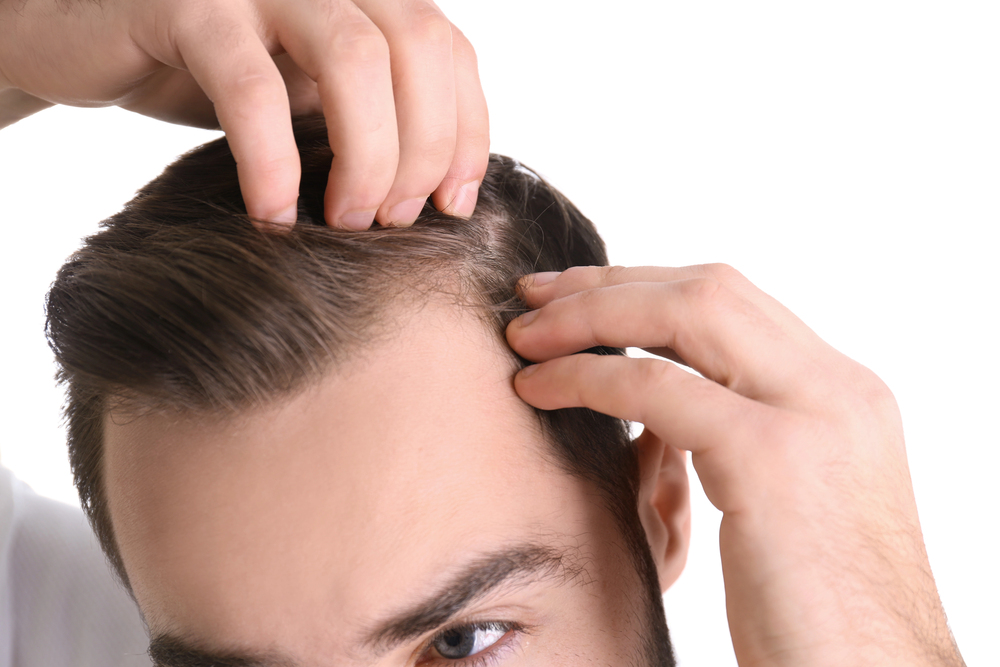
One of the most important considerations is whether the donor area can support the desired treatment.
A patient with mild temple recession may require a very different plan from someone seeking restoration across the hairline, mid-scalp, and crown.

Why the Donor Area Matters in FUE
The donor area is one of the most important considerations in FUE hair transplantation.
Donor follicles are limited.
Before treatment is planned, the donor area may be evaluated for:
- Density
- Hair caliber
- Hair texture
- Size of the available donor zone
- Previous harvesting
- Scalp condition
- Potential future treatment needs
The objective should not be to remove as many grafts as possible.
Responsible donor management means using available follicles strategically while preserving options if additional hair loss occurs in the future.
How Many Grafts Are Needed for FUE?
There is no universal graft number for an FUE procedure.
Graft requirements can depend on:
- Size of the treatment area
- Degree of hair loss
- Existing density
- Donor availability
- Hair caliber
- Hair texture
- Desired coverage
- Hairline design
- Future hair-loss progression
A smaller procedure focused on temple recession or frontal hairline refinement may require considerably fewer grafts than treatment involving several areas of the scalp.
More grafts do not automatically mean a better result.
The appropriate graft number should balance the patient’s goals with the donor supply available.
Learn more about how many grafts you may need for a hair transplant
Hairline Design and FUE
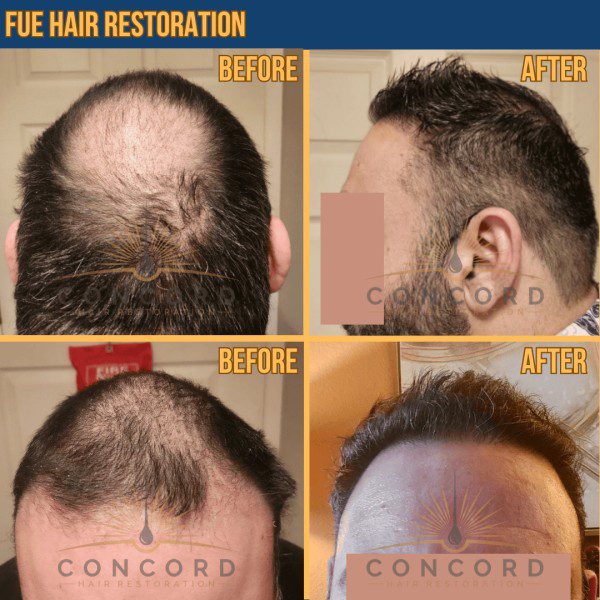
Hairline design is especially important when FUE is being used for frontal restoration.
A natural-looking hairline is not simply a straight line of transplanted follicles.
Planning may take into account:
- Facial proportions
- Forehead height
- Existing hairline
- Temple recession
- Hair direction
- Hair caliber
- Graft selection
- Density transitions
- Age
- Future hair loss
The goal should be a hairline that complements the patient’s facial structure while also making responsible use of the available donor supply.
Graft Placement Matters as Much as Extraction
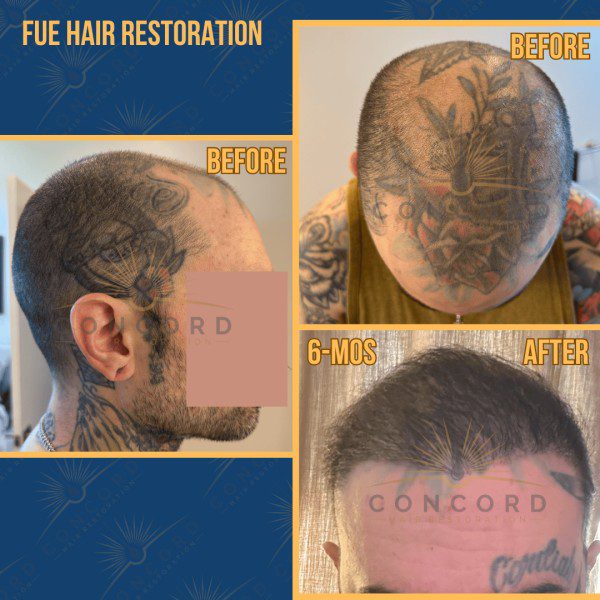
FUE describes how follicles are harvested, but extraction alone does not determine how natural the final result will look.
The appearance of a hair transplant can also depend on how grafts are:
- Selected
- Distributed
- Angled
- Directed
- Spaced
- Blended with existing hair
Natural hair does not grow at identical angles or densities across the scalp.
Careful recipient-site planning helps transplanted follicles follow patterns that better resemble natural hair growth.
What Happens During an FUE Hair Transplant?
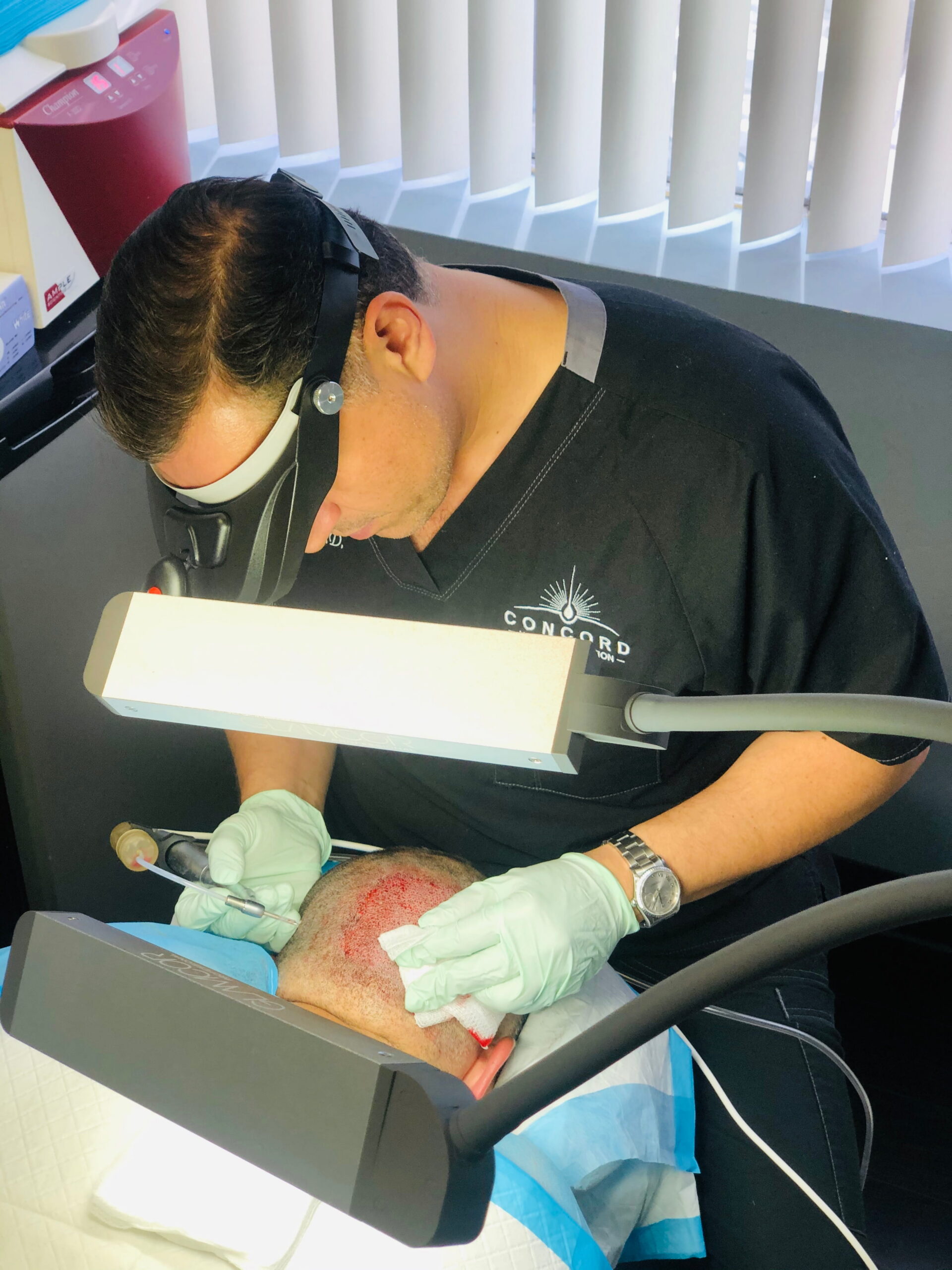
The exact process varies according to the treatment plan, but FUE generally involves several stages.
Consultation and Evaluation
The physician evaluates the patient’s hair-loss pattern, donor area, hair characteristics, goals, previous procedures, and long-term considerations.
If you’re preparing for an appointment, read What to Expect During Your First Hair Transplant Consultation in Los Angeles.
Treatment Planning
The areas to be treated and estimated graft requirements are discussed.
For frontal restoration, this may also include detailed hairline design.
Donor Harvesting
Individual follicular units are carefully removed from the donor area.
Recipient-Site Planning
Recipient sites are created according to the planned direction, angle, density, and distribution of the transplanted hair.
Graft Placement
Prepared follicular units are placed into the recipient sites.
Healing and Follow-Up
The donor and recipient areas begin healing after the procedure, followed by the longer process of hair growth and maturation.
What Is FUE Recovery Like?
Recovery varies depending on the individual patient and the scope of treatment.
During the early healing period, patients may receive instructions regarding:
- Washing the scalp
- Sleeping position
- Exercise
- Returning to work
- Sun exposure
- Protecting the transplanted grafts
- Donor-area care
Healing begins immediately, but the appearance of the transplanted hair continues changing over the following weeks and months.
When Does FUE Hair Begin Growing?
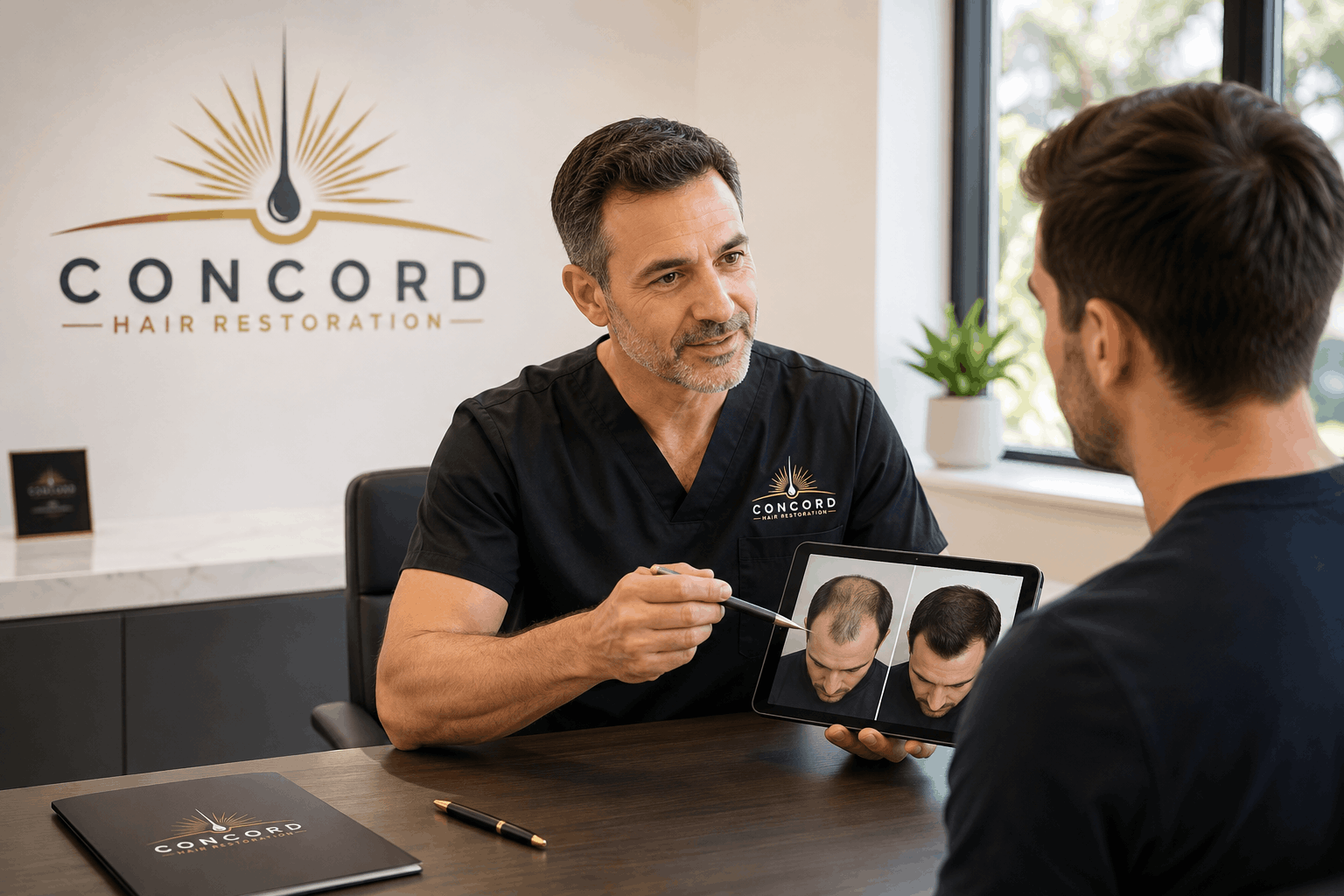
Hair transplant results develop gradually.
The transplanted area should not be expected to look like the final result immediately after surgery.
Transplanted hairs may shed while the underlying follicles remain in place. New hair growth typically develops gradually over the following months, with continued maturation over time.
The exact timeline varies between patients.
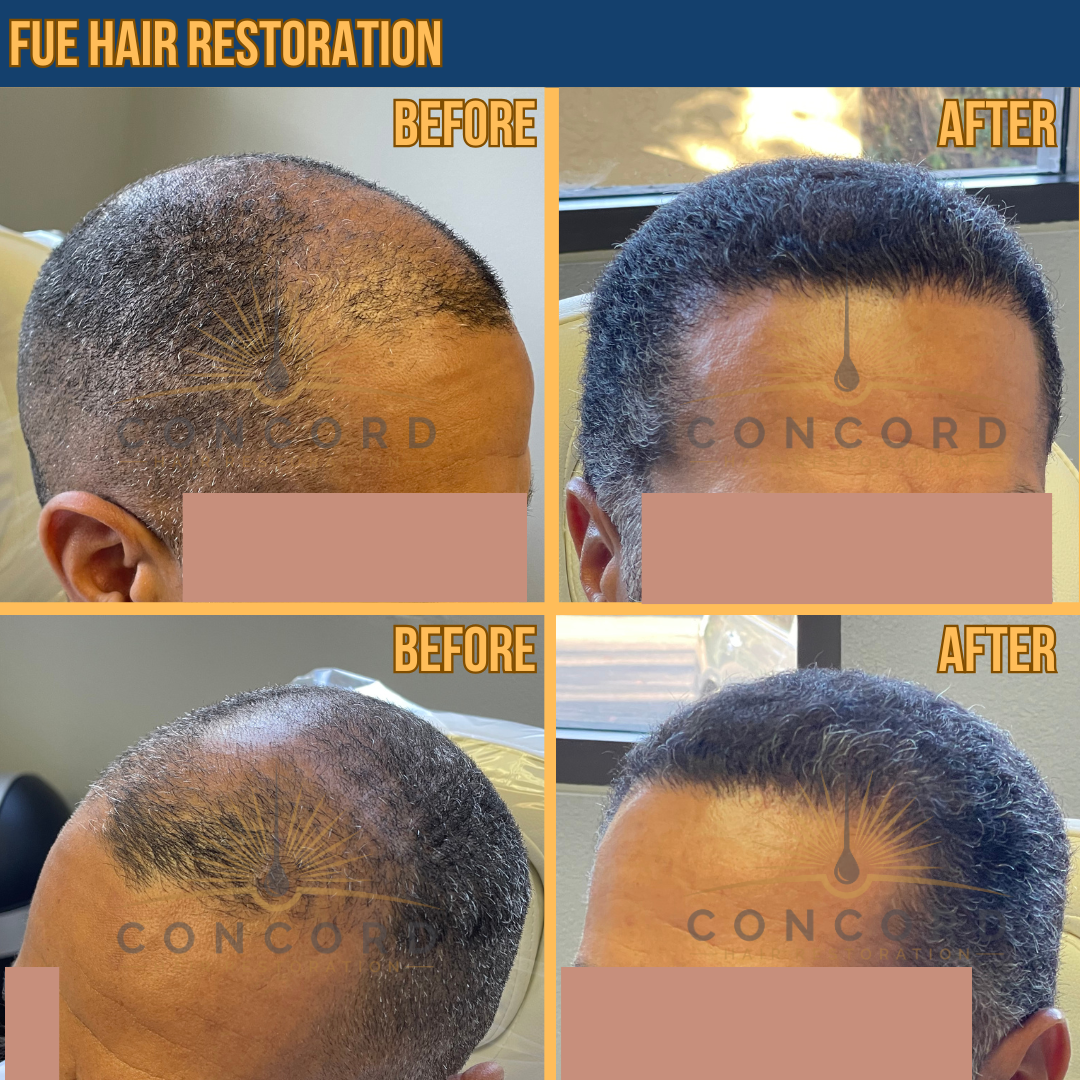
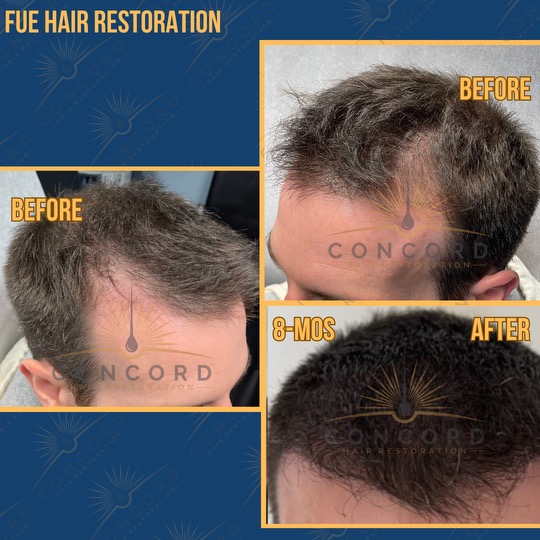
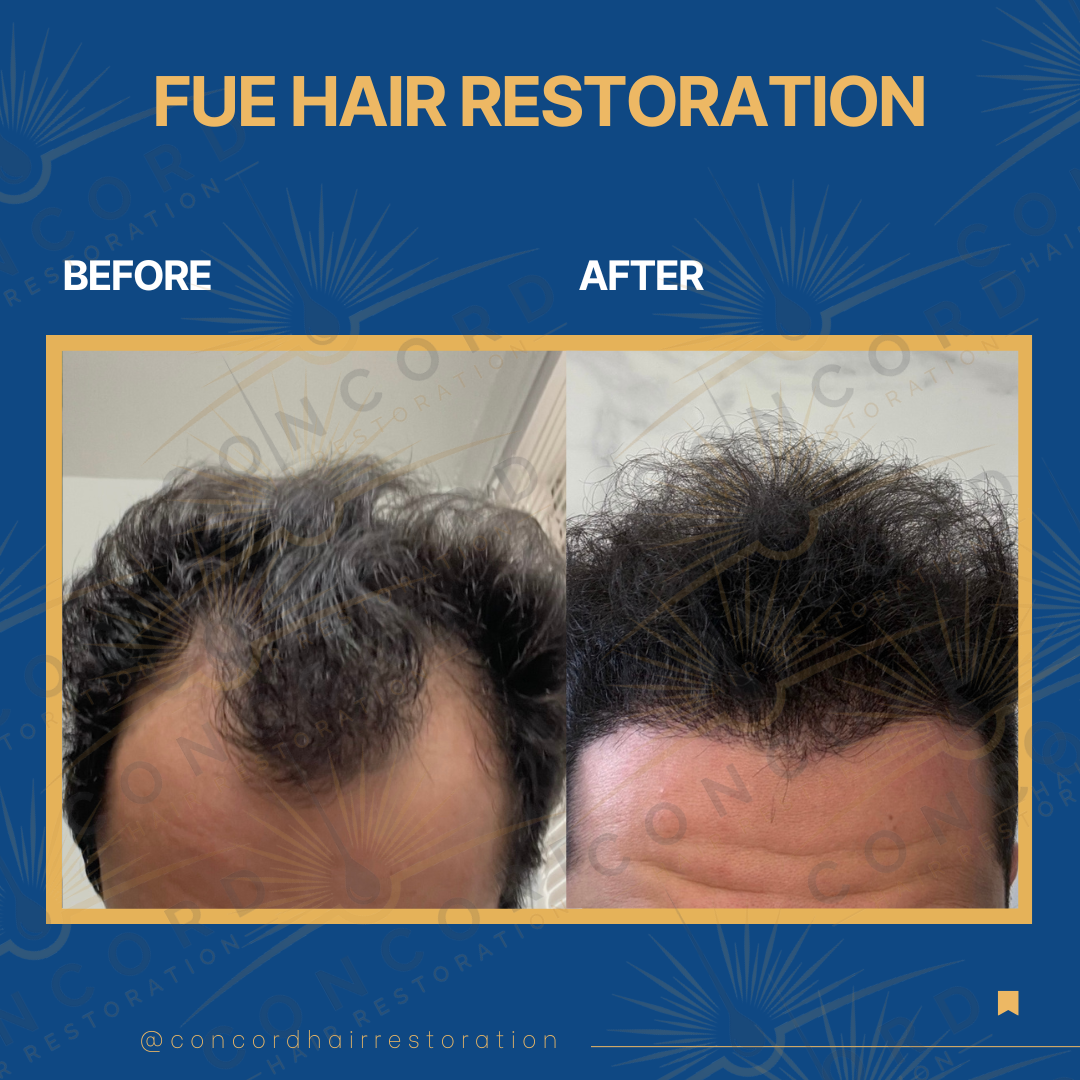
You can view examples of hair restoration outcomes in Concord Hair Restoration’s before-and-after gallery.

Why FUE Can Produce Natural-Looking Results
Natural-looking FUE results depend on a combination of treatment factors rather than the extraction method alone.
Important considerations may include:
- Hairline design
- Graft selection
- Natural hair angles
- Hair direction
- Density transitions
- Graft distribution
- Existing native hair
- Donor management
- Long-term planning
The objective is to create transplanted growth that blends with the patient’s existing hair rather than looking obviously surgical.

FUE for Hairline and Temple Restoration
FUE may be used for patients experiencing:
- Receding temples
- M-shaped recession
- Frontal thinning
- Loss of frontal density
- Certain previously transplanted hairlines
Because the frontal hairline frames the face, even relatively small procedures can require detailed planning.
A lower hairline is not necessarily a better hairline.
The design should consider facial proportions, available donor hair, existing hair, and how future hair loss may affect the result.

FUE for the Mid-Scalp
Mid-scalp restoration may involve distributing grafts through areas of reduced density while blending transplanted follicles with existing native hair.
The number of grafts needed can depend on:
- Size of the thinning area
- Remaining native hair
- Hair caliber
- Desired density
- Donor availability
Treatment planning should also consider whether additional thinning may occur in surrounding areas over time.
FUE for Crown Hair Loss
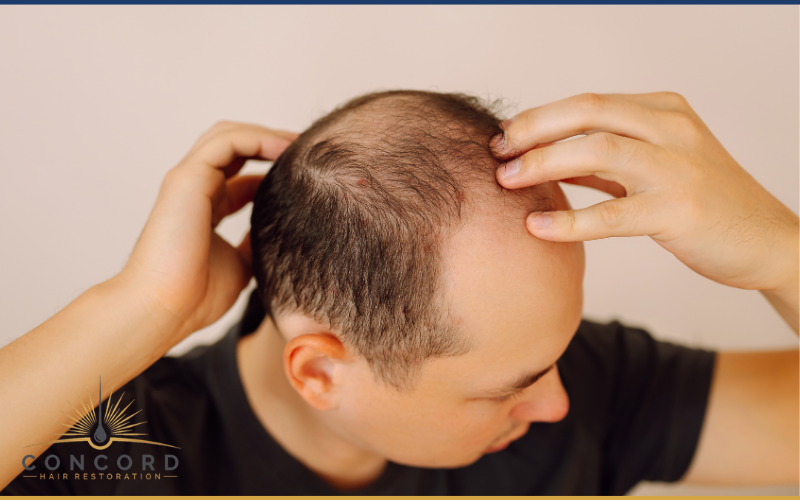
The crown can require a different graft-placement strategy because natural hair commonly grows in a whorl pattern.
Treatment planning may consider:
- Size of the crown
- Existing hair
- Direction of the natural whorl
- Available donor grafts
- Other areas that may need restoration
- Long-term hair-loss progression
Large crown areas can require substantial donor resources, making donor management particularly important.
How Much Does FUE Cost in Los Angeles?
There is no single price for an FUE hair transplant.
Cost can vary depending on factors such as:
- Number of grafts
- Treatment area
- Donor characteristics
- Hairline design
- Procedure complexity
- Previous hair transplant procedures
- Scope of treatment
- Follow-up care
A smaller frontal procedure may cost considerably less than a larger case involving several areas of the scalp.
For detailed pricing information, visit our Hair Transplant Cost in Los Angeles guide.
Can FUE Treat Multiple Areas?
In some cases, yes.
A treatment plan might involve:
- Hairline and temples
- Hairline and mid-scalp
- Mid-scalp and crown
- Multiple areas of the scalp
However, treating additional areas generally increases graft requirements.
The decision should be based on available donor hair and treatment priorities rather than attempting to cover every area at once.
Is FUE Right for Everyone?
No.
Although FUE can be appropriate for many patients, it is not automatically the best choice for every person experiencing hair loss.
Factors affecting candidacy may include:
- Type of hair loss
- Extent of hair loss
- Donor supply
- Hair characteristics
- Scalp condition
- Previous procedures
- Medical history
- Expectations
- Future hair-loss progression
An individualized consultation is necessary to determine whether FUE may be appropriate.
Questions to Ask During an FUE Consultation
If you’re considering FUE, useful questions include:
- Am I a good candidate for FUE?
- What type of hair loss do I have?
- How many grafts do you recommend?
- Why do you recommend that graft number?
- How will my donor area be managed?
- How will my hairline be designed?
- Who performs each stage of the procedure?
- What level of coverage is realistic?
- What happens if my hair loss continues?
- What should I expect during recovery?
- When should I expect new growth?
- What is included in the quoted price?
- Could I need additional treatment in the future?
A consultation should help you understand both the procedure and the reasoning behind the proposed treatment plan.
Frequently Asked Questions About FUE Hair Transplant
Does FUE leave scars?
FUE avoids the long linear donor scar associated with FUT. Because follicles are harvested individually, the donor area instead contains many small extraction sites. Healing and visibility can vary from patient to patient.
Is FUE painful?
Local anesthesia is typically used during hair transplantation. Patient experiences can vary, so discomfort and pain-management expectations should be discussed during the consultation.
How long does an FUE procedure take?
Procedure length depends on factors such as the number of grafts required, areas being treated, and complexity of the case.
How long is FUE recovery?
Recovery varies by patient and procedure size. Individual instructions regarding work, exercise, scalp washing, and other activities should be provided by the treating clinical team.
When does transplanted hair start growing?
Hair growth develops gradually after transplantation. Transplanted hairs may initially shed before new growth begins, followed by continued improvement over the following months.
How many grafts can be transplanted with FUE?
There is no single graft number that applies to every patient. Donor density, hair characteristics, treatment area, previous procedures, and long-term goals all influence the recommended number.
Is FUE permanent?
Transplanted follicles are generally selected from donor areas that tend to be more resistant to common pattern hair loss. However, untreated native hair may continue to thin, which is why long-term planning remains important.
Is FUE better than FUT?
Neither technique is automatically better for every patient. The appropriate option depends on factors such as donor characteristics, graft needs, previous procedures, hairstyle preferences, and treatment goals.
How much does an FUE hair transplant cost in Los Angeles?
Pricing varies according to graft requirements, treatment area, donor characteristics, complexity, and the overall treatment plan. An individualized evaluation is generally needed to provide a more accurate estimate.
Schedule an FUE Hair Transplant Consultation in Los Angeles
If you’re considering FUE and want to understand whether it may be appropriate for your hair loss, schedule a consultation with Concord Hair Restoration.
During your evaluation, the team can review your hair-loss pattern, donor area, hair characteristics, goals, potential graft requirements, and long-term considerations.

Concord Hair Restoration
Encino Office
16661 Ventura Blvd., Suite 703
Encino, CA 91436
(818) 800-2002
