
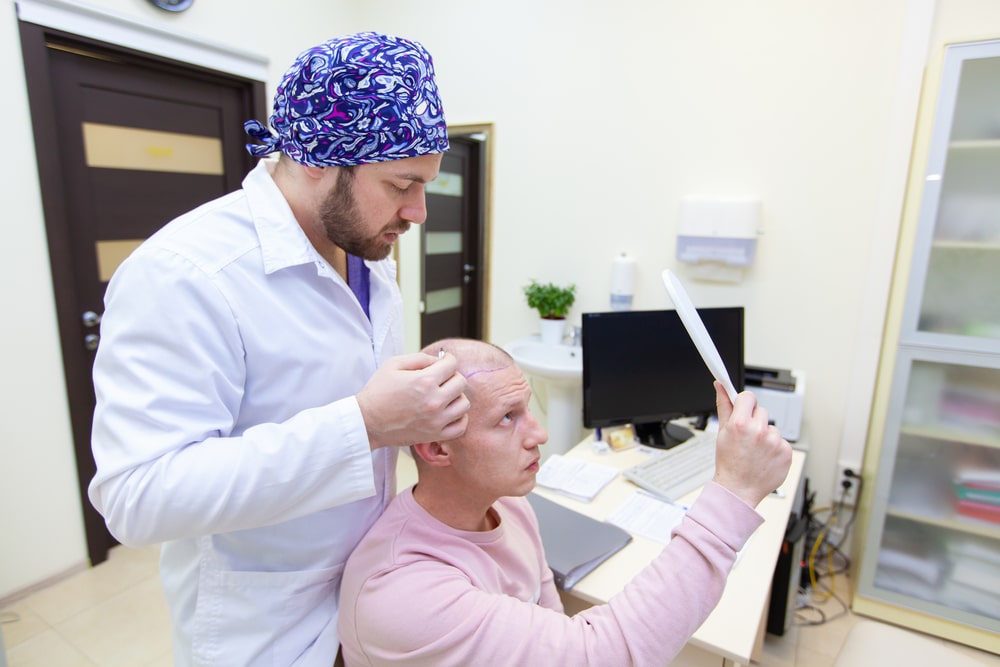
Hair loss can affect more than your appearance. It can also influence your confidence and how you feel about yourself. If you have been researching hair restoration, you may already know that modern hair transplants can produce remarkably natural-looking results.
However, choosing to undergo a hair transplant is a significant decision. Understanding the process, setting realistic expectations, and choosing an experienced hair restoration physician can help you make a more informed choice.
Whether you have recently noticed thinning hair or have been considering treatment for years, this guide explains the most important things to know before scheduling a hair transplant consultation.
Quick Summary
A successful hair transplant depends on much more than relocating hair follicles. Important factors include determining the cause of your hair loss, evaluating your candidacy, choosing the right physician, protecting your donor area, planning for future hair loss, and establishing realistic expectations.
Taking time to understand these factors before surgery can help you pursue natural-looking, long-lasting results with greater confidence.
Understand Why You Are Losing Your Hair First
One of the biggest misconceptions about hair restoration is that every form of hair loss should be treated with a hair transplant.
Hair loss can have many possible causes, and not all of them require surgery. Common causes include:
- Male pattern baldness, also called androgenetic alopecia
- Female pattern hair loss
- Hormonal changes
- Stress-related shedding
- Nutritional deficiencies
- Certain medications
- Autoimmune conditions
- Scalp disorders
- Temporary illness or physical stress
Understanding why you are losing your hair is an essential part of the consultation process.
A qualified hair restoration physician may evaluate your medical history, family history, pattern of thinning, scalp health, hair characteristics, and donor hair availability before recommending treatment.
In some cases, nonsurgical treatments or additional medical evaluation may be recommended before hair transplantation is considered.
Beginning with an accurate evaluation helps ensure that your treatment plan addresses your specific form of hair loss rather than only the visible symptoms.
Are You a Good Candidate for a Hair Transplant?
Modern hair transplantation can produce significant improvements, but not everyone is an ideal candidate.
Several factors can influence whether a hair transplant is appropriate, including:
- Your age
- The cause of your hair loss
- The stability of your hair loss pattern
- Donor hair density
- Hair texture and caliber
- Scalp health
- Overall health
- Long-term expectations
For example, a younger patient experiencing rapidly progressing hair loss may benefit from a conservative treatment plan. Creating an aggressive hairline too early could lead to an unbalanced appearance if the surrounding non-transplanted hair continues to thin.
Patients with limited donor hair also require careful planning. The donor area contains a finite number of follicles, so the available supply must be used responsibly.
A personalized consultation can help determine whether you are a suitable candidate and what type of result may be realistically achievable.
Choose Your Hair Transplant Physician Carefully
Choosing the right physician is one of the most important decisions you will make during the hair restoration process.
Hair transplantation combines medical knowledge, surgical planning, and artistic judgment. Although the procedure involves relocating healthy follicles, creating a believable result requires careful attention to:
- Facial proportions
- Hairline placement
- Hair direction
- Donor density
- Existing hair
- Future hair loss
- Age
- Long-term treatment goals
An experienced physician should develop a personalized plan rather than recommending the same hairline, graft count, or procedure for every patient.
Questions to Ask a Hair Transplant Physician
During your consultation, consider asking:
- How much experience do you have performing hair transplant procedures?
- Who performs the extraction and placement portions of the procedure?
- Can I see results from patients with hair loss similar to mine?
- How will you determine the position and shape of my hairline?
- How will my donor hair be managed?
- Which transplant method do you recommend for me?
- What results can I realistically expect?
- How should we plan for future hair loss?
- Could I need another procedure later?
- What does the recovery process involve?
A reputable physician should welcome thoughtful questions and provide clear answers without relying on unrealistic promises.
Physician Insight
“A successful hair transplant is not simply about moving follicles. It requires a personalized treatment plan that considers current hair loss, possible future progression, donor availability, facial features, and long-term goals.”
— Dr. Ben Mousavi
Understand the Difference Between FUE and FUT
Modern hair transplantation generally uses one of two primary donor-harvesting methods:
- Follicular Unit Extraction, or FUE
- Follicular Unit Transplantation, or FUT
What Is FUE?
With FUE, individual follicular units are removed from the donor area and transplanted into areas affected by thinning or baldness.
Patients may consider FUE because it:
- Uses small individual extraction sites
- Does not create one long linear donor scar
- May provide greater flexibility with shorter hairstyles
- Allows follicular units to be harvested individually
- Can support a customized distribution of grafts
However, the quality of an FUE result still depends on proper extraction, donor management, graft handling, hairline design, and placement.
Learn more:
What Is Follicular Unit Extraction?
What Is FUT?
FUT, sometimes called strip harvesting, involves removing a narrow strip of tissue from the donor area. The tissue is then separated into individual follicular units for transplantation.
FUT may be appropriate for certain patients depending on their donor area, hairstyle preferences, treatment goals, and the number of grafts required.
Neither method is automatically right for every patient. A physician should explain the advantages and limitations of each option based on your individual needs.
Compare the two methods:
The Differences Between FUE and FUT Hair Transplants
Natural Hairlines Matter More Than Graft Counts
Many patients begin researching hair transplantation by asking:
“How many grafts will I need?”
Graft count is an important part of treatment planning, but it does not determine whether a result will look natural.
The design of the frontal hairline often has a much greater influence on the final appearance.
An experienced hair restoration physician considers:
- Facial proportions
- Forehead shape
- Age
- Hair direction
- Hair texture
- Hair caliber
- Existing density
- Temple recession
- Future hair loss
- Available donor supply
A natural hairline is rarely perfectly straight or uniformly dense. It usually contains subtle variations and softer areas that reflect normal hair growth.
The finest single-hair grafts are commonly used near the front to create a gradual transition. Follicular units containing more hairs can then be positioned behind them to build the appearance of density.
In many cases, thoughtful design produces a better long-term result than simply transplanting the highest possible number of grafts.
Learn more:
Why Natural Hairlines Matter More Than Hair Count
Hair Direction and Placement Affect the Final Result
Natural hair does not grow straight upward across the entire scalp. Its direction and angle change depending on the location.
Hair near the frontal hairline usually exits the scalp at a relatively shallow angle. Hair around the temples follows a different pattern, while hair in the crown may grow in a circular whorl.
During transplantation, grafts should be positioned to complement these natural patterns.
Placement that does not account for angle and direction can make transplanted hair more difficult to style and may contribute to an unnatural appearance.
Careful placement helps the new hair:
- Blend with existing follicles
- Follow natural growth patterns
- Sit properly when styled
- Create softer transitions
- Frame the face appropriately
This is one reason hair transplantation should not be viewed as a simple process of filling empty spaces.
Donor Hair Is a Limited Resource
Hair used for transplantation is generally harvested from more stable areas of the scalp, often along the back and sides of the head.
However, every patient has a limited donor supply.
Removing too many follicles or harvesting them unevenly can create visible thinning in the donor area. It may also reduce the number of grafts available if another procedure becomes necessary later.
Responsible donor management involves evaluating:
- Donor density
- Hair caliber
- Follicular-unit distribution
- Scalp characteristics
- Safe harvesting zones
- Current hair loss
- Expected future hair loss
- The potential need for additional treatment
A conservative plan attempts to improve the areas that matter most while preserving future options.
Learn more:
Understanding Donor Hair
Recovery Requires Patience
Hair transplantation is a gradual process rather than an immediate transformation.
During the early healing period, patients may experience:
- Mild swelling
- Temporary redness
- Small scabs around the grafts
- Tenderness in the donor area
- Temporary shedding
- Changes in scalp sensitivity
Your physician should provide specific postoperative instructions for washing, sleeping, exercising, caring for the scalp, and protecting the grafts.
Following these directions is important because the transplanted follicles are particularly vulnerable during the early recovery period.
Typical Hair Transplant Recovery Timeline
Although recovery varies, a general timeline may look like this:
First week: Initial healing occurs, and small scabs may remain around the transplanted grafts.
Weeks two through four: The transplanted hairs may begin to shed. This is commonly called shock shedding and does not necessarily mean the follicles have been lost.
Months three through four: Early new growth may begin to appear.
Months six through nine: Many patients notice more meaningful improvements in coverage and density.
Months 12 through 18: The transplanted hair may continue to mature, thicken, and improve in appearance.
Some areas of the scalp may develop more slowly than others. Crown growth, for example, may take longer to mature than the frontal hairline.
Learn more:
Hair Transplant Recovery Timeline Los Angeles
A Hair Transplant Does Not Stop Future Hair Loss
A hair transplant moves follicles into areas affected by thinning or baldness, but it does not automatically stop the progression of hair loss in the surrounding non-transplanted hair.
This distinction is important.
The transplanted follicles may continue growing while the original hair around them becomes thinner. Without long-term planning, this could eventually create uneven density or visible separation between transplanted and non-transplanted areas.
A physician may consider:
- Your current pattern of hair loss
- Age
- Family history
- Rate of progression
- Donor supply
- Existing miniaturization
- The likelihood of future thinning
- Nonsurgical treatment options
Planning conservatively can help create a result that remains balanced as your appearance changes.
Learn more:
What Happens If You Continue Losing Hair After a Hair Transplant?
How Much Does a Hair Transplant Cost?
Cost is an important consideration, but it should not be the only factor guiding your decision.
Hair transplant pricing may be influenced by:
- The number of grafts required
- The complexity of the procedure
- The transplant method
- Physician experience
- Donor-area characteristics
- Hairline and density goals
- Geographic location
- Follow-up care
Choosing a clinic based only on the lowest advertised price may increase the risk of poor graft placement, donor overharvesting, inadequate planning, or the need for corrective work.
Instead, consider the overall value of the treatment, including:
- Physician involvement
- Quality of previous results
- Personalized surgical planning
- Donor-area preservation
- Follow-up support
- Transparency about realistic outcomes
Learn more:
Hair Transplant Cost Los Angeles
https://concordhairrestoration.com/hair-transplant-cost-los-angeles/
H2: Why Every Hair Transplant Result Is Different
Two patients with similar patterns of hair loss may achieve different outcomes because hair transplantation depends on many individual characteristics.
These include:
- Donor density
- Hair thickness
- Hair color
- Skin tone
- Hair texture
- Curl pattern
- Size of the treatment area
- Existing hair
- Scalp characteristics
- Future hair loss
- Healing response
For example, thicker or curlier hair may create the visual impression of greater coverage with fewer grafts than very fine, straight hair. A lower contrast between hair color and skin tone may also make the scalp less visible.
This does not mean one patient will necessarily receive a better procedure than another. It means treatment goals and expectations should be based on the individual rather than a standardized result.
Set Realistic Expectations About Density and Coverage
A hair transplant redistributes existing follicles. It does not create an unlimited new supply of hair.
For that reason, transplanted density may not perfectly match the density a patient had before experiencing hair loss.
The goal is usually to create the most natural and cosmetically meaningful improvement possible with the available donor supply.
A successful treatment plan may prioritize:
- Framing the face
- Establishing a natural hairline
- Improving coverage in highly visible areas
- Blending with existing hair
- Preserving donor follicles
- Creating a result that ages appropriately
Patients with larger areas of advanced hair loss may need to prioritize certain regions or consider whether staged procedures are appropriate.
Your physician should explain what can reasonably be accomplished before treatment begins.
Learn more about the factors that affect the final outcome:
Personalized Treatment Planning Makes the Biggest Difference
Every patient experiences hair loss differently. Therefore, every hair transplant plan should be individualized.
Two people with similar recession may require different approaches because of differences in:
- Age
- Facial structure
- Donor density
- Hair texture
- Existing hair
- Family history
- Future loss
- Personal goals
Personalized treatment planning considers the complete picture, not only how the patient looks on the day of surgery.
A thoughtful plan should address:
- Where the hairline should begin
- How the hairline should be shaped
- Where density should be concentrated
- How many grafts can be harvested safely
- How future loss may affect the result
- Whether additional procedures may be needed
- How transplanted hair will blend with existing hair
This approach can help protect donor resources and create a result that remains appropriate over time.
Choosing the Right Hair Transplant Starts With the Right Consultation
A hair transplant is a personal decision that deserves careful consideration.
Taking time to understand your options, research physicians, review real patient results, and establish realistic expectations can improve your overall experience.
During a consultation, the physician should evaluate your scalp and hair rather than relying only on photographs or a generic graft estimate. You should also receive an explanation of why a particular procedure, hairline, or graft distribution is being recommended.
Be cautious of clinics that:
- Guarantee a specific result
- Recommend surgery without evaluating the cause of hair loss
- Focus only on maximizing graft counts
- Avoid discussing future hair loss
- Do not explain who performs the procedure
- Pressure you to schedule immediately
- Provide identical plans to every patient
An informed consultation should help you understand both the possibilities and limitations of treatment.
Learn More About Hair Transplant Options in Los Angeles
At Concord Hair Restoration, Dr. Ben Mousavi develops personalized treatment plans based on each patient’s pattern of hair loss, donor availability, hair characteristics, facial features, and long-term goals.
The purpose of the consultation is to determine whether you are a suitable candidate and which treatment approach may be appropriate for your needs.
Learn more about:
Frequently Asked Questions
How do I know if I am a good candidate for a hair transplant?
Candidacy depends on factors such as the cause and stability of your hair loss, donor hair availability, scalp health, age, overall health, and expectations. A consultation with a qualified hair restoration physician is the best way to receive an individualized evaluation.
Is FUE better than FUT?
Neither procedure is universally better for every patient. FUE and FUT have different advantages and limitations. The most appropriate method depends on your donor area, hairstyle preferences, graft requirements, hair characteristics, and treatment goals.
How many grafts will I need?
The number of grafts depends on the size of the treatment area, available donor density, hairline design, hair characteristics, existing hair, and desired coverage. A personalized evaluation is needed to provide a meaningful estimate.
Learn more:
How long does it take to recover from a hair transplant?
Many patients return to routine activities within several days, although visible redness, scabbing, or swelling may take longer to resolve. New growth develops gradually, and results can continue maturing for approximately 12 to 18 months.
Will the transplanted hair fall out after surgery?
The hair shafts commonly shed during the weeks following a procedure. This is an expected phase of the growth cycle. New hair may begin emerging from the transplanted follicles several months later.
Are hair transplant results permanent?
Transplanted follicles are commonly selected from areas that are more resistant to pattern hair loss. These follicles may provide long-lasting growth, although surrounding non-transplanted hair can continue thinning. Long-term planning remains important.
Will my hair transplant look natural?
Modern hair transplantation can produce highly natural-looking results when the procedure includes careful hairline design, appropriate graft selection, correct placement angles, strategic density, and responsible donor management.
Can a hair transplant stop future hair loss?
No. A transplant relocates selected follicles but does not necessarily prevent ongoing thinning in the surrounding original hair. Your physician may discuss a long-term treatment strategy based on your individual condition.
H3: How soon will I see the final result?
Early growth may begin within several months, but the hair typically becomes more visible and mature over time. Many patients continue seeing changes for 12 to 18 months following the procedure.