
Traction Alopecia: Causes, Symptoms, Regrowth & Treatment Options
Traction alopecia is a type of hair loss caused by repeated pulling or tension on the hair follicles.
Unlike genetic pattern hair loss, traction alopecia develops because of external forces placed on the hair over time. Tight hairstyles, extensions, braids, ponytails, and other styling practices can repeatedly stress the follicles, particularly around the hairline and temples.
One of the most important things to understand about traction alopecia is that early hair loss may be reversible, but continued tension can eventually cause permanent follicle damage.
Recognizing the early warning signs and removing the source of tension can make an important difference.
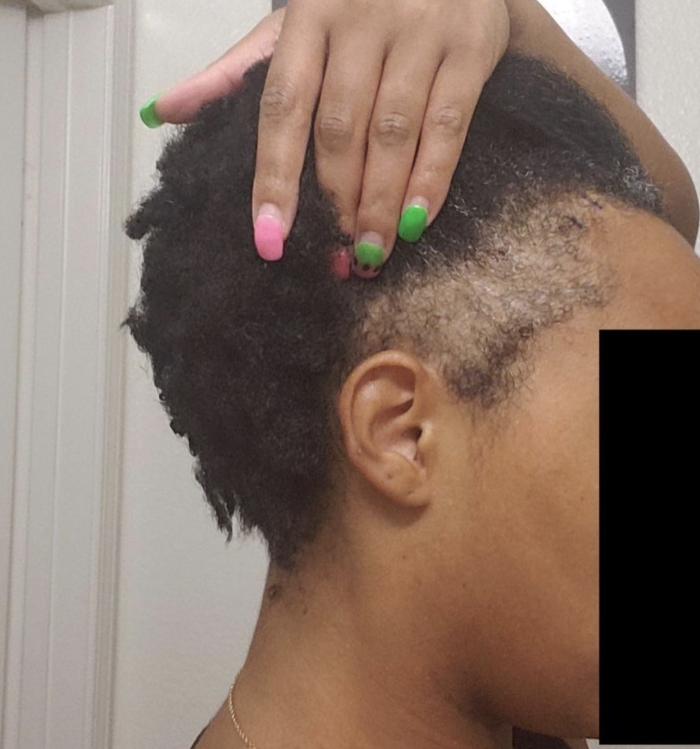
What Is Traction Alopecia?
Traction alopecia occurs when repeated pulling places excessive mechanical stress on hair follicles.
Hair is remarkably resilient, but follicles aren’t designed to withstand continuous tension.
When the same areas are repeatedly pulled, inflammation and damage can develop around the affected follicles.
Initially, changing the hairstyle or eliminating the source of tension may allow the follicles to recover.
If traction continues for a prolonged period, however, follicular damage can become permanent and natural regrowth may become less likely.
What Causes Traction Alopecia?
Any hairstyle or practice that repeatedly pulls tightly on the hair can potentially contribute to traction alopecia.
Common examples include:
- Tight braids
- Cornrows
- Tight ponytails
- Buns
- Hair extensions
- Weaves
- Tight dreadlocks or locs
- Repeated use of certain hair accessories
- Hairstyles that consistently pull at the temples or frontal hairline
The risk isn’t necessarily associated with one particular hairstyle.
The amount of tension, how frequently the style is worn, how long it’s maintained, and whether the same follicles are repeatedly stressed all matter.
Where Does Traction Alopecia Usually Occur?
Hair loss tends to develop where the greatest pulling forces are placed on the follicles.
Common areas include:
- Frontal hairline
- Temples
- Sides of the scalp
- Areas surrounding tight braids
- Locations where extensions or other styling methods repeatedly create tension
The exact pattern depends heavily on the hairstyle and where tension is concentrated.
What Are the Early Signs of Traction Alopecia?
Traction alopecia doesn’t always begin with obvious bald areas.
Early warning signs can include:
- Broken hairs around the hairline
- Thinning at the temples
- Increasing hairline recession
- Small bumps around stressed follicles
- Scalp tenderness
- Redness
- Itching
- Short or broken hairs in high-tension areas
If a hairstyle hurts, pulls strongly on the scalp, or consistently leaves the scalp feeling tender, that can be a warning that excessive tension is being applied.
Recognizing these signs early is important because follicles may still be capable of recovery.
Can Traction Alopecia Grow Back?
Sometimes.
Whether hair grows back depends largely on how much damage has occurred to the follicles.
Early Traction Alopecia
When traction is identified relatively early and the follicles haven’t been permanently damaged, removing the source of tension may allow hair growth to recover over time.
Regrowth won’t necessarily happen immediately because follicles must progress through their normal hair-growth cycles.
Long-Term Traction Alopecia
If repeated pulling continues for years, chronic inflammation and follicular damage may eventually lead to scarring.
Once follicles have been permanently destroyed, simply changing hairstyles won’t cause those follicles to regenerate.
This distinction is why early intervention matters.
Is Traction Alopecia Permanent?
It can become permanent.
Early-stage traction alopecia may improve after the source of tension is eliminated.
Long-standing traction alopecia can cause irreversible damage when follicles become scarred.
Someone who has stopped wearing tight hairstyles but still has areas that remain thin over an extended period may therefore need an evaluation to determine whether viable follicles remain.
How Is Traction Alopecia Different From Androgenetic Alopecia?
Traction alopecia and genetic pattern hair loss can both affect the hairline, but their causes are very different.
Androgenetic alopecia is influenced by genetics and androgen sensitivity and typically produces progressive follicular miniaturization.
Traction alopecia is caused by external mechanical forces repeatedly pulling on follicles.
The pattern of loss, hairstyle history, scalp findings, family history, and progression can help distinguish between them.
In some people, more than one form of hair loss may also be present.
Learn more about the different types of hair loss and how their causes and patterns differ.
How Can You Prevent Traction Alopecia?
Reducing excessive tension is the most important preventive step.
Consider:
- Avoiding consistently tight hairstyles
- Alternating hairstyles
- Reducing tension around the frontal hairline and temples
- Being cautious with heavy extensions
- Avoiding styles that cause scalp pain or tenderness
- Giving high-tension areas time to recover
- Paying attention to early breakage or thinning
You don’t necessarily have to abandon every hairstyle associated with traction.
The goal is to avoid chronic excessive pulling on the same follicles.
How Is Traction Alopecia Treated?
Treatment depends on whether the condition is early and potentially reversible or has progressed to permanent follicular damage.
Remove the Source of Tension
The first step is generally eliminating or substantially reducing the mechanical forces causing the problem.
Continuing to pull on affected follicles can allow additional damage to occur.
Evaluate Scalp and Follicle Health
If thinning persists, professional evaluation can help determine whether follicles remain viable and whether another hair-loss condition may also be present.
Medical Treatment
Depending on the stage and individual circumstances, a healthcare professional may discuss treatment options intended to address inflammation or support hair growth.
Treatment should be based on an appropriate diagnosis rather than self-treating unexplained hair loss.
Can Minoxidil Help Traction Alopecia?
Minoxidil may sometimes be discussed for patients with traction-related thinning when follicles remain capable of producing hair.
However, it can’t correct the underlying problem if damaging tension continues.
It also can’t recreate follicles that have been permanently destroyed by scarring.
Whether minoxidil or another treatment is appropriate should be discussed with an appropriate healthcare professional.
Can a Hair Transplant Restore Permanent Traction Alopecia?
For appropriately selected patients with stable, permanent traction alopecia, hair transplantation may potentially be an option.
This is very different from transplanting hair while active traction continues.
Before surgical restoration is considered, several questions are important:
- Has the damaging hairstyle or source of traction stopped?
- Is the hair loss stable?
- Is there evidence of permanent follicle loss?
- Is the donor area healthy?
- Is there another form of hair loss present?
- How many grafts may be required?
- Can transplantation create natural density in the affected area?
If the underlying cause hasn’t been corrected, newly transplanted follicles could potentially be subjected to the same damaging forces.
How FUE May Be Used for Permanent Traction Hair Loss
For an appropriate candidate, Follicular Unit Extraction (FUE) can be used to harvest individual follicular units from a suitable donor area.
Those grafts can then be strategically placed into areas affected by permanent hair loss.
When restoring a frontal or temporal hairline, successful results require careful attention to:
- Hairline shape
- Facial proportions
- Graft direction
- Natural angles
- Density transitions
- Existing hair
- Donor preservation
Simply filling a thin area with as many grafts as possible isn’t the goal.
The objective is to create restoration that blends naturally with the patient’s existing hair.
Why Hairline Design Matters With Traction Alopecia
Traction alopecia commonly affects areas that are extremely visible, including the temples and frontal hairline.
That makes thoughtful hairline design especially important if transplantation is eventually considered.
A natural hairline isn’t perfectly straight or uniformly dense.
Individual follicular units need to be positioned with appropriate direction, angle, distribution, and irregularity so the restored area blends naturally with surrounding hair.
The patient’s age, facial proportions, existing hairline, donor supply, and long-term goals should all influence treatment planning.
When Should You Have Traction Hair Loss Evaluated?
Consider seeking professional evaluation if you notice:
- Progressive temple thinning
- A receding hairline associated with tight hairstyles
- Persistent broken hairs around the hairline
- Scalp tenderness or inflammation
- Areas that don’t regrow after eliminating tension
- Smooth areas where hair previously grew
- Uncertainty about whether your hair loss is traction-related
Early evaluation may be particularly useful because preventing additional follicle damage is much easier than restoring follicles after they’ve been permanently lost.
Considering Hair Restoration for Permanent Traction Alopecia?
If you’ve eliminated the source of traction but areas of permanent hair loss remain, a hair restoration consultation can help determine whether transplantation may be appropriate.
An evaluation should consider the stability of the hair loss, condition of the affected scalp, donor density, existing hair, and your restoration goals.
For appropriately selected patients researching a hair transplant in Los Angeles, Concord Hair Restoration can evaluate whether FUE may be an option for restoring areas affected by permanent hair loss.
Frequently Asked Questions
What is traction alopecia?
Traction alopecia is hair loss caused by repeated pulling or tension on hair follicles, often from tight hairstyles or styling practices.
What hairstyles can cause traction alopecia?
Tight braids, cornrows, ponytails, buns, extensions, weaves, and other styles that repeatedly place significant tension on follicles can contribute to traction alopecia.
What are the first signs of traction alopecia?
Early signs can include broken hairs, thinning around the temples or hairline, scalp tenderness, redness, itching, or small bumps around stressed follicles.
Can traction alopecia grow back?
Early traction alopecia may improve when damaging tension is eliminated before permanent follicular damage occurs.
Is traction alopecia permanent?
It can become permanent when prolonged tension causes scarring and destruction of hair follicles.
How long does traction alopecia take to grow back?
There isn’t one recovery timeline for everyone. Regrowth depends on the extent of follicular damage, how long traction occurred, and individual hair-growth cycles.
Can tight braids cause permanent hair loss?
Repeated tight braiding can potentially cause permanent hair loss if prolonged tension damages and scars the follicles.
Can hair extensions cause traction alopecia?
Extensions can contribute to traction alopecia when their weight or attachment repeatedly creates excessive tension on the follicles.
Can minoxidil help traction alopecia?
Minoxidil may sometimes be considered when follicles remain viable, but it doesn’t eliminate the underlying mechanical cause or recreate follicles that have been permanently destroyed.
Can you get a hair transplant for traction alopecia?
Selected patients with stable, permanent traction alopecia and adequate donor hair may be candidates for transplantation after the source of damaging tension has been eliminated and the condition appropriately evaluated.
Resources: