Scarring Alopecia: Causes, Symptoms, Treatment & Hair Restoration
Scarring alopecia, also known as cicatricial alopecia, refers to a group of hair-loss conditions in which inflammation damages and destroys hair follicles.
Unlike many forms of temporary hair shedding, the affected follicles can be replaced by scar tissue. Once a follicle has been permanently destroyed, it can no longer naturally produce hair.
This makes early diagnosis particularly important. Treatment often focuses first on identifying the underlying condition, controlling inflammation, and preventing additional follicle damage rather than immediately trying to restore lost hair.
For some people with long-term stable scarring alopecia, surgical hair restoration may eventually be considered—but only after careful medical evaluation.
What Is Scarring Alopecia?
Scarring alopecia isn’t one single disease.
It is a broad term describing conditions that cause permanent destruction of hair follicles and subsequent scarring.
Inflammation may occur around the follicle and gradually damage the structures necessary for normal hair production.
As the condition progresses, affected follicles may disappear and be replaced by fibrous or scar tissue.
This distinguishes cicatricial alopecia from conditions such as telogen effluvium, where follicles generally remain intact and may resume normal hair production.
What Does Scarring Alopecia Look Like?
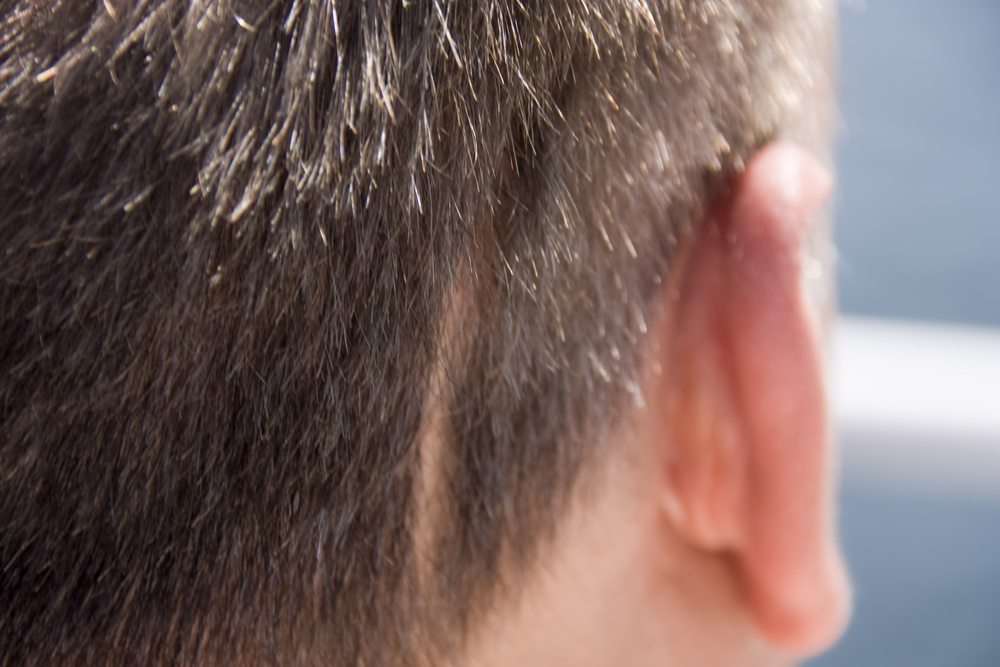
Scarring alopecia can appear differently depending on the underlying condition and stage of disease.
Possible signs include:
- Areas of permanent hair loss
- Smooth or shiny areas of scalp
- Loss of visible follicular openings
- Redness around follicles
- Scaling
- Itching
- Burning
- Tenderness or pain
- Pustules or crusting in some conditions
- Changes in scalp pigmentation
Some people experience noticeable scalp symptoms, while others may have relatively few symptoms despite progressive hair loss.
Because several conditions can produce similar-looking hair loss, appearance alone isn’t enough to determine the cause.
What Causes Scarring Alopecia?
There are multiple forms of cicatricial alopecia, and their causes differ.
Broadly, scarring hair loss may develop when inflammation directly targets the hair follicle or when follicles are destroyed as a secondary result of another process.
Potential causes can include:
- Inflammatory scalp disorders
- Autoimmune conditions
- Certain infections
- Physical trauma
- Burns
- Radiation
- Other processes that permanently damage follicles
Determining why the scarring occurred is critical because treatment depends on the underlying cause.
Primary vs. Secondary Scarring Alopecia
One useful distinction is between primary and secondary cicatricial alopecia.
Primary Scarring Alopecia
In primary cicatricial alopecia, inflammation directly affects structures of the hair follicle.
Several different inflammatory disorders fall into this category.
Treatment generally focuses on controlling the disease process before additional follicles are permanently damaged.
Secondary Scarring Alopecia
Secondary scarring alopecia occurs when follicles are destroyed by another process affecting the skin.
Examples can include severe injury, burns, certain infections, radiation, or other forms of significant tissue damage.
The distinction can be important when determining treatment and whether future surgical restoration may be feasible.
Conditions Associated With Scarring Alopecia
Several disorders can cause cicatricial hair loss.
Examples include:
Lichen Planopilaris
Lichen planopilaris is an inflammatory condition that can damage hair follicles and lead to permanent areas of hair loss.
Frontal Fibrosing Alopecia
Frontal fibrosing alopecia is a form of scarring alopecia that commonly affects the frontal and temporal hairline.
Eyebrow loss may also occur.
Central Centrifugal Cicatricial Alopecia
Central centrifugal cicatricial alopecia, or CCCA, commonly begins around the central portion of the scalp and can gradually expand outward.
Discoid Lupus Erythematosus
Discoid lupus can affect the scalp and produce inflammatory lesions that may eventually result in permanent scarring and hair loss.
Folliculitis Decalvans
Folliculitis decalvans is an inflammatory condition that can cause pustules, crusting, and progressive scarring hair loss.
These conditions don’t all behave the same way, which is why a specific diagnosis matters.
How Is Scarring Alopecia Different From Other Types of Hair Loss?
The key distinction is follicular destruction.
With androgenetic alopecia, follicles progressively miniaturize as part of genetic pattern hair loss.
With alopecia areata, immune activity disrupts normal hair growth, but the follicles aren’t necessarily permanently destroyed.
With telogen effluvium, follicles temporarily shift into the resting phase and produce increased shedding.
With cicatricial alopecia, inflammation or tissue damage can permanently destroy the follicle itself.
Our guide to the different types of hair loss explains how these conditions differ.
Why Early Diagnosis Matters
Once a follicle has been permanently destroyed by scarring, medical treatment can’t simply make that follicle regenerate.
For this reason, one of the primary goals of treatment is often to prevent additional follicular destruction.
Someone experiencing symptoms such as progressive patchy hair loss, scalp inflammation, burning, tenderness, redness, scaling, or loss of visible follicular openings should consider seeking appropriate medical evaluation.
Waiting until a large area has become permanently scarred can limit future treatment options.
How Is Scarring Alopecia Diagnosed?
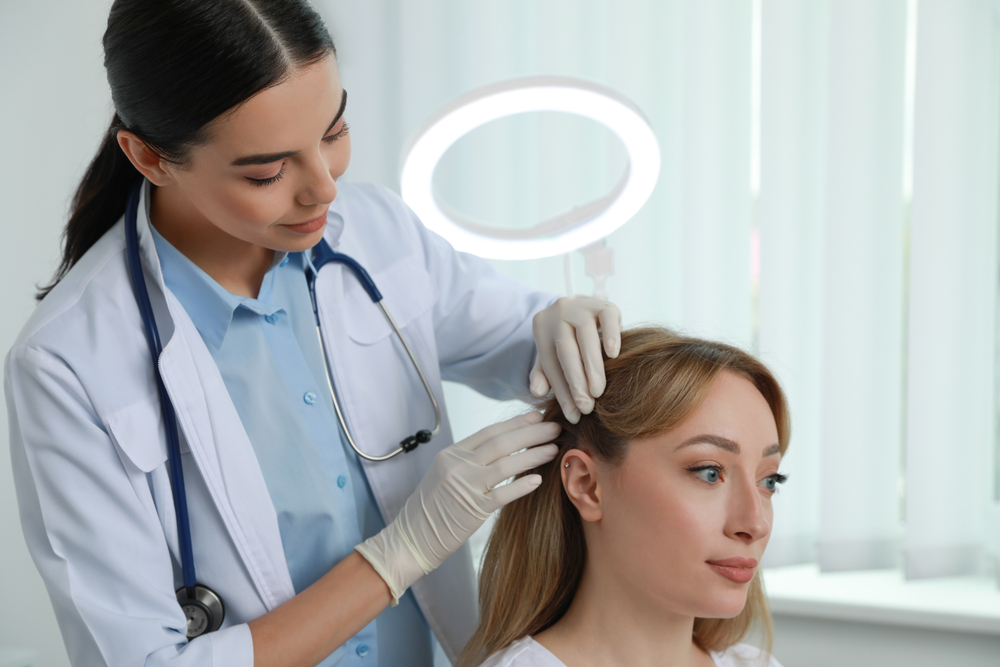
Diagnosis generally involves evaluation by an appropriate healthcare professional, often a dermatologist.
The evaluation may include:
- Hair-loss pattern
- Scalp examination
- Symptoms
- Medical history
- Rate of progression
- Examination of the follicles and surrounding skin
A scalp biopsy may sometimes be used to help identify the underlying type of inflammatory or scarring process.
Other testing may also be appropriate depending on the suspected condition.
How Is Scarring Alopecia Treated?
Treatment depends on the underlying diagnosis.
When active inflammation is responsible for follicular destruction, the immediate goal is generally controlling the disease and preventing additional permanent hair loss.
Depending on the condition, a dermatologist or other qualified medical professional may consider treatments intended to reduce inflammation or address an underlying cause.
The appropriate treatment varies considerably among different forms of cicatricial alopecia.
This is why self-treating unexplained scarring hair loss without first establishing a diagnosis can be problematic.
Can Hair Grow Back After Scarring Alopecia?
If a follicle has been completely destroyed and replaced by scar tissue, it generally can’t naturally regenerate hair.
However, not every follicle within an affected area is necessarily destroyed at the same time.
Controlling an active inflammatory condition may therefore help preserve follicles that remain viable.
That’s another reason early diagnosis and treatment can be important.
Can You Get a Hair Transplant With Scarring Alopecia?
Possibly—but hair transplantation is not appropriate for every patient with scarring alopecia.
The first priority is determining whether the underlying disease is active.
Transplanting follicles into an area with ongoing inflammatory disease could put those transplanted follicles at risk and doesn’t address the underlying condition.
For selected patients with long-term stable disease, surgical restoration may eventually be considered after appropriate medical evaluation.
Important considerations include:
- Type of scarring alopecia
- Disease activity
- Duration of stability
- Scalp condition
- Blood supply within the scarred tissue
- Donor-hair availability
- Extent of hair loss
- Expectations
- Risk of disease recurrence
The decision needs to be individualized.
Why Disease Stability Matters Before Hair Transplantation
A hair transplant relocates follicles. It doesn’t cure the inflammatory condition responsible for cicatricial alopecia.
That’s why simply waiting for the scalp to “look better” isn’t necessarily enough to establish candidacy.
Appropriate medical evaluation may be needed to determine whether the underlying condition appears sufficiently controlled or inactive before surgical restoration is considered.
Even after a prolonged period of stability, recurrence can remain a concern with some forms of scarring alopecia.
Why Transplanting Into Scar Tissue Is Different
Scarred scalp tissue isn’t necessarily identical to healthy, unaffected scalp.
Depending on the type and severity of scarring, differences in tissue characteristics and vascularity may affect treatment planning and graft survival.
This can make hair transplantation into scarred areas less predictable than transplantation for ordinary androgenetic alopecia.
As a result, treatment may need to be more conservative and carefully planned.
Are Test Grafts Ever Used for Scarring Alopecia?
In selected circumstances, a hair restoration physician may consider a small test procedure before undertaking more extensive transplantation.
The idea is to evaluate how transplanted follicles behave within the affected tissue before committing substantial donor resources to a larger procedure.
However, a successful test doesn’t guarantee that the underlying disease can never recur.
The broader medical history, diagnosis, and stability of the condition remain important.
Can FUE Be Used for Stable Scarring Alopecia?
For an appropriately selected candidate, Follicular Unit Extraction (FUE) may potentially be used to harvest individual follicular units from a healthy donor area.
Those grafts can then be strategically placed into selected areas of permanent hair loss.
But the surgical technique isn’t the first question.
The first question is whether the underlying scarring condition is sufficiently stable for transplantation to be considered at all.
Only after that question has been addressed does graft harvesting, placement, density, and hairline design become relevant.
When Should You See a Dermatologist?
Consider seeking medical evaluation if you notice:
- Patchy hair loss accompanied by scalp changes
- Redness or inflammation
- Burning or tenderness
- Persistent itching
- Scaling or crusting
- Pustules
- Smooth or shiny areas of permanent-looking hair loss
- Progressive loss around the frontal hairline
- Eyebrow loss accompanied by frontal recession
- Rapidly expanding areas of hair loss
Earlier diagnosis may provide a better opportunity to protect follicles that haven’t yet been permanently damaged.
Considering Hair Restoration After Scarring Alopecia?
If you have previously diagnosed scarring alopecia and your condition has remained stable, a hair restoration evaluation can help determine whether surgical treatment may be worth considering.
This is a more complex situation than transplantation for ordinary pattern baldness.
For appropriately selected patients considering a hair transplant in Los Angeles, Concord Hair Restoration can evaluate donor availability, the affected scalp, treatment goals, and whether FUE may be appropriate after the underlying condition has been medically evaluated.
Frequently Asked Questions
What is scarring alopecia?
Scarring alopecia, or cicatricial alopecia, refers to hair-loss conditions in which inflammation or tissue damage destroys hair follicles and replaces them with scar tissue.
Is scarring alopecia permanent?
Hair loss becomes permanent when follicles have been completely destroyed and replaced by scar tissue.
What are the symptoms of scarring alopecia?
Symptoms can include patchy hair loss, scalp redness, scaling, itching, burning, tenderness, pustules, changes in pigmentation, and smooth areas where follicular openings are no longer visible.
What causes scarring alopecia?
There are multiple causes. Primary scarring alopecias involve inflammatory conditions that directly affect follicles, while secondary scarring can result from injuries, burns, infections, radiation, or other tissue damage.
Can scarring alopecia be stopped?
Treatment may help control the underlying disease and reduce additional follicular damage in some conditions. The appropriate treatment depends on the specific diagnosis.
Can hair grow back after scarring alopecia?
Hair generally cannot naturally regrow from follicles that have been completely destroyed by scarring. Preserving follicles that remain viable is therefore important.
How is scarring alopecia diagnosed?
Evaluation may include examination of the scalp, medical history, assessment of the hair-loss pattern and, in some cases, a scalp biopsy or other testing.
Can you get a hair transplant with scarring alopecia?
Selected patients with sufficiently stable scarring alopecia may potentially be candidates, but careful medical and surgical evaluation is necessary because outcomes can be less predictable and recurrence may be possible.
How long should scarring alopecia be inactive before a hair transplant?
There isn’t one universal waiting period appropriate for every form of scarring alopecia. Disease type, history, clinical stability, scalp findings, and specialist evaluation should guide the decision.
Can FUE be used for scarring alopecia?
FUE may potentially be used in selected patients with stable permanent scarring hair loss and adequate healthy donor hair. Determining whether the disease is sufficiently stable should come before choosing the surgical technique.
Treatment Options for Scarring Alopecia:
There is no cure for scarring alopecia, but various treatments can help manage the condition and prevent further scarring. Treatment options may include:
- Oral medications: Antibiotics or anti-inflammatory medications to address underlying infections or inflammation.
- Topical medications: Corticosteroids or other topical creams to reduce inflammation.
- Hair transplantation: In some cases, hair transplantation can be used to restore hair in areas with minimal scarring. However, careful evaluation is necessary to ensure successful hair growth.
Hair Transplantation for Scarring Alopecia:
Hair transplantation can be a viable option for patients with scarring alopecia who have undergone a scalp biopsy to confirm inactive disease. A test transplant with a small number of grafts can be performed to assess hair growth viability in the scarred areas. It’s important to understand that the success rate of hair transplantation in scarring alopecia can vary depending on the cause and severity of scarring. There is also a risk of losing some transplanted hair in some types of scarring alopecia.
Concord Hair Restoration Can Help!
We offer consultations with hair loss specialists who can diagnose your condition and recommend the best course of action.
Contact us today for a free consultation in Los Angeles or San Diego.
Resources:
alopecia areata, traction alopecia, telogen effluvium, and androgenetic alopecia.