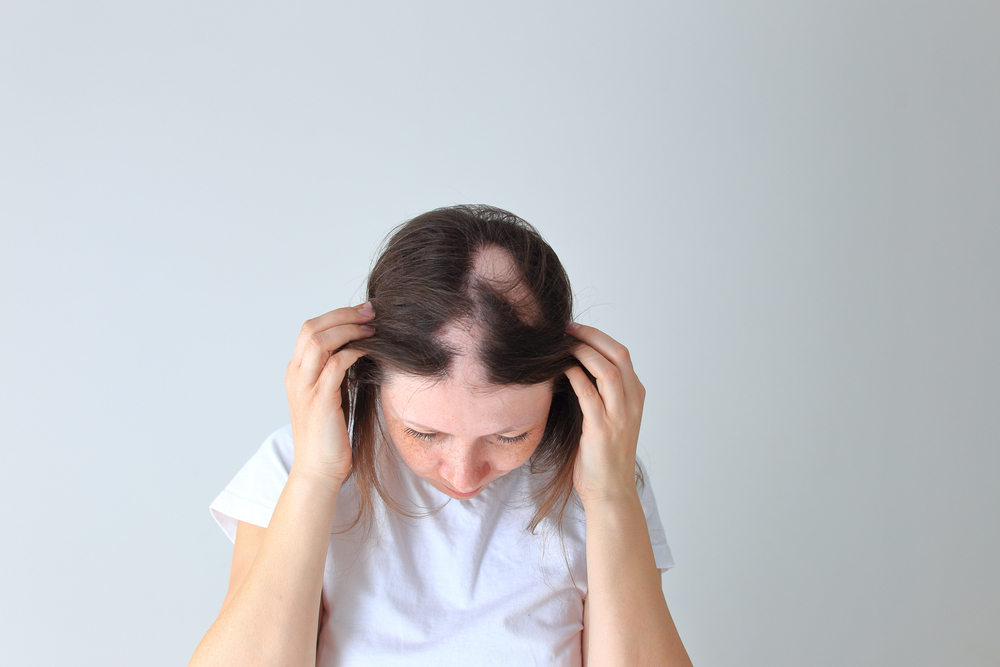
Alopecia Areata: Causes, Symptoms, Regrowth & Treatment Options
Alopecia areata is an autoimmune condition that causes sudden, often patchy hair loss. It can affect the scalp, beard, eyebrows, eyelashes, and other areas of the body.
Unlike androgenetic alopecia, which typically causes gradual pattern hair loss, alopecia areata can appear relatively quickly and may create smooth, round or oval areas of hair loss.
The condition can be unpredictable. Some people experience spontaneous regrowth, while others experience recurring episodes or more extensive hair loss.
Because several conditions can cause patchy or sudden hair loss, an accurate medical diagnosis is important before deciding on treatment.
What Is Alopecia Areata?
Alopecia areata occurs when the immune system mistakenly targets hair follicles.
Hair follicles normally cycle through periods of growth, transition, rest, and shedding. With alopecia areata, immune activity around affected follicles disrupts normal hair production.
This can result in sudden areas of hair loss even when the surrounding scalp appears relatively normal.
Alopecia areata is different from androgenetic alopecia, which involves progressive follicular miniaturization associated with genetic and hormonal factors.
What Does Alopecia Areata Look Like?
Alopecia areata commonly produces one or more smooth patches of hair loss.
It may affect:
- Scalp hair
- Beard hair
- Eyebrows
- Eyelashes
- Other body hair
The amount and pattern of hair loss can vary considerably from person to person.
Some people develop a single small patch, while others develop multiple areas of hair loss.
Because patchy hair loss can have several possible causes, appearance alone shouldn’t be used to self-diagnose the condition.
What Causes Alopecia Areata?
Alopecia areata is considered an autoimmune disease.
Normally, the immune system protects the body against harmful organisms and other threats. With an autoimmune condition, the immune system mistakenly targets the body’s own tissues.
In alopecia areata, immune activity affects hair follicles and interrupts normal hair growth.
Researchers continue studying why the condition develops and what causes episodes to begin or recur.
Genetic susceptibility may play a role, and some people with alopecia areata have a personal or family history of autoimmune disease.
Is Alopecia Areata Permanent?
Not necessarily.
One important characteristic of alopecia areata is that affected follicles are not always permanently destroyed.
That means hair may be capable of growing again.
However, the course of alopecia areata is highly variable.
Some people experience:
- Complete regrowth
- Partial regrowth
- Recurrent patches
- New areas of hair loss
- More extensive hair loss
It isn’t always possible to predict exactly how the condition will progress in an individual patient.
Does Hair Grow Back After Alopecia Areata?
Yes, regrowth is possible.
In some cases, hair begins growing again without treatment. In others, medical treatment may be recommended.
Early regrowth can sometimes look different from the patient’s previous hair. New hairs may initially appear finer or have differences in pigmentation before continuing to mature.
Regrowth doesn’t necessarily mean alopecia areata will never recur.
Some people experience multiple episodes over time.
Alopecia Areata vs. Androgenetic Alopecia
These are two very different causes of hair loss.
Alopecia Areata
Alopecia areata is an autoimmune condition and frequently produces sudden, patchy hair loss.
Androgenetic Alopecia
Androgenetic alopecia—male or female pattern hair loss—typically progresses more gradually and involves follicular miniaturization in genetically susceptible areas.
Someone with male pattern baldness may notice gradual temple recession, a changing frontal hairline, or crown thinning.
Someone with alopecia areata may instead notice a relatively sudden smooth patch of missing hair.
Correctly identifying the cause matters because the treatment strategy for one condition may not be appropriate for the other.
Learn more about different types of hair loss and how their patterns can differ.
Different Forms of Alopecia Areata
Alopecia areata can vary in extent and pattern.
Patchy Alopecia Areata
This is the form many people associate with the condition and typically involves one or more localized areas of hair loss.
Alopecia Totalis
Alopecia totalis refers to loss of essentially all hair on the scalp.
Alopecia Universalis
Alopecia universalis is a more extensive form involving loss of hair across the body.
Not everyone with patchy alopecia areata progresses to these more extensive forms.
How Is Alopecia Areata Diagnosed?
A healthcare professional may evaluate the appearance and pattern of hair loss along with the patient’s medical history.
The evaluation may consider:
- Location and pattern of hair loss
- Speed of onset
- Scalp appearance
- Hair characteristics around affected areas
- Nail changes
- Medical history
- Family history
- Other symptoms or health conditions
Additional testing may sometimes be appropriate when the diagnosis is uncertain or another cause of hair loss is suspected.
A dermatologist can help determine whether sudden or patchy hair loss represents alopecia areata or another condition.
Treatment Options for Alopecia Areata
Treatment depends on factors such as the patient’s age, extent and duration of hair loss, previous treatment response, and individual medical circumstances.
Not every patient requires the same approach.
Observation
Some limited cases can experience spontaneous regrowth, so observation may sometimes be appropriate under medical guidance.
Corticosteroids
Corticosteroids may be used in certain patients to reduce the immune activity associated with alopecia areata.
Depending on the situation, treatment may involve injections or topical formulations.
Other Medical Treatments
Additional therapies may be considered for some patients, particularly when hair loss is extensive or persistent.
Treatment for alopecia areata has evolved considerably, including systemic therapies used in appropriately selected patients.
Because these treatments have different risks, benefits, indications, and monitoring requirements, they should be discussed with a qualified medical professional rather than self-prescribed.
Can Stress Cause Alopecia Areata?
People frequently associate hair loss with stress, but the relationship is more complicated than saying stress directly causes alopecia areata.
Alopecia areata is an autoimmune disease.
Stress may be discussed as a possible trigger or contributing factor in some individuals, but it shouldn’t be assumed to be the cause of every episode.
Stress can also be associated with other types of shedding, including telogen effluvium.
This is another reason proper diagnosis matters.
Can Alopecia Areata Affect the Beard?
Yes.
Alopecia areata can affect facial hair and may produce smooth patches within the beard.
This is sometimes called alopecia areata barbae.
Because other conditions can also create patchy facial-hair loss, evaluation may be appropriate when new unexplained patches develop.
Can Alopecia Areata Affect the Eyebrows?
Yes. Alopecia areata can affect eyebrow and eyelash hair as well as the scalp.
The extent can vary from small areas of thinning to more substantial loss.
Again, eyebrow loss can have several potential causes, so unexplained changes should be appropriately evaluated.
Can You Get a Hair Transplant With Alopecia Areata?
This requires considerably more caution than transplantation for stable pattern hair loss.
Hair transplantation is generally not a routine treatment for active alopecia areata.
Because alopecia areata involves immune activity affecting hair follicles, simply transplanting follicles into an affected area does not address the underlying autoimmune condition.
Disease activity can also be unpredictable.
In unusual circumstances involving long-term stable hair loss, surgical restoration might be discussed only after appropriate specialist evaluation. However, candidacy needs to be considered individually, and there may still be a risk of recurrence.
This is very different from transplantation for appropriately selected patients with stable androgenetic alopecia.
Why Medical Evaluation Should Come Before Hair Restoration
If you suddenly develop round patches of hair loss, the priority shouldn’t be determining how many grafts can be transplanted into the area.
The priority is understanding why the hair disappeared.
That distinction is important throughout hair restoration.
Hair transplantation moves follicles. It does not treat an active autoimmune condition.
Identifying the underlying cause first helps determine whether medical treatment, observation, or another approach is more appropriate.
When Should You See a Doctor About Patchy Hair Loss?
Consider seeking medical evaluation if you experience:
- Sudden patches of hair loss
- Rapidly progressing hair loss
- Eyebrow or eyelash loss
- Patchy beard loss
- Scalp discomfort or inflammation
- Nail changes along with hair loss
- Repeated episodes of unexplained hair loss
A dermatologist or other qualified healthcare professional can evaluate the pattern and determine whether additional testing or treatment may be appropriate.
Understanding Your Type of Hair Loss Is the First Step
Not every person experiencing hair loss has the same condition—and not every type of hair loss should be treated the same way.
Alopecia areata is fundamentally different from common male and female pattern hair loss.
If you’re unsure what is causing your thinning or shedding, start with our guide to the different types of hair loss to understand some of the major conditions that can affect hair growth.
An appropriate professional evaluation can then help establish a diagnosis and determine which treatment options make sense for your individual situation.
Frequently Asked Questions
What is alopecia areata?
Alopecia areata is an autoimmune disease in which immune activity affects hair follicles, commonly causing sudden patches of hair loss.
What does alopecia areata look like?
It often appears as smooth, round or oval patches of hair loss on the scalp, beard, eyebrows, or other areas. The pattern and extent vary among patients.
Does alopecia areata grow back?
Hair regrowth is possible because the follicles are not necessarily permanently destroyed. However, the course is unpredictable, and some people experience recurring episodes.
Is alopecia areata permanent?
Not always. Some patients experience spontaneous or treatment-associated regrowth, while others have persistent or recurrent hair loss.
Is alopecia areata caused by stress?
Alopecia areata is an autoimmune disease. Stress may be discussed as a possible trigger or contributing factor in some individuals, but it shouldn’t be assumed to be the direct cause.
Is alopecia areata contagious?
No. Alopecia areata is not contagious.
Can alopecia areata affect your beard?
Yes. It can cause localized areas of hair loss within the beard as well as the scalp and other hair-bearing areas.
Can alopecia areata affect eyebrows?
Yes. Eyebrow and eyelash hair can be affected in some people with alopecia areata.
What is the difference between alopecia areata and male pattern baldness?
Alopecia areata is an autoimmune condition commonly associated with sudden patchy loss. Male pattern baldness is androgenetic alopecia and usually causes gradual, patterned follicular miniaturization.
Can you get a hair transplant for alopecia areata?
Hair transplantation is generally not a routine treatment for active alopecia areata. In unusual cases of long-term stable disease, surgical restoration may only be considered after appropriate specialist evaluation because recurrence remains a concern.
Resources: